A black hole is a region of spacetime with gravity so powerful – resulting from a massive amount of mass concentrated in a tiny space – that nothing, not even light, can escape from it. It constitutes a point of no return (event horizon), typically forming when massive stars collapse at the end of their life cycle. Black holes do not “suck in” everything in the universe – they act gravitationally like any other body of similar mass.
Main features of a black hole:
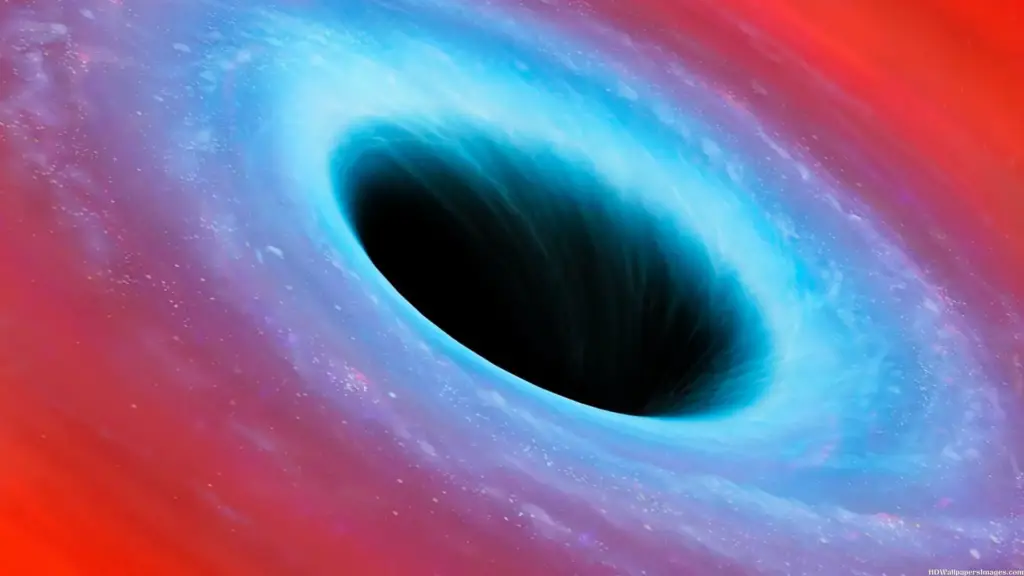
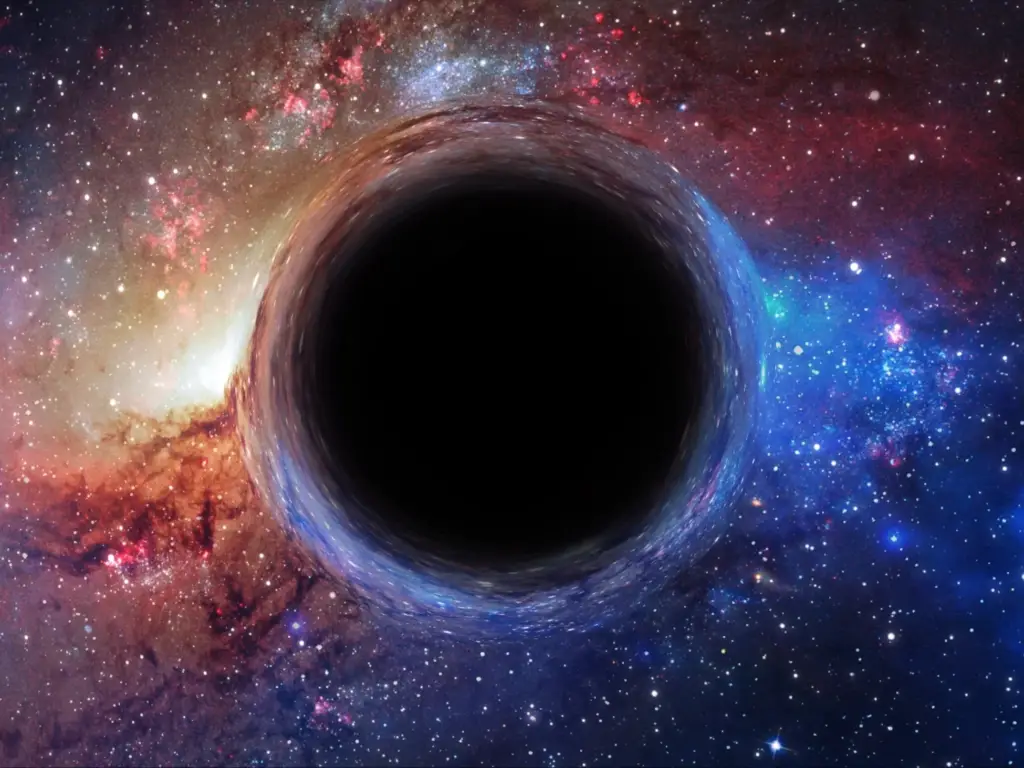
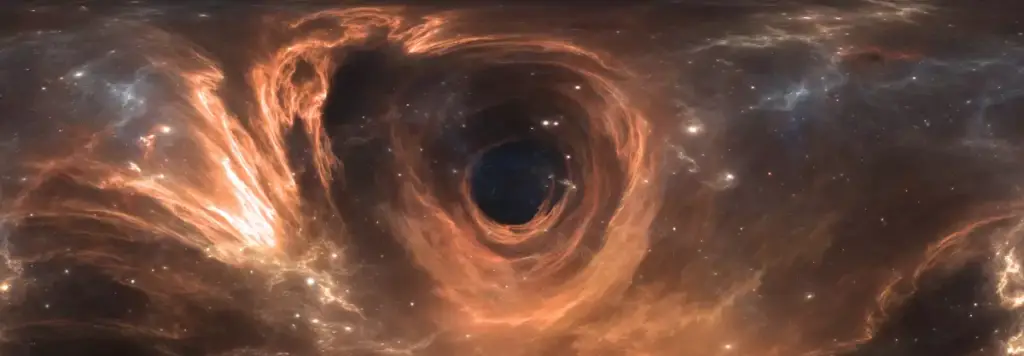
Event horizon – this is the conventional boundary of a black hole. Everything that crosses it remains trapped forever. It is the last shadow, a deep black glow that can absorb all light and never let it out again. What does this mean in practice? It is the last shadow before the deep blackness that is able to absorb all light so as not to let it out again.
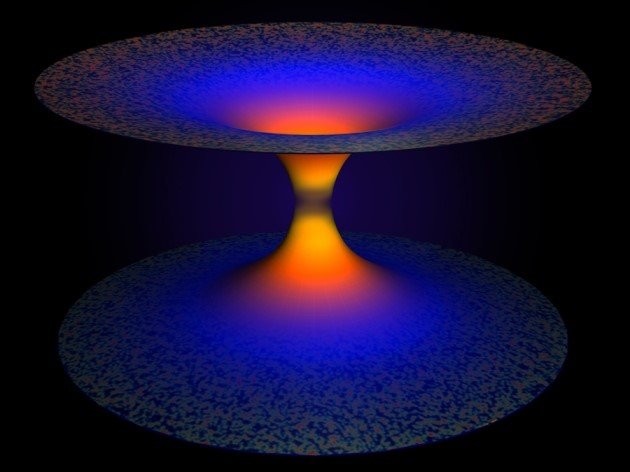
Singularity: The center of a black hole, where the density of matter and the force of gravity tend toward infinity, and the known laws of physics cease to apply. Inside a black hole, time and space swap roles. Time does not flow “forward” but is “blocked” on the way to the singularity, and movement in space is inevitable toward the center.
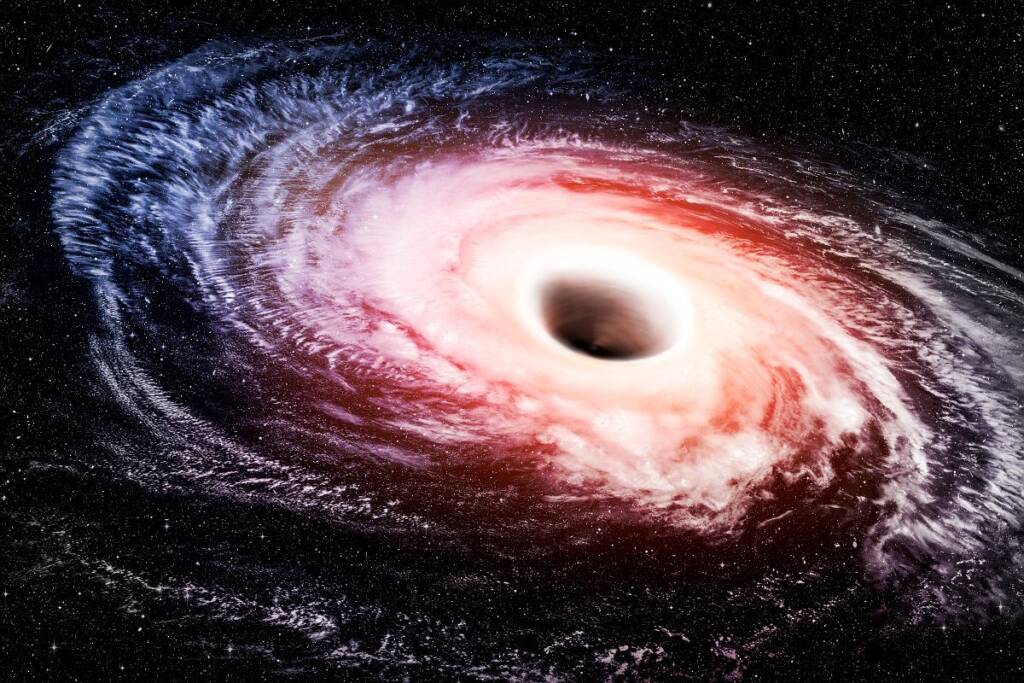
Invisibility: Because light does not escape, black holes cannot be seen directly. Their presence is detected by observing their influence on the surroundings (e.g., attracting matter and creating accretion disks).
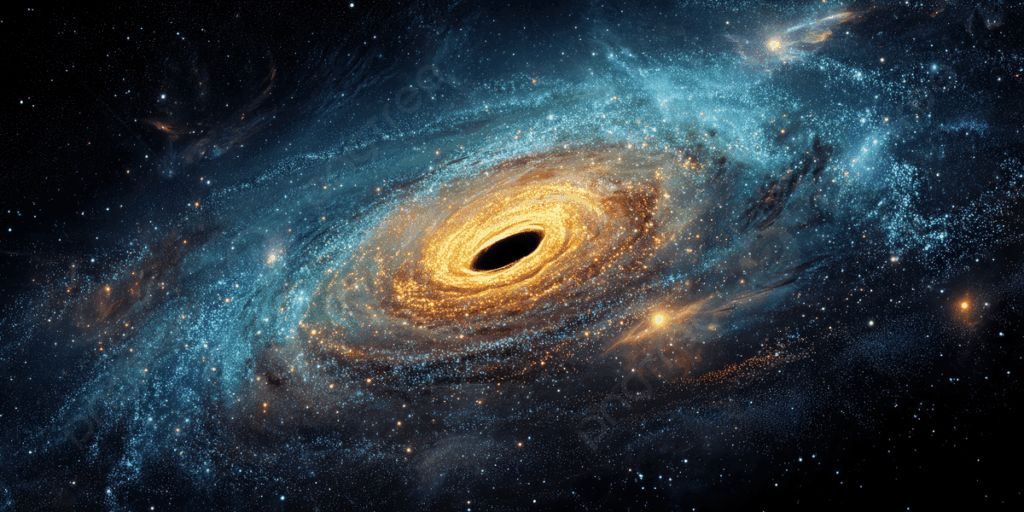
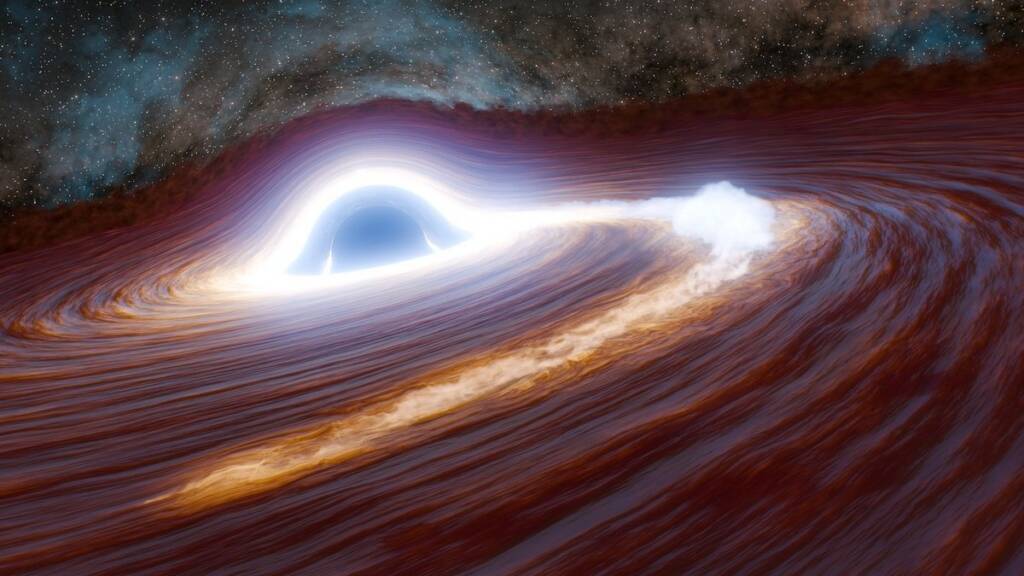
Stellar-mass black holes are formed as a result of the collapse of the core of a dying, massive star. Matter (stars, gas) is attracted, creating a swirling, super-hot disk that emits intense radiation (X-rays, gamma rays).
In a black hole, matter is crushed by extreme gravity toward the central singularity, where spacetime undergoes infinite curvature, breaking the laws of known physics, and an object (or astronaut) is stretched and crushed into “spaghetti”. Matter falling into a black hole creates a hot, glowing accretion disk, emitting radiation before it crosses the event horizon, beyond which nothing can escape, not even light. Inside the horizon, time and space seem to reverse, and movement is only possible toward the center.
Known black holes most often belong to one of two groups:
stellar-mass black holes (approx. several to a dozen solar masses),
black holes with masses at least 100,000 times greater than the mass of the Sun.
Stellar-mass black holes form as a result of the gravitational collapse of very massive stars at the end of their lives.
Another category is supermassive black holes with masses exceeding millions of solar masses. It is suspected that such black holes are located in the centers of most galaxies. The main mass growth of a massive black hole in the center of a typical galaxy occurred when the galaxy was going through a phase of intense activity, and they are presumed to be the “engines” powering active galactic nuclei, such as quasars. These objects are extremely dense, and their gravitational pull makes it impossible for even light to escape. There is convincing evidence for the existence of a black hole with a mass of about 4 million solar masses in the center of the Milky Way.
Object Q0906+6930 contains a black hole with a mass exceeding 10 billion solar masses.
There are also intermediate-mass black holes between stellar and supermassive ones, and the heaviest black holes are sometimes called ultramassive.
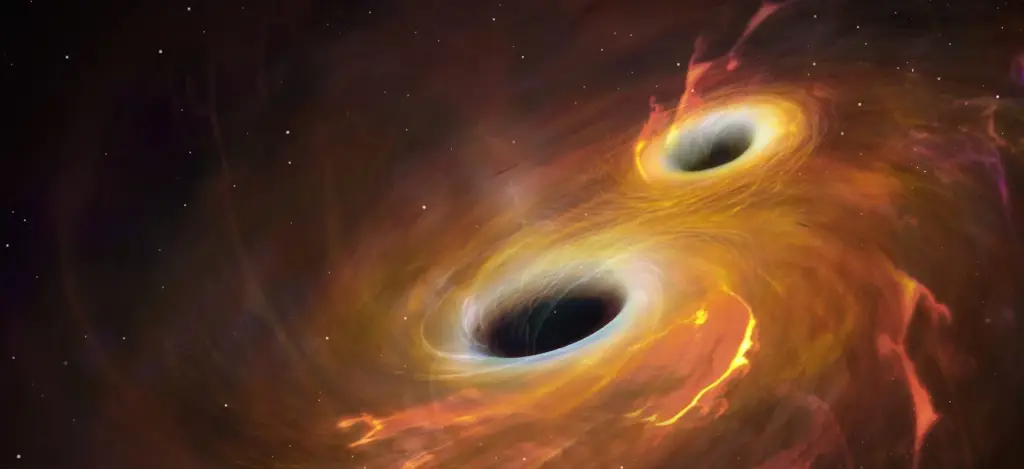
On September 14, 2015, LIGO (Laser Interferometer Gravitational-Wave Observatory) recorded gravitational waves for the first time in history as a result of the collision of two black holes 1.3 billion light-years from Earth. This observation confirms the theoretical predictions of Einstein and others that such an event can occur. Firstly, this event confirms that binary black holes actually exist in Space. Secondly, it opens the way to practical observation of the nature of gravity and understanding events in Space, including the Big Bang and what happened after it. This discovery was officially announced on February 11, 2016, after many months of verifying the results.