

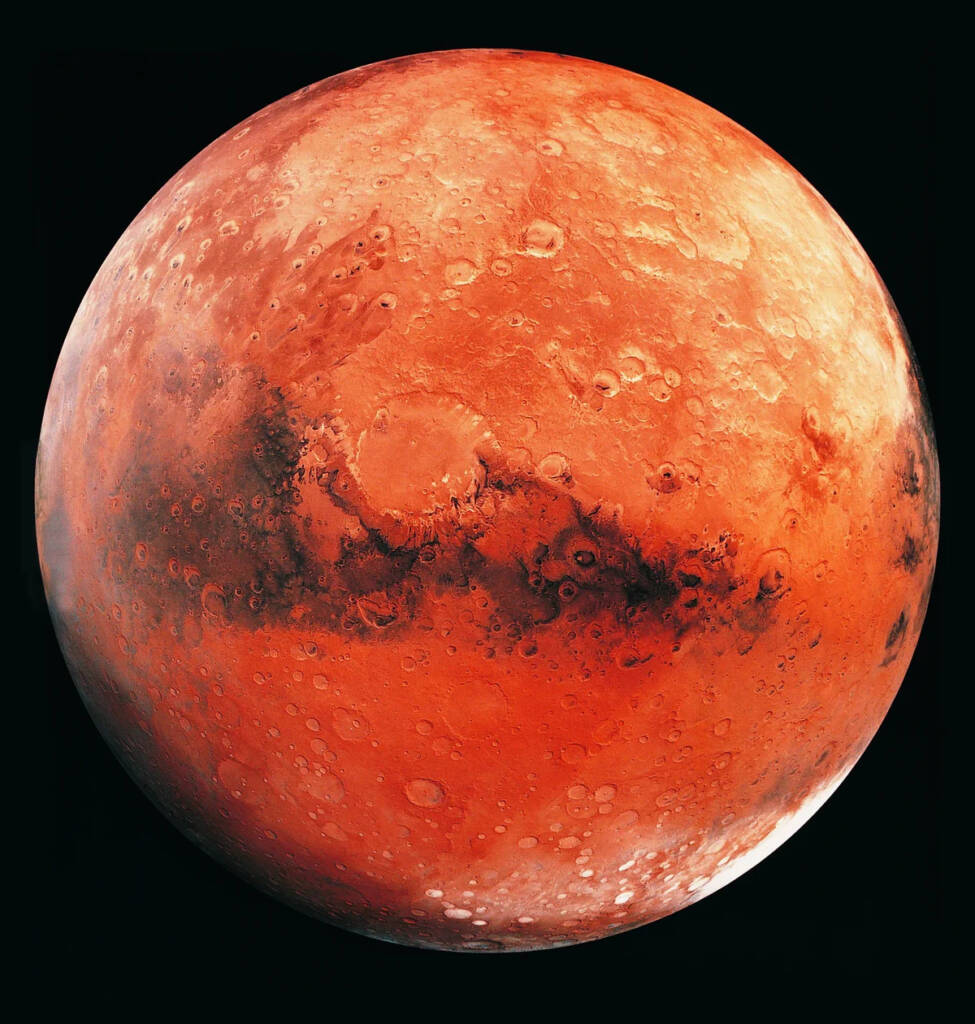
Mars is the fourth planet from the Sun and Earth’s most intensely studied neighbor in the Solar System. Orbiting at an average distance of 227.9 million kilometers (1.52 Astronomical Units), the Red Planet has captivated human imagination for millennia. Named after the Roman god of war due to its distinctive blood-red hue—a color imparted by ubiquitous iron oxide rust covering its dusty surface—Mars sits at the outer edge of the Sun’s circumstellar habitable zone.
Though Mars possesses roughly half the radius and just 11 percent of Earth’s mass, it shares striking dynamical similarities with our world. A Martian day, known as a Sol, lasts 24 hours, 39 minutes, and 35 seconds, while its 25.2-degree axial tilt creates a familiar cycle of four seasons, albeit twice as long as Earth’s. Yet behind these planetary parallels lies a cold, hyper-arid desert world wrapped in a thin carbon dioxide atmosphere where surface pressures average less than 1 percent of Earth’s sea-level pressure.
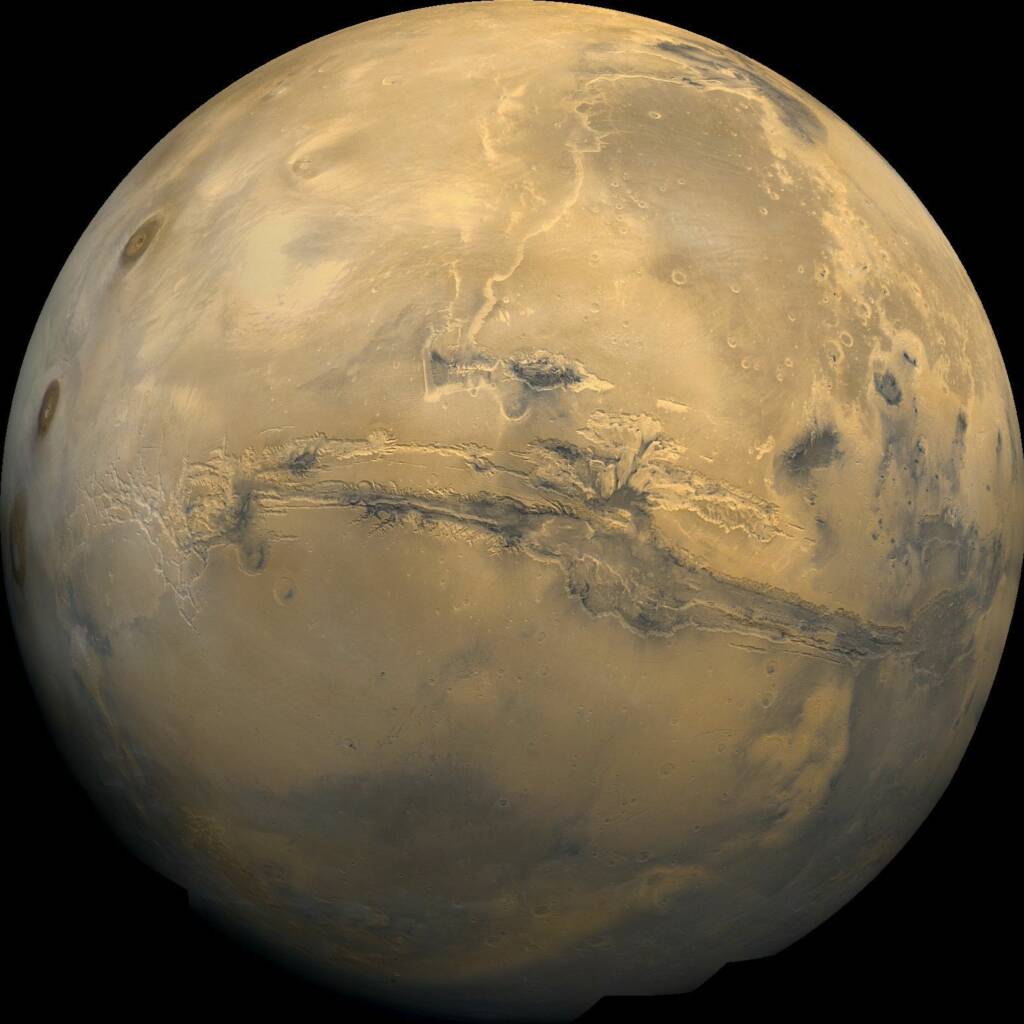
Despite its current desolate state, Mars is a world of extreme geological grandeur. It hosts Olympus Mons, the largest volcano in the Solar System, and Valles Marineris, a colossal canyon system that dwarfs Earth’s Grand Canyon. Ancient river deltas, dried-up lake basins, and water-worn minerals provide undeniable evidence that billions of years ago, Mars was a warmer, wetter planet with liquid oceans capable of supporting life. Today, as an armada of orbiters, landers, and rovers scours its surface for biosignatures, Mars remains humanity’s ultimate proving ground for robotic exploration and the primary target for future crewed interplanetary travel.
I. COSMIC ADDRESS AND RED PLANET METRICS
Located in the inner Solar System directly beyond Earth, Mars occupies a critical transition zone between the warm, rocky terrestrial worlds and the cold, asteroid-strewn outer realm. Its physical metrics, orbital mechanics, and rotational alignment combine to create a planet that is eerily familiar to Earth in its daily cadence, yet fundamentally distinct in its physical scale and orbital environment.
1. Position in the Habitable Zone: Edge of the Habitable Zone
Mars orbits at the outer boundary of the Sun’s circumstellar habitable zone—the theoretical region around a star where an Earth-like planet with a sufficient atmosphere can maintain liquid water on its surface.
Solar Irradiance: At its average distance from the Sun, Mars receives only about 43 percent of the solar flux (light and heat) that Earth receives.
The Faint Young Sun Problem: Early in Mars’s history, roughly 3.8 to 4.0 billion years ago, the Sun was approximately 25 to 30 percent dimmer than it is today. To maintain liquid surface water at the outer edge of the habitable zone during this era, Mars required a thick atmospheric envelope rich in greenhouse gases (such as carbon dioxide and hydrogen) to trap incoming solar radiation.
Modern Habitability Limits: Today, because Mars lost most of its atmosphere to space, its weak greenhouse warming is insufficient to compensate for its distance from the Sun, leaving its surface frozen and hyper-arid.
2. Physical Parameters: Mass, Radius, Density, and Gravity
Mars is significantly smaller and less massive than Earth, placing its physical scale roughly halfway between Earth and the Moon.
Mass: Mars has a total mass of 6.417 x 10 to the power of 23 kilograms, which equals roughly 10.7 percent (about one-tenth) of Earth’s mass.
Radius and Volume: The mean volumetric radius of Mars is 3,389.5 kilometers—approximately 53 percent (about half) of Earth’s radius. Its total surface area is roughly equal to the combined landmass area of all seven continents on Earth.
Density: Mars exhibits a bulk mean density of 3.933 grams per cubic centimeter, compared to Earth’s 5.515 grams per cubic centimeter. This lower bulk density indicates that Mars possesses a smaller metallic core relative to its volume and contains a higher proportion of lighter volatile elements and iron oxides within its silicate mantle.
Surface Gravity: Due to its smaller mass and radius, surface gravity on Mars is 3.72 meters per second squared, which is approximately 38 percent (roughly one-third) of Earth’s gravity. A human weighing 100 kilograms on Earth would weigh approximately 38 kilograms on the surface of Mars.
3. Orbit and High Eccentricity: Seasonal Asymmetry
Mars orbits the Sun at an average semi-major axis distance of 227.9 million kilometers (approximately 1.524 Astronomical Units), taking 687 Earth days (or 668.6 Martian Sols) to complete one full revolution.
Unlike Earth’s nearly circular orbit, Mars possesses a pronounced orbital eccentricity of 0.0934—the second-highest eccentricity among all major planets in the Solar System after Mercury:
Distance Variation: At perihelion (closest approach to the Sun), Mars draws in to 206.6 million kilometers (1.38 AU). At aphelion (furthest point), it moves out to 249.2 million kilometers (1.67 AU)—a massive variation of over 42 million kilometers.
Solar Irradiance Variations: Sunlight intensity reaching Mars varies by roughly 45 percent between perihelion and aphelion, driving extreme seasonal asymmetries:
Southern Hemisphere: Southern summer occurs near perihelion, resulting in short, intense, and hot summers, while southern winter occurs near aphelion, causing long, exceptionally cold winters.
Northern Hemisphere: Northern summer occurs near aphelion, producing long, mild summers, while northern winter occurs near perihelion, resulting in short, relatively warm winters.
Global Dust Storm Trigger: The intense solar heating during southern perihelion drives strong thermal convection currents, serving as the primary seasonal trigger for planet-wide global dust storms.
4. Martian Day (Sol) and Axial Tilt: Daily and Seasonal Dynamics
In terms of rotational mechanics, Mars is Earth’s closest twin in the Solar System, exhibiting near-identical daily rhythms and axial alignment.
The Sol (Martian Solar Day): Mars completes one full rotation relative to the Sun in 24 hours, 39 minutes, and 35.24 seconds. To distinguish a Martian solar day from an Earth day, planetary scientists use the term Sol. A Martian sidereal day (rotation relative to background stars) lasts 24 hours, 37 minutes, and 22 seconds.
Axial Tilt (Obliquity): Mars’s rotational axis is currently tilted at an angle of 25.19 degrees relative to its orbital plane, exceptionally close to Earth’s axial tilt of 23.44 degrees. This orientation causes Mars to experience four distinct seasons—spring, summer, autumn, and winter—though each season lasts roughly twice as long as its Earth counterpart due to the longer 687-day year.
Obliquity Chaos: Unlike Earth, whose axial tilt is stabilized within a narrow range of roughly 22.1 to 24.5 degrees by the gravitational pull of our large Moon, Mars lacks a large stabilizing satellite. Gravitational perturbations from Jupiter and the other planets cause Mars’s axial tilt to chaotically wobble over 10-million-year cycles, ranging from 10 degrees to over 60 degrees. During high-obliquity periods, solar heating melts polar ice caps and redistributes water ice toward the equator, driving dramatic long-term climate cycles.
II. INTERIOR ARCHITECTURE AND SEISMIC GEOLOGY
For centuries, our understanding of the Martian interior relied entirely on theoretical models and orbital gravity measurements. The arrival of NASA’s InSight lander fundamentally transformed Martian geophysics, providing direct seismic measurements that unlocked the planet’s internal structure and revealing an active, dynamic world beneath its quiet surface.
1. Interior Model Post-InSight: Crust, Mantle, and Core
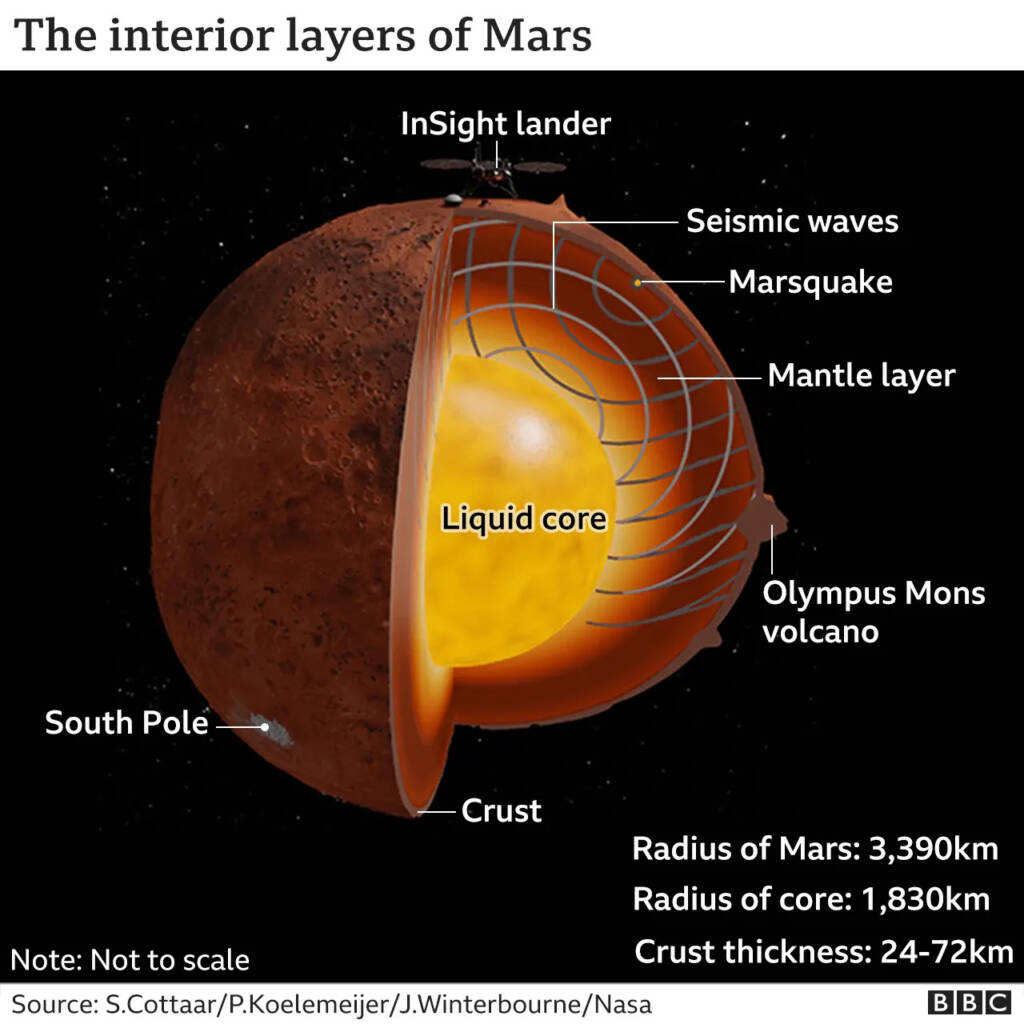
By placing a ultra-sensitive seismometer (SEIS) directly on the Martian regolith, the InSight mission recorded hundreds of seismic waves, providing the first precise “ultrasound” of Mars’s layered interior.
Crustal Architecture: The Martian crust is surprisingly thin and structurally heterogeneous. InSight data reveals that the crust consists of two or three distinct sub-layers, reaching an overall average thickness of 24 to 72 kilometers:
Northern Lowlands: Thin crust averaging roughly 20 to 30 kilometers thick.
Southern Highlands: Thicker, ancient crust averaging 45 to 70 kilometers thick.
Mantle Density: Beneath the crust lies a silicate mantle roughly 1,500 kilometers thick, composed primarily of olivine and pyroxene. The Martian mantle is enriched in iron relative to Earth’s mantle, making it denser and chemically distinct, which limits the vigor of thermal convection.
Liquid Metallic Core: InSight confirmed that Mars possesses a completely liquid metallic core with a radius of approximately 1,830 kilometers. The core is less dense than pure iron-nickel because it contains a remarkably high fraction of light volatile elements—primarily sulfur (around 10 to 15 percent by weight), along with smaller amounts of oxygen, carbon, and hydrogen. This high light-element content lowers the core’s melting point, keeping it entirely molten today despite cooling.
2. Marsquakes: Seismic Activity and Subsurface Magma
While Mars lacks active global plate tectonics, it is far from seismically dead.
Seismic Profile: InSight detected over 1,300 marsquakes during its operational lifetime. Unlike terrestrial earthquakes (which are predominantly driven by sliding tectonic plates), marsquakes are generated by thermal cooling, crustal contraction, and localized magmatic activity.
Cerberus Fossae Activity: A significant portion of the most energetic marsquakes originated from Cerberus Fossae—a young volcanic fracture zone located thousands of kilometers from InSight. Seismic wave patterns from Cerberus Fossae revealed low S-wave velocities, providing strong evidence for subsurface liquid magma chambers or localized active volcanism at depths of 15 to 50 kilometers.
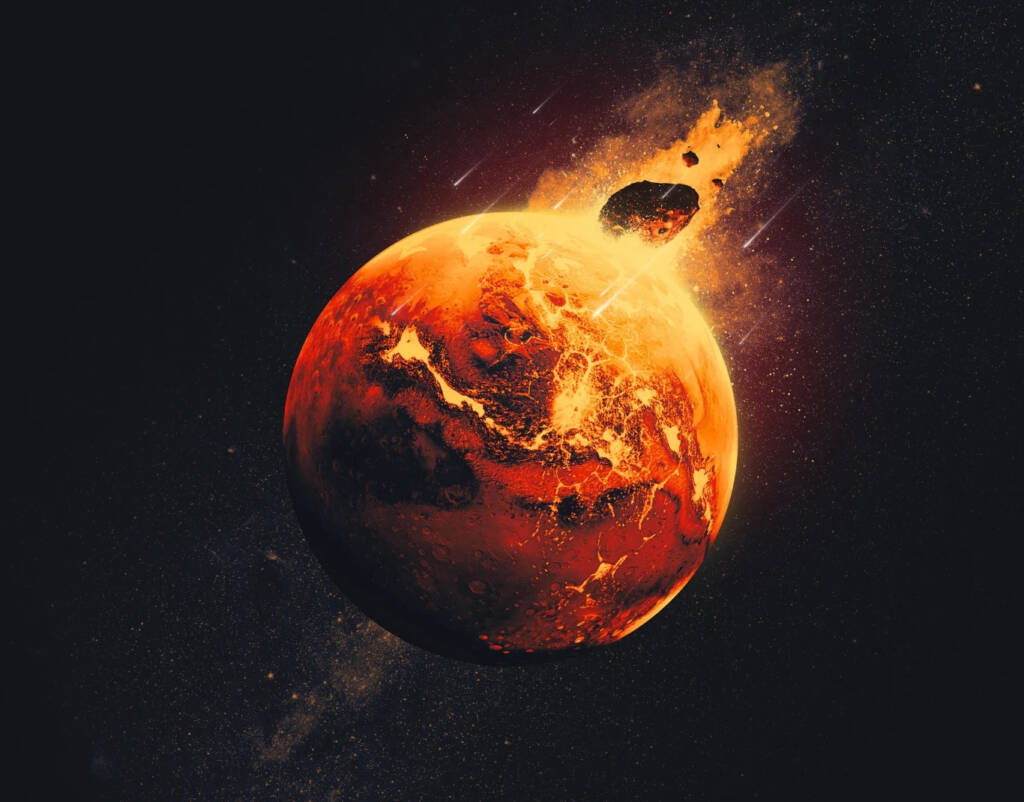
Impact Seismology: InSight also detected seismic signals generated by meteoroid impacts, allowing scientists to correlate orbital cratering events with internal shockwaves to measure the density of the upper crust.
3. Rock and Regolith Composition: Why Is Mars Red?
The striking reddish hue that earned Mars its historic moniker is the result of chemical weathering on a planetary scale.
Iron Oxides (Rust): The Martian surface is covered in a layer of fine dust and regolith enriched in iron. Billions of years ago, iron-rich basaltic rocks were exposed to liquid water, atmospheric oxygen, and volcanic gases. This oxidized the iron into hematite and nanophase iron oxides—essentially microscopic rust—which absorbs blue and green wavelengths while scattering bright red light.
Basaltic Crustal Rocks: Beneath the dusty surface, Martian bedrock consists overwhelmingly of dark, igneous volcanic rocks such as basalt, gabbro, and andesite, rich in dark minerals like olivine, pyroxene, and plagioclase feldspar.
Toxic Regolith Chemistry: Martian soil contains fine-grained silicate dust mixed with hazardous chemical compounds—specifically perchlorates at concentrations between 0.5 and 1.0 percent by weight. Perchlorates act as powerful oxidizers that pose significant chemical toxicity challenges for future human explorers.
4. Tharsis Volcanic Plateau and Olympus Mons
Mars features the most colossal volcanic structures in the Solar System, dominated by the massive Tharsis Rise—a volcanic bulge 4,000 kilometers wide and 10 kilometers high that alters the planet’s gravitational symmetry.
Olympus Mons: Sitting on the western edge of the Tharsis bulge, Olympus Mons is a giant shield volcano that towers 21.9 kilometers above the surrounding plains—nearly three times the height of Mount Everest. Its footprint spans over 600 kilometers in diameter, an area roughly equal to the entire island of Great Britain or the state of Arizona.
Role of Stagnant Lid Tectonics: The staggering height of Martian volcanoes is a direct consequence of the absence of plate tectonics. On Earth, moving tectonic plates glide over stationary volcanic hotspots, creating chains of smaller volcanic islands (like the Hawaiian Islands). On Mars, the crust remains locked in place above a single stationary thermal mantle plume for hundreds of millions of years, allowing erupting lava to build up continuously into a single mega-volcano.
5. Valles Marineris: A Colossal Canyon System
Stretching along the Martian equator directly east of the Tharsis region lies Valles Marineris, a rift valley system that dwarfs every canyon network on Earth.
Proportions: Valles Marineris stretches over 4,000 kilometers long, reaches widths of 200 kilometers, and plunges to depths of up to 7 to 10 kilometers. By comparison, Earth’s Grand Canyon is 446 kilometers long and 1.8 kilometers deep.
Tectonic Origin: Unlike Earth’s Grand Canyon, which was carved primarily by running water from the Colorado River, Valles Marineris is a structural tectonic rift valley. As the massive Tharsis bulge swelled with lava billions of years ago, it placed the surrounding crust under immense tension, causing the crust to crack, fault, and slump downward.
Subsequent Modification: After the initial tectonic fracturing, the canyon was dramatically expanded and shaped by massive catastrophic outflow flooding events, ongoing wind erosion, giant landslides, and groundwater sapping.
III. ATMOSPHERE, WEATHER, AND WATER TODAY
Today, Mars is a hyper-arid, freezing desert world. Its environment is governed by a fragile, low-density atmosphere that offers negligible thermal insulation and leaves the surface directly exposed to space radiation, solar UV light, and severe temperature fluctuations.
1. Thin Carbon Dioxide Atmosphere and Weak Greenhouse Effect
The current Martian atmosphere is a whisper of its ancient self, having lost more than 99 percent of its original volatile mass over the last 4 billion years.
Composition: The atmospheric envelope consists of 95.3 percent carbon dioxide, 2.6 percent nitrogen, 1.9 percent argon, and trace amounts of oxygen (0.16 percent), carbon monoxide (0.06 percent), and water vapor (0.03 percent).
Surface Pressure: Mean surface pressure averages just 6.1 millibars (0.088 psi)—less than 1 percent of Earth’s sea-level pressure (1,013 millibars). This sits near the Armstrong Limit for human physiology, meaning unpressurized liquid water would instantly boil at human body temperature.
Weak Greenhouse Warming: Despite being composed almost entirely of carbon dioxide (a greenhouse gas), the atmosphere is simply too thin to trap thermal radiation effectively. As a result, atmospheric greenhouse warming raises surface temperatures by only 5 to 10 degrees Celsius, leaving the planet with a global average surface temperature of minus 60 degrees Celsius (-76°F), swinging wildly from a high of 20°C (68°F) at the equator during noon to minus 125°C (-193°F) at the poles during winter.
2. Global Dust Storms, Dust Devils, and Solar Obscuration
Dust is the primary driver of day-to-day weather and seasonal climate variation on modern Mars. Fine iron-rich dust particles suspended in the thin air scatter sunlight, painting the Martian sky a butterscotch-pink hue.
Dust Devils: Driven by localized daytime heating, warm air rising off the sun-baked ground creates violent, spinning convective columns called dust devils. Ranging from tens of meters to over 20 kilometers high, these swirling vortices act as natural “cleaning crews” when they sweep across solar panels of landed probes—such as NASA’s Spirit and Opportunity rovers—removing accumulated dust layers.
Regional and Global Dust Storms: During southern summer (near perihelion), intense surface heating triggers localized dust storms. On occasion (roughly every 3 to 6 Earth years), these storms grow, merge, and envelope the entire planet in a dense, yellow haze that persists for months.
Solar Obscuration and Spacecraft Deaths: Global dust storms block over 99 percent of direct sunlight from reaching the surface. This darkens the sky so severely that solar-powered missions—including NASA’s Opportunity rover in 2018 and the InSight lander in 2022—ultimately starved of power and died.
3. Clouds of Water Ice and CO2, and Frost Phenomena
Despite its hyper-arid climate, atmospheric water vapor and carbon dioxide frequently condense into delicate, high-altitude cloud decks and ground-level frost.
Water Ice Clouds: Thin, wispy cirrus-like clouds composed of water ice crystals form at altitudes of 10 to 30 kilometers, particularly along the Martian equator during aphelion (the “Aphelion Cloud Belt”).
Dry Ice Clouds: High in the mesosphere (above 50 kilometers depth), where temperatures plunge below minus 120 degrees Celsius, carbon dioxide gas freezes directly out of the air, forming rare dry ice clouds.
Seasonal CO2 Frost Cycle: During polar winters, up to 25 to 30 percent of the total carbon dioxide in the entire atmosphere freezes out directly onto the winter pole, forming a solid, meter-thick sheet of dry ice frost. When spring returns and sunlight hits the frost layer, dry ice beneath the surface sublimates directly into gas, triggering explosive geysers of carbon dioxide gas that erupt through cracks, spraying dark basal dust across the white ice field.
4. Water Inventories Today: Polar Caps and Subsurface Ice
While liquid water cannot persist stably on the surface of modern Mars due to low atmospheric pressure, vast reservoirs of frozen water ice remain locked within the planet’s crust and poles.
Polar Ice Caps: Mars features permanent ice caps at both poles:
North Polar Cap (Planum Boreum): Dominated almost entirely by a vast deposit of pure water ice up to 3 kilometers thick, covered in a temporary seasonal layer of dry ice during winter.
South Polar Cap (Planum Australe): Contains a massive underlying water ice sheet topped by a permanent 8-meter-thick cap of solid carbon dioxide ice.
Widespread Subsurface Ice: Beneath the dusty regolith, subsurface water ice glaciers extend from high polar latitudes down into the mid-latitudes (above 30 to 40 degrees latitude). Radar observations from Mars Reconnaissance Orbiter (SHARAD) confirmed pure water ice sheets tens of meters thick hiding just 1 to 2 meters under the soil.
Recurring Slope Lineae (RSL): Dark, narrow streaks that appear and incrementally lengthen down warm, steep slopes during Martian summer, initially hypothesized to be flowing flows of liquid saltwater (salty brines). Modern high-resolution analyses suggest RSLs are likely dry granular flows of dust and sand triggered by seasonal dry ice sublimation, though trace amounts of hydrated salts inside them confirm water vapor plays a role in their formation.
IV. ANCIENT MARS: A WET AND WARM PAST
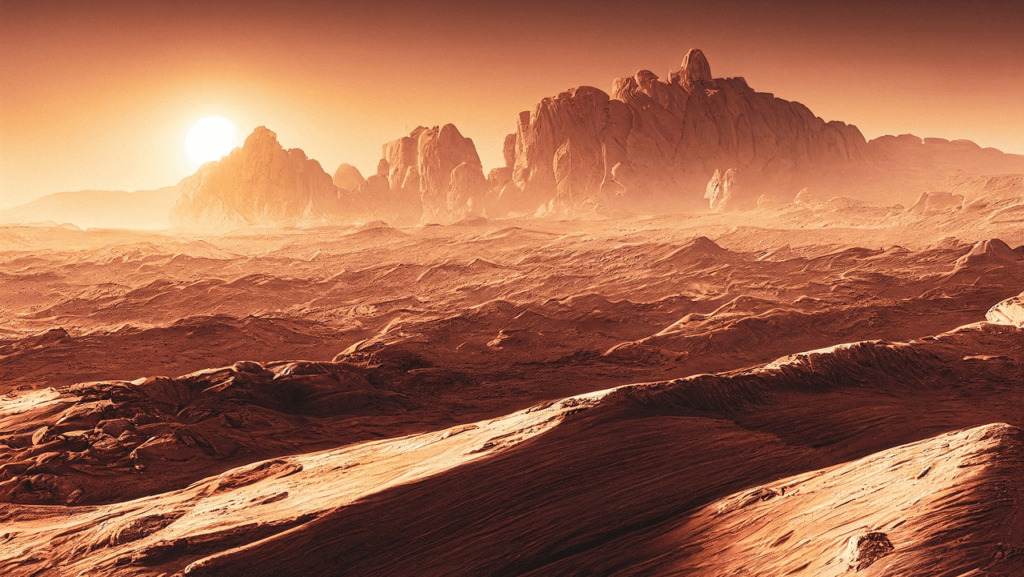
Underneath its current hyper-arid red crust lies the undeniable geological record of a fundamentally different planet. Four billion years ago, early Mars featured active hydrological cycles, stable surface lakes, river networks, and a dense atmospheric blanket capable of sustaining clement, habitable conditions.
1. Liquid Water on Early Mars: Deltas, Lakes, and Oceans
High-resolution orbital mapping and direct surface explorations by robotic rovers have provided definitive proof that liquid water once flowed abundantly across the Martian landscape.
Sinuous River Valleys: Orbital imagery reveals vast networks of dendritic valley networks that closely mimic terrestrial river systems. These were formed by sustained runoff from rainfall or snowmelt during the planet’s first billion years.
Dried-Up Lake Basins:
Gale Crater: NASA’s Curiosity rover confirmed that Gale Crater hosted a long-lived system of lakes and streams for tens of millions of years. The rover discovered mudstone layers containing clay minerals, rounded river pebbles worn down by running water, and ancient lake deposits.
Jezero Crater: NASA’s Perseverance rover landed directly in Jezero Crater to explore a remarkably preserved river delta. The rover confirmed that a river once breached the crater wall, depositing layered silt, clay, and organic-rich muds as it emptied into an ancient crater lake.
The Primordial Northern Ocean: Geomorphological features along the border between the northern lowlands and southern highlands—including ancient shorelines, vast deltaic plains, and tsunami deposits—suggest that early Mars may have hosted a vast northern ocean (Oceanus Borealis) covering up to one-third of the planet’s surface.
2. Habitability-Friendly Environment and Epochal Transitions
Planetary geologists divide the history of Mars into three distinct geological eras that track its transition from a warm, wet world to a frozen desert:
Noachian Epoch (4.5 to 3.7 Billion Years Ago): The oldest era, characterized by heavy meteorite bombardment, active volcanism, thick atmospheric density, and abundant surface liquid water. Neutral-pH clay minerals (phyllosilicates) formed extensively during this epoch, creating a chemical environment highly favorable for the origin of life.
Hesperian Epoch (3.7 to 3.0 Billion Years Ago): As the atmosphere began to thin and volcanic activity erupted massive sulfur dioxide emissions, liquid water became increasingly acidic and ephemeral. Global clay formation gave way to acidic sulfate salts, marking a major transition toward harsher, hyper-acidic environmental conditions.
Amazonian Epoch (3.0 Billion Years Ago to Present): The modern era, characterized by an extremely thin atmosphere, cold temperatures, and cold-desert weathering. Surface water froze into subsurface ice or escaped into space, leaving behind a hyper-arid landscape dominated by wind erosion, dust storms, and oxidation by iron oxides.
3. Loss of Atmosphere and Magnetic Field: Solar Wind Stripping
The primary driver behind Mars’s catastrophic climate shift was the loss of its internal magnetic shield, which left its atmospheric envelope vulnerable to destruction by solar radiation.
Shutdown of the Geodynamo: During its first 500 million years, Mars possessed an active global magnetic field generated by thermal convection in its molten core. However, because Mars is small, its core cooled rapidly, shutting down the internal geodynamo roughly 4.0 to 4.1 billion years ago.
MAVEN Mission Evidence: NASA’s MAVEN (Mars Atmosphere and Volatile EvolutioN) spacecraft directly measured the modern rate at which the solar wind strips gas away from Mars’s upper atmosphere.
Atmospheric Stripping: Without a magnetic field to deflect the solar wind, high-energy solar particles and ultraviolet photons struck the unprotected upper ionosphere directly. Over hundreds of millions of years, solar wind unbinding broke atmospheric carbon dioxide and water molecules apart, sweeping free hydrogen, oxygen, and carbon directly into space through a process known as sputtering.
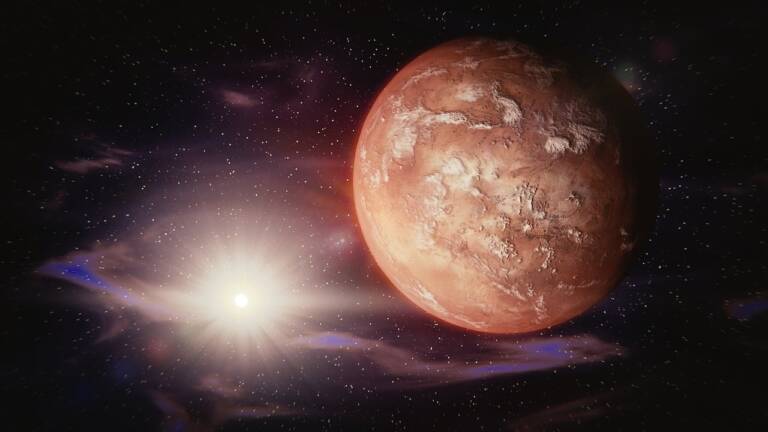
4. Atmospheric Methane: Seasonal Spikes and the Origin Mystery
One of the most persistent scientific enigmas on modern Mars is the presence of trace amounts of methane ($CH_4$) in its thin atmosphere.
The Methane Enigma: Methane is unstable in the Martian atmosphere because solar ultraviolet light destroys it within approximately 300 to 400 years. Therefore, any methane detected today must be actively produced by an ongoing subsurface source.
Curiosity Detections: NASA’s Curiosity rover recorded localized background levels of methane (around 0.2 to 0.7 parts per billion) that consistently exhibit seasonal spikes during northern summer, reaching up to 2 parts per billion. Occasionally, transient plumes exceeding 20 parts per billion have been detected.
Two Competing Hypotheses:
Abiotic (Geological) Origin: Methane could be produced by a non-biological chemical reaction called serpentinization, where warm water interacts with olivine-rich rocks deep underground, or by the release of trapped gas from ancient methane clathrates (ice cages).
Biotic (Biological) Origin: Methane could be actively produced as a metabolic waste product by deep subsurface anaerobic microorganisms known as methanogens, living in isolated aquifers beneath the frozen regolith.
The Measurement Paradox: While Curiosity detects methane on the surface, ESA’s Trace Gas Orbiter (TGO) in orbit consistently reports virtually no methane in the upper atmosphere, suggesting a complex, local destruction or absorption mechanism near the ground that remains unexplained.
V. ASTROBIOLOGY AND CURRENT DISCOVERIES
Humanity’s robotic presence on Mars has evolved from simple reconnaissance into an active astrobiological investigation. Modern surface missions, led by NASA’s Curiosity and Perseverance rovers, are actively evaluating ancient habitability, searching for potential biosignatures, testing technologies for future human arrival, and laying the groundwork for returning the first Martian samples to Earth.
1. The Search for Ancient Life: Biosignatures and Organics
The primary goal of modern Martian astrobiology is not hunting for living surface organisms, but searching for biosignatures—chemical, structural, or isotopic traces preserved in ancient rocks that indicate ancient microbial life once existed.
Detection of Organic Molecules: NASA’s Curiosity rover made historic discoveries in Gale Crater using its Sample Analysis at Mars (SAM) instrument suite. It confirmed the presence of complex organic molecules—including thiophenes, benzene, toluene, and long-chain alkanes—embedded within 3.5-billion-year-old mudstones. While organic compounds can form through abiotic geological processes, their preservation proves that early Martian rocks could safeguard delicate carbon structures over billions of years.
Astrobiological Targets in Jezero Crater: Exploring an ancient lake-delta system, Perseverance uses its SHERLOC (Scanning Habitable Environments with Raman & Luminescence for Organics & Chemicals) and PIXL (Planetary Instrument for X-ray Lithochemistry) instruments to map organic carbon and minerals at a microscopic scale. The rover has identified organic-mineral associations in silica- and sulfate-rich rock formations, which are prime candidates for trapping ancient microbial fossils and biosignatures.
2. The Perseverance Mission and Ingenuity Helicopter
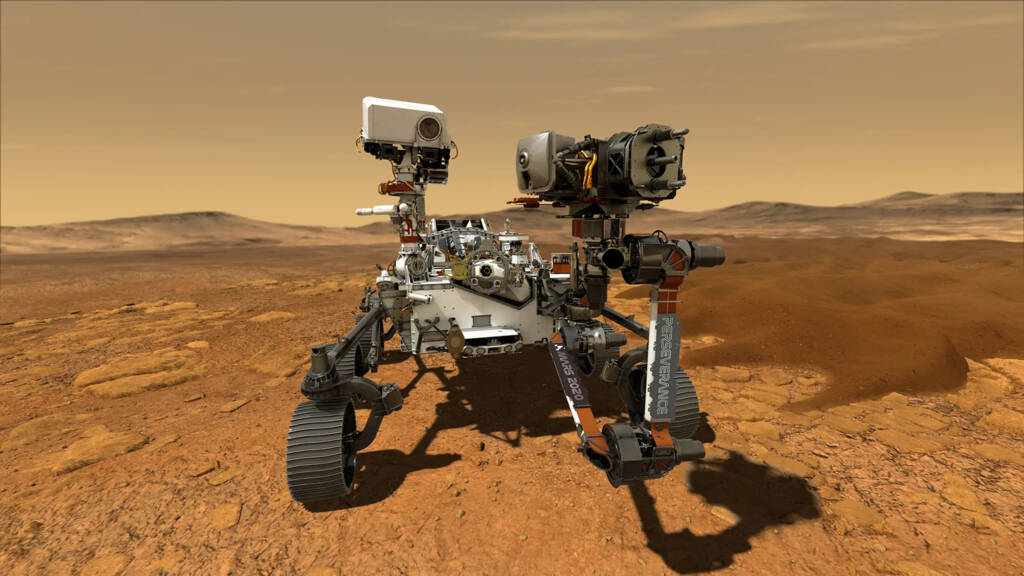
On February 18, 2021, NASA’s Perseverance rover touched down inside Jezero Crater, deploying a suite of advanced scientific instruments along with a historic technological demonstrator.
The Ingenuity Mars Helicopter: Attached to Perseverance’s belly was Ingenuity, a 1.8-kilogram technology demonstration aircraft designed to prove that controlled, powered atmospheric flight is possible in Mars’s extremely thin atmosphere (less than 1 percent of Earth’s atmospheric density).
Aviation Breakthrough: To generate sufficient lift in the ultra-low-density air, Ingenuity featured specially designed counter-rotating carbon-fiber blades spinning at over 2,400 RPM—nearly eight times faster than a standard helicopter on Earth.
From Technology Demo to Aerial Scout: Originally built for a 30-day, 5-flight demonstration, Ingenuity exceeded all expectations. It operated for nearly three years, completing 72 successful flights, traveling over 17 kilometers, and serving as an invaluable aerial scout for Perseverance by mapping safe driving routes and identifying high-value geological targets ahead of the rover.
3. The MOXIE Experiment: First-Ever In-Situ Oxygen Production
For future human missions to survive on Mars and launch back into space, astronauts will require tens of tons of oxygen for breathing and rocket propellant. Transporting all that oxygen from Earth is economically and logistically unfeasible, making In-Situ Resource Utilization (ISRU) essential.
How MOXIE Worked: Mounted inside Perseverance, the MOXIE (Mars Oxygen ISRU Experiment) instrument successfully demonstrated that oxygen can be extracted directly from the thin Martian air. MOXIE drew in ambient carbon dioxide ($CO_2$), compressed it, heated it to 800 degrees Celsius, and used a process called solid oxide electrolysis to split $CO_2$ molecules into pure oxygen ($O_2$) and carbon monoxide ($CO$).
Milestone Achievements: Over its operational campaign from 2021 to 2023, MOXIE completed 16 test runs under varying atmospheric conditions across different seasons. It produced a total of 122 grams of high-purity oxygen—enough to keep a small dog alive for 10 hours—demonstrating a critical baseline technology for future industrial-scale human life-support systems.
4. The Mars Sample Return (MSR) Campaign
While rovers carry sophisticated miniaturized laboratories, the definitive verification of extraterrestrial life requires analyzing samples using room-sized, ultra-high-resolution instruments on Earth.
Sample Collection by Perseverance: As it explores Jezero Crater, Perseverance uses a specialized drill to collect pristine rock cores and regolith samples, sealing them inside ultra-clean titanium tubes. The rover has already sealed and cached dozens of diverse rock cores, representing a rich cross-section of igneous rocks, ancient river delta clays, and organic-bearing mudstones.
Campaign Architecture: The planned multi-agency campaign involves landing a Retrieval Lander on Mars equipped with a robotic arm to collect the tubes (or retrieve them from a backup cache deposited on the Martian surface) and load them into a Mars Ascent Vehicle (MAV)—a small rocket that will launch the samples into Martian orbit.
Engineering Challenges and Reassessment: Transporting samples from the surface of another planet back to Earth involves unprecedented technical and financial hurdles:
Executing the first-ever rocket launch from the surface of another world.
Performing an autonomous orbital rendezvous in Martian orbit between the sample container and an Earth Return Orbiter.
Ensuring strict planetary protection containment protocols to prevent potential Martian biohazards from contaminating Earth upon atmospheric reentry.
VI. MOONS OF MARS: PHOBOS AND DEIMOS
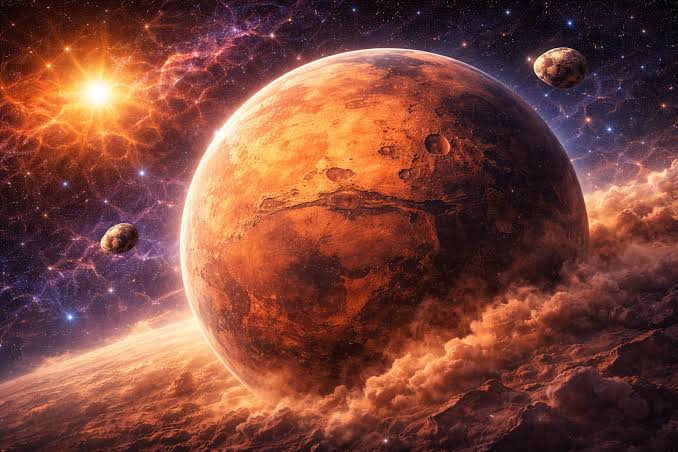
Mars is orbited by two tiny, irregularly shaped natural satellites: Phobos (fear) and Deimos (dread), named after the twin companions of the Roman god of war. Unlike Earth’s massive, spherical Moon, these two potato-shaped worlds are tiny, heavily cratered, low-density bodies that orbit exceptionally close to their parent planet.
1. Origin of the Satellites: Captured Asteroids vs. Giant Impact
The origin of Phobos and Deimos remains one of the long-standing puzzles in planetary science, as their physical appearances directly conflict with their orbital dynamics.
The Asteroid Capture Hypothesis:
The Case For: Visually and compositionally, Phobos and Deimos resemble dark, carbonaceous D-type or C-type asteroids common in the outer Main Asteroid Belt. They possess extremely low surface reflectivities (albedos under 0.07) and low bulk densities (around 1.8 grams per cubic centimeter), suggesting porous, rubble-pile interiors.
The Case Against: Capturing two separate asteroids into nearly perfect, circular, low-inclination equatorial orbits around Mars via gravitational drag or gas dynamics is dynamically improbable.
The Giant Impact Hypothesis:
Modern numerical simulations suggest that early in Martian history (during the Noachian era), a protoplanet roughly the size of the dwarf planet Ceres or Vesta struck young Mars.
The catastrophic collision ejected a vast disk of debris into equatorial orbit around Mars. Over time, most of the inner debris coalesced into larger moons that eventually spiraled inward and crashed into Mars, leaving behind Phobos and Deimos as the outer surviving remnants of this ancient ring-moon recycling system.
2. Phobos: A Doomed Moon and the Future Ring of Mars
Phobos is the larger and innermost of the two moons, measuring approximately 27 x 22 x 18 kilometers. It orbits just 6,000 kilometers above the Martian surface—closer to its primary planet than any other known natural satellite in the Solar System.
Stickney Crater and Structural Grooves: The dominant geological feature on Phobos is Stickney Crater, an enormous impact basin measuring 9 kilometers across—nearly half the total width of the moon itself. The impact that formed Stickney was so energetic it nearly shattered Phobos apart, creating a network of global linear grooves and fractures radiating across its surface.
Tidal Deceleration: Because Phobos orbits inside Mars’s synchronous orbit radius (where an orbit takes less time than the planet takes to rotate on its axis), Phobos orbits Mars in just 7 hours and 39 minutes—meaning it rises in the west and sets in the east twice every Martian day.
Approaching the Roche Limit: Gravitational tidal interactions between Mars and Phobos continuously extract orbital energy from the moon. Phobos is spiraling inward toward Mars at a rate of roughly 1.8 meters per century.
Future Destruction and Ring Formation: In approximately 30 to 50 million years, Phobos will cross Mars’s fluid Roche limit (roughly 5,400 kilometers altitude), where Martian tidal forces will overcome the moon’s weak internal gravity. The porous, rubble-pile structure of Phobos will be torn apart, dispersing its debris into a dense planetary ring system around Mars that will persist for tens of millions of years before gradually raining down onto the equator.
3. Deimos: The Small, Smooth Outer Satellite
Deimos is the smaller and more distant of the two moons, measuring roughly 15 x 12 x 11 kilometers across.
Orbital Profile: Deimos orbits Mars at a distance of 23,460 kilometers, completing one full revolution every 30.3 hours. Because its orbital period is only slightly longer than a Martian Sol (24.6 hours), Deimos moves extremely slowly across the Martian sky, taking over 2.5 Sols (roughly 64 hours) to travel from horizon to horizon.
Smooth Surface and Regolith Blanket: Unlike the sharp, grooved terrain of Phobos, Deimos appears remarkably smooth. Its impact craters are buried beneath a thick, global blanket of fine dust and regolith estimated to be 50 to 100 meters deep.
Weak Gravity: Gravity on Deimos is practically negligible—surface acceleration is just 0.003 meters per second squared (about 0.03 percent of Earth’s gravity). An astronaut standing on Deimos could easily reach escape velocity (roughly 20 kilometers per hour) simply by jumping off the surface.
Long-Term Stability: Unlike Phobos, Deimos orbits outside Mars’s synchronous distance. As a result, tidal friction is gradually pushing Deimos outward from Mars at a microscopic pace, ensuring its long-term survival for billions of years.
4. Upcoming Satellite Exploration Missions: JAXA’s MMX
Because Phobos and Deimos reside in shallow gravitational wells and hold clues to both early terrestrial planet formation and asteroid dynamics, they have become high-priority targets for international space agencies.
JAXA’s Martian Moons eXploration (MMX): Led by the Japan Aerospace Exploration Agency (JAXA) in collaboration with NASA and ESA, the flagship MMX mission is designed to decisively resolve the origin of the Martian satellites.
Mission Profile:
MMX will enter Martian orbit, conduct close flybys of Deimos, and enter a quasi-satellite orbit around Phobos for detailed remote sensing.
The spacecraft carries a small rover (jointly developed by CNES and DLR) that will drop onto the surface of Phobos to measure surface mechanics and regolith chemistry directly.
Sampling and Earth Return: The core objective of MMX is to deploy a specialized coring mechanism to collect over 10 grams of regolith from the surface of Phobos and transport those pristine samples back to Earth, allowing scientists to determine whether Phobos is a captured asteroid or a piece of ancient Mars ejected during a giant impact.
VII. COLONIZATION, CREWED EXPLORATION, AND TERRAFORMING
Establishing a permanent human presence on Mars is the ultimate ambition of 21st-century space exploration. However, transitioning from robotic reconnaissance to long-term human habitation requires overcoming severe physiological hazards, mastering resource extraction on another world, building massive transport infrastructure, and confronting the fundamental physics limits of planetary engineering.
1. Medical and Physical Challenges for Humans
Living on Mars presents an unforgiving environment where three major health hazards threaten human biology:
Galactic Cosmic Rays and Solar Particle Events: Lacking a dense atmosphere and a global protective magnetosphere, the Martian surface is continuously bombarded by Galactic Cosmic Rays and sudden high-energy Solar Particle Events. Astronauts on a standard 2.5-year round-trip mission would receive radiation doses exceeding 0.6 to 1.0 Sieverts—approaching or exceeding career limits for NASA astronauts, significantly increasing risks of fatal cancers, central nervous system damage, and acute radiation sickness.
Partial Gravity Effects (38 Percent Earth Gravity): While microgravity health risks during the 6-to-9-month transit (muscle atrophy, bone mineral density loss of 1 to 1.5 percent per month, cardiovascular deconditioning, and vision loss from Spaceflight-Associated Neuro-ocular Syndrome) are well documented, the long-term physiological impact of living indefinitely in Mars’s 0.38g environment remains unknown.
Toxic Regolith Dust: Martian dust consists of ultra-fine, highly abrasive silicate particles saturated with perchlorates at concentrations up to 1 percent by weight. Breathing perchlorate-laden dust damages human thyroid function, causes pulmonary fibrosis, and corrodes mechanical seals, requiring habitat airlocks designed to strictly isolate surface spacesuits.
2. In-Situ Resource Utilization: Water and Fuel Production
Because launching the full supply of water, air, and return fuel from Earth is mass-prohibitive, long-term survival depends entirely on In-Situ Resource Utilization.
Glacial Water Mining: Water is the fundamental feedstock for life support and fuel. ISRU architectures target mid-latitude subsurface glaciers or hydrated minerals to mine water ice. Subsurface ice purification provides drinking water, oxygen via water electrolysis (splitting two water molecules into two hydrogen molecules and one oxygen molecule), and hydrogen for industrial chemical synthesis.
Sabatier Fuel Production: To launch return rockets back to Earth, ISRU systems will utilize the Sabatier reaction. By reacting atmospheric carbon dioxide with hydrogen extracted from ice at temperatures around 400 degrees Celsius over a nickel catalyst, habitats can produce methane and water:
One molecule of carbon dioxide plus four molecules of hydrogen yields one molecule of methane plus two molecules of water.
Liquefied methane and oxygen (liquid methalox) serve as the primary propellant combination for modern interplanetary architectures like SpaceX’s Starship.
3. Architecture of Future Bases: Global Mars Programs
International space architectures are coalescing around distinct technical visions for crewed Martian exploration:
SpaceX Starship Program: Centered around a fully reusable super-heavy launch vehicle capable of carrying over 100 metric tons of payload to Mars using orbital refueling in Earth orbit. The operational model relies on establishing an early industrial base (“Mars Base Alpha”) dedicated to high-volume cargo delivery, automated solar power fields, and mass Sabatier fuel production plants.
NASA’s Moon-to-Mars Architecture: A phased, risk-mitigated approach that uses the Artemis program and the lunar Gateway as proving grounds. NASA envisions long-duration crewed missions using nuclear thermal or nuclear electric propulsion, establishing a small research outpost on Mars analogous to McMurdo Station in Antarctica.
The Chinese Mars Program (CNSA): China’s long-term roadmap targets crewed orbital reconnaissance followed by crewed surface landings in the late 2030s to 2040s, leveraging heavy-lift rockets (Long March 9) to construct a permanent robotic and human research station.
4. Is Terraforming Mars Possible? Physical Limitations
Terraforming—the theoretical concept of warming Mars, thickening its atmosphere, and melting its polar caps to make it Earth-like—faces insurmountable physical barriers given current technology.
The Carbon Dioxide Budget Problem: To build a surface pressure warm enough for liquid water without suits, Mars needs a thick carbon dioxide atmosphere. However, NASA studies analyzing data from MAVEN and Mars Reconnaissance Orbiter confirm that even if all surface carbon dioxide locked in the polar caps, shallow soils, and carbonate rocks were completely sublimated into the air, it would yield a surface pressure of only 20 to 30 millibars—less than 3 to 5 percent of what is required. Most of Mars’s ancient atmosphere was permanently stripped into space rather than trapped in the crust.
Lack of a Magnetic Shield: Without an internal geodynamo to generate a global magnetic field, any artificially generated atmosphere would be continuously stripped away by solar wind sputtering over geological timescales.
Conclusion: Complete planetary terraforming remains science fiction due to elemental resource scarcity. Human habitation will instead rely on subterranean habitats, lava tube cities, and localized pressurized megastructures covered by meters of regolith shielding for the foreseeable future.
VIII. ANOMALIES, FACTS, AND GREAT PLANETOLOGY QUESTIONS
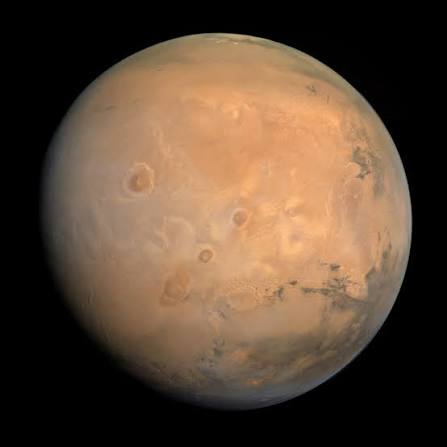
Mars remains a world of profound scientific puzzles. Its surface records extreme physical contrasts, atmospheric acoustics, cognitive illusions, and optical phenomena that reveal the complex interplay between light, dust, and planetary evolution.
1. Hemispheric Asymmetry: The Martian Dichotomy
One of the most striking global features of Mars is the stark contrast between its northern and southern halves, a topographic mystery known as the Martian Dichotomy.
Elevation and Crustal Thickness: The northern hemisphere consists of smooth, flat lowlands that sit approximately 3 to 6 kilometers lower in elevation than the southern hemisphere. The crust beneath the northern lowlands is relatively thin at 20 to 30 kilometers, whereas the crust under the southern highlands is heavily cratered, rugged, and thick, reaching 50 to 80 kilometers.
Age Difference: Impact crater density reveals that the southern highlands represent an ancient crust over 4 billion years old. The northern lowlands show far fewer visible craters, indicating a significantly younger or extensively resurfaced floor.
The Giant Impact Theory: The leading explanation suggests that early in Martian history, a massive protoplanetary body collided with Mars at an oblique angle. This mega-impact excavated the primordial crust of the northern hemisphere, forming the vast Borealis Basin.
The Internal Convection Theory: An alternative model proposes that mantle convection deep inside the young planet generated a degree-one mantle upwelling beneath the southern hemisphere, thickening the southern crust with extensive volcanic melt while leaving the north thin.
2. Sounds from Mars: Acoustics of a Thin Atmosphere
Humanity listened directly to the sounds of another planet for the first time when sensitive acoustic microphones arrived on Mars aboard NASA’s Perseverance rover.
Acoustic Environment: Sound travels differently through the thin Martian air. Because atmospheric pressure is low and carbon dioxide absorbs high-frequency sound waves, high-pitched sounds are heavily muffled and dissipate rapidly, while low-frequency sounds travel much farther.
Speed of Sound Difference: On Earth, sound travels at roughly 343 meters per second. On Mars, sound travels slower at about 240 meters per second for low frequencies, while higher frequencies travel slightly faster, creating a strange acoustic dispersion where different pitches reach a listener at slightly different times.
Recorded Sounds: Microphones recorded the deep rumble of Martian wind gusts, the mechanical clicks and whirs of rover wheels crunching over rocks, the high-speed spinning blades of the Ingenuity helicopter, and the snapping shockwaves of laser strikes breaking down rock samples for chemical analysis.
3. The Face on Mars and Surface Structures: Pareidolia
Optical illusions on Mars have captivated the public imagination for decades, serving as classic examples of pareidolia—the human brain’s tendency to recognize familiar patterns such as faces or artificial objects in random visual data.
The Face on Mars: In July 1976, NASA’s Viking 1 orbiter photographed a 1.5-kilometer mesa in the Cydonia region. Due to low image resolution and a specific solar illumination angle, shadows cast across the eroded hill created the uncanny appearance of a human face staring up into space.
Debunking by High Resolution Imaging: Decades later, NASA’s Mars Global Surveyor and Mars Reconnaissance Orbiter imaged Cydonia with crisp, high-resolution cameras under multiple lighting conditions. The images revealed a natural, heavily eroded mesa devoid of artificial features, proving that the original face was simply an artifact of low resolution and shadows.
Other Famous Optical Illusions: High-resolution surface photography has revealed dozens of geological formations that trigger pareidolia, including rocks shaped like door openings, animals, bone fragments, and mechanical parts, all of which are natural basaltic rocks carved by relentless wind erosion.
4. Little-Known Scientific Facts: Blue Sunsets on Mars
While daytime skies on Earth are blue and sunsets are brilliant orange or red, Mars exhibits the exact opposite optical behavior, featuring a butterscotch-pink daytime sky and striking blue sunsets.
Dust-Driven Light Scattering: On Earth, clean air molecules scatter sunlight through Rayleigh scattering, which deflects short blue wavelengths outward into the daytime sky and leaves longer red wavelengths visible at sunset. On Mars, the atmosphere is thin and packed with fine iron-rich dust particles measuring roughly one micrometer across.
Mie Scattering: Sunlight striking these micron-sized dust grains undergoes Mie scattering. Martian dust scatters red light widely across the sky throughout the day, creating a reddish daytime horizon.
Forward Scattering at Sunset: When the Sun approaches the horizon, its light passes through a much longer column of dust-laden air. Martian dust scatters blue light tightly forward toward the viewer much more efficiently than red light. As a result, a cool blue halo surrounds the setting Sun, creating a blue twilight sky around the solar disk.
CONCLUSION: THE GATEWAY TO HUMANITY’S INTERPLANETARY FUTURE
Mars stands at a profound crossroads in human history. Once a distant point of reddish light associated with war and ancient myth, it has evolved through centuries of scientific observation into our primary laboratory for understanding how planetary habitability arises, thrives, and ultimately collapses.
The story of Mars is a study in stark planetary contrasts. Beneath its quiet, freezing, red dust deserts lie the dramatic signatures of a dynamic past—massive river deltas, dried-up ocean basins, and colossal volcanoes that dwarfed anything found on Earth. In its early history, Mars shared a strikingly similar environment to early Earth, possessing the essential raw ingredients for life to emerge. Understanding why Mars lost its magnetic heart and thick atmospheric blanket—while Earth flourished into a resilient, living biosphere—remains one of the central questions of modern planetary science.
Today, Mars serves as both a window into our Solar System’s ancient history and the ultimate proving ground for human ingenuity. As an armada of orbiters, rovers, and future sample return missions continues to probe its surface for ancient biosignatures, Mars challenges us to push the boundaries of engineering, life support, and space exploration. Whether as a target for scientific discovery, a sanctuary for preserved ancient history, or the first stepping stone toward becoming a multi-planetary species, the Red Planet will remain central to humanity’s journey into the cosmos for generations to come.


