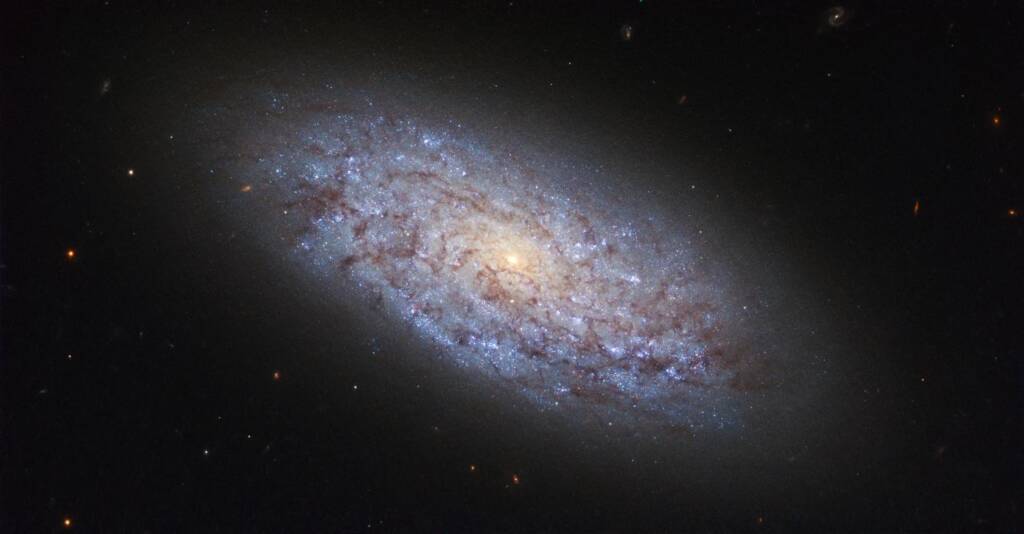
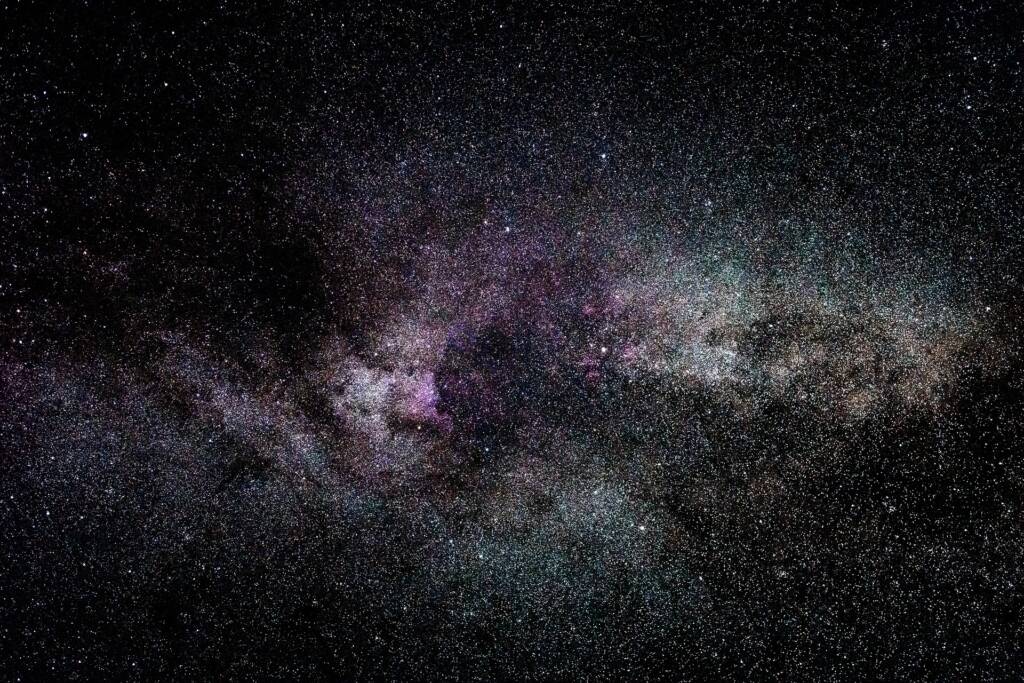
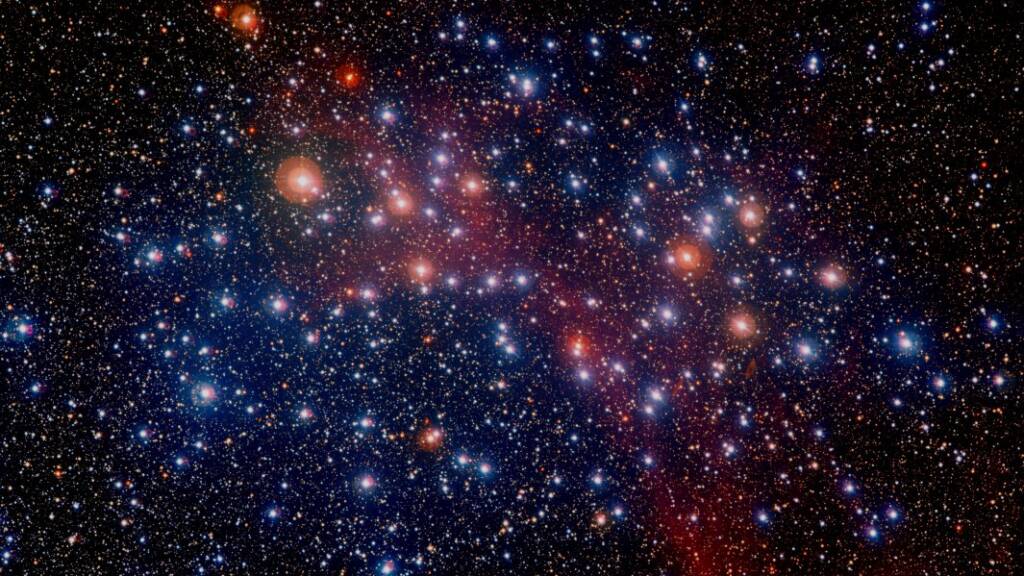
Galaxies – these are enormous, gravitationally bound systems containing millions to trillions of stars, gas, interstellar dust, and dark matter, orbiting a common center of mass. Galaxies play a fundamental role in the Universe, acting as „cosmic cities” where key physical and chemical processes take place.
In the observable Universe, it is estimated that there are hundreds of billions of large galaxies and several trillion dwarf galaxies. All these galaxies, in turn, form billions of galaxy groups contained within millions of galaxy superclusters.
Here is key information about galaxies:
Composition and structure: In addition to stars, galaxies contain nebulae and supermassive black holes at their centers. Over 90% of their mass consists of invisible dark matter.
Sizes and distances: Sizes range from a few thousand to several hundred thousand light-years, and the distances between them reach millions of light-years.
Birthplace and life of stars: Galaxies contain vast amounts of gas and dust from which new stars are formed. They are „nurseries” where stars are born, live, and die.
Creating the structure of the Universe: Galaxies are not scattered chaotically. Thanks to gravity, they form larger structures: groups, clusters, and superclusters, which define the appearance of the cosmos on the largest scales, creating the so-called cosmic web.
Production and recycling of matter: Inside galaxies, thanks to stellar evolution (supernovae), heavier elements (carbon, oxygen, iron) are created. Galaxies process this material, allowing for the formation of subsequent generations of stars, and ultimately planets and life.
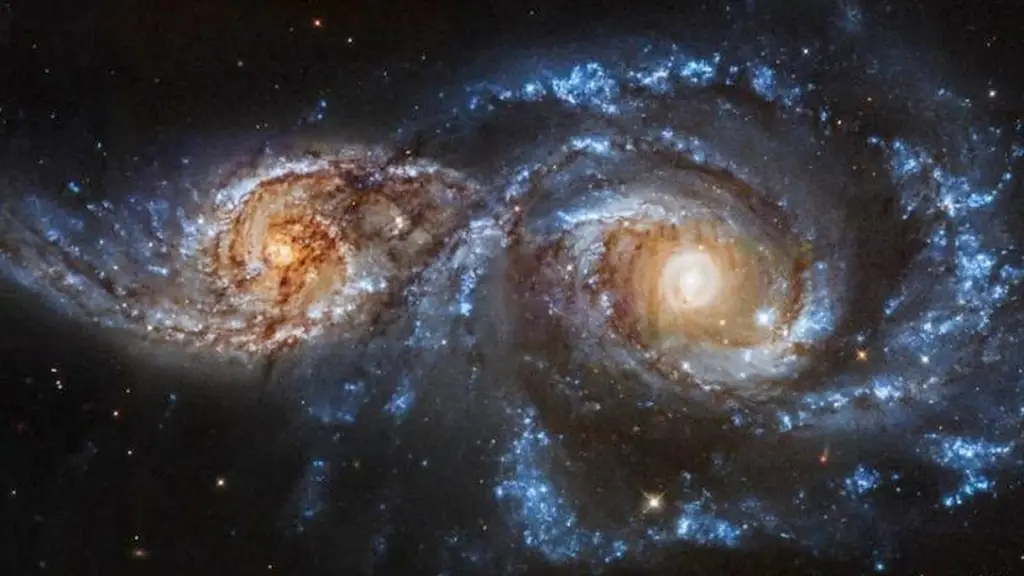
Cosmic evolution laboratories: Galaxies evolve, collide, and merge, which changes their shape (e.g., from spiral to elliptical) and drives star-forming processes.

Storage of dark matter: Galaxies are surrounded by a „halo” of dark matter, which constitutes their largest mass component and holds them together.
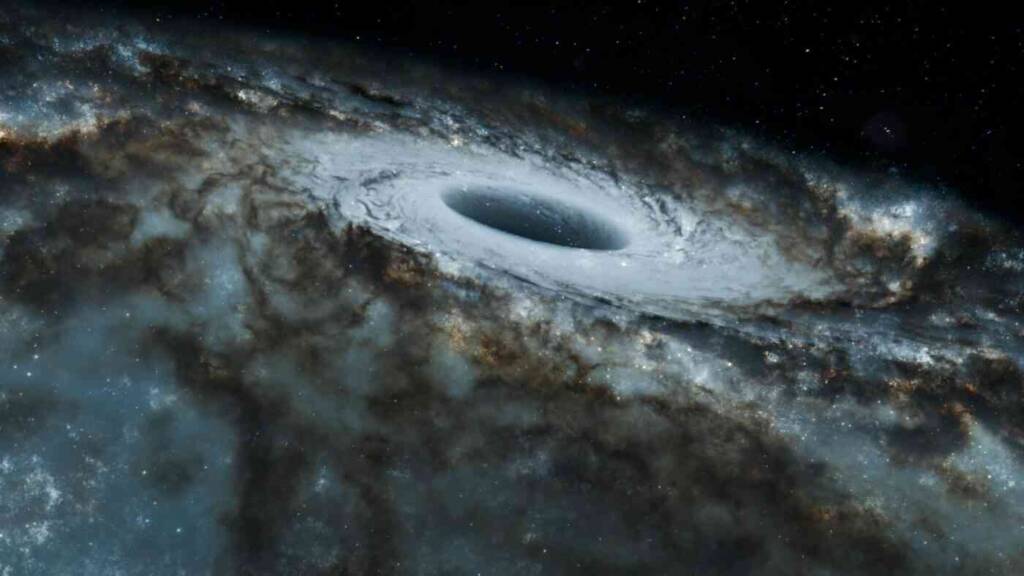
Home for black holes: The centers of most large galaxies contain supermassive black holes that influence the evolution of the entire galaxy by emitting enormous amounts of energy.
Hubble’s classification of galaxies:
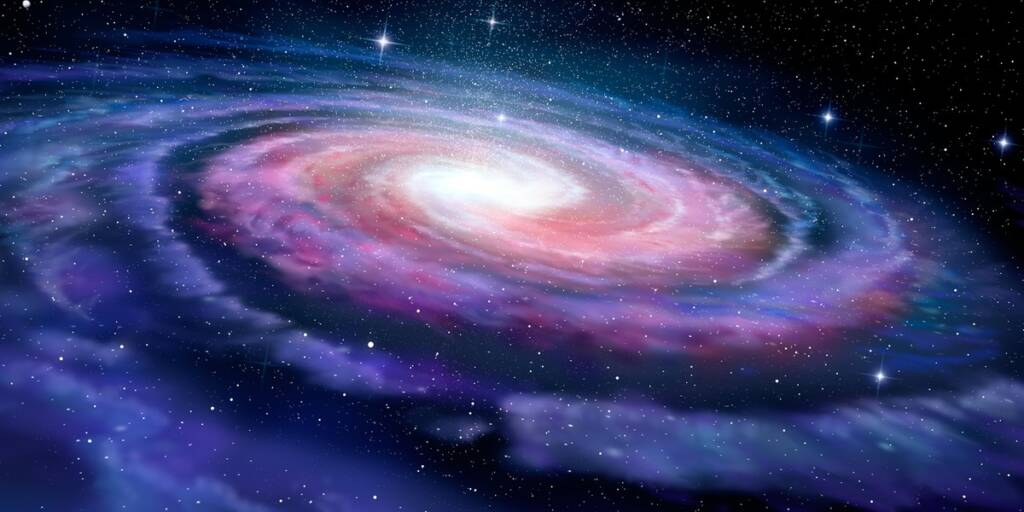
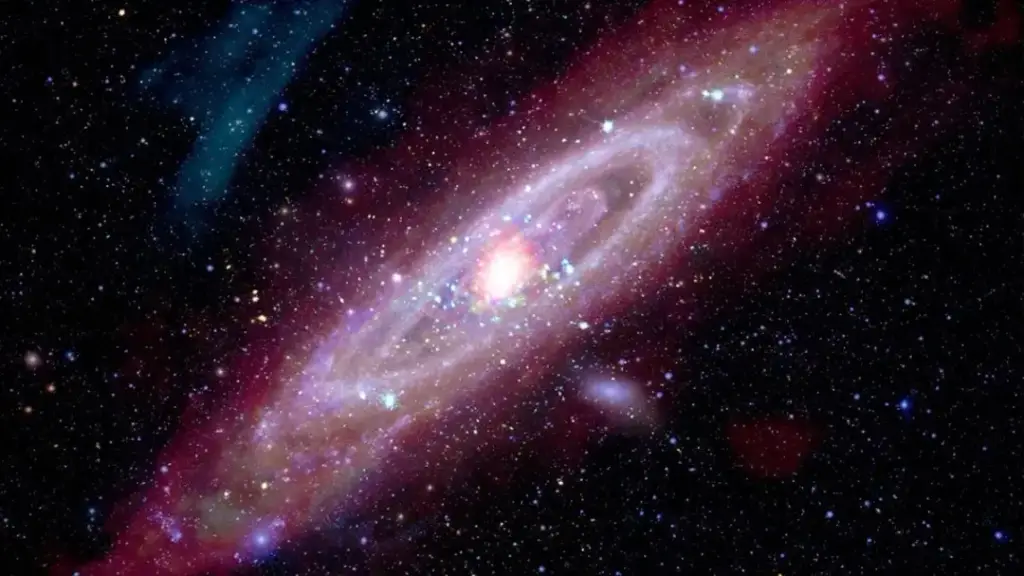
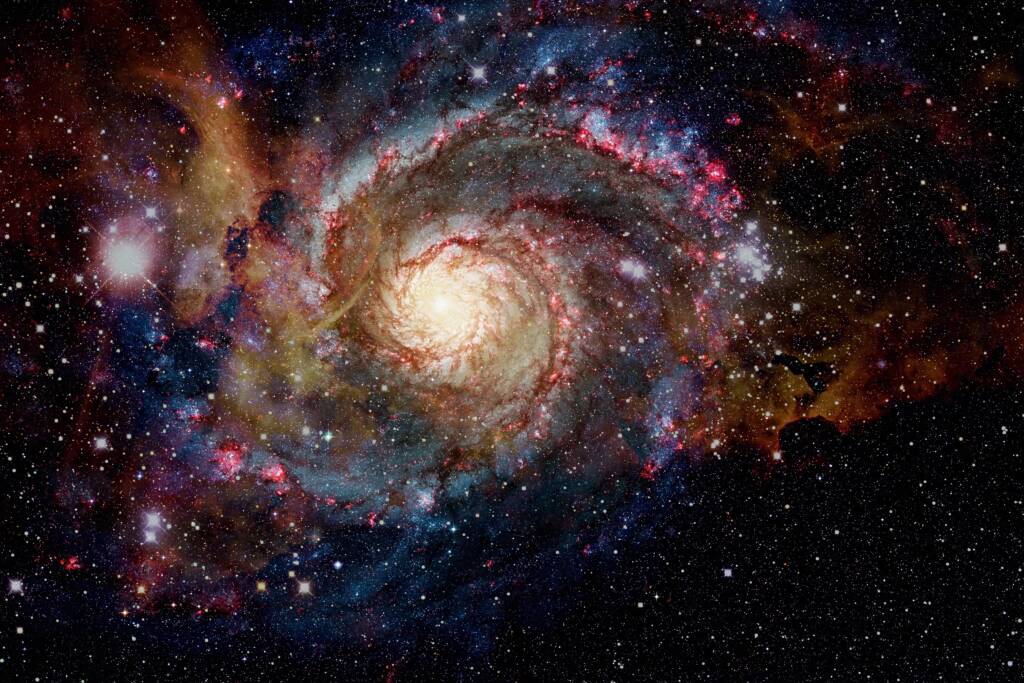
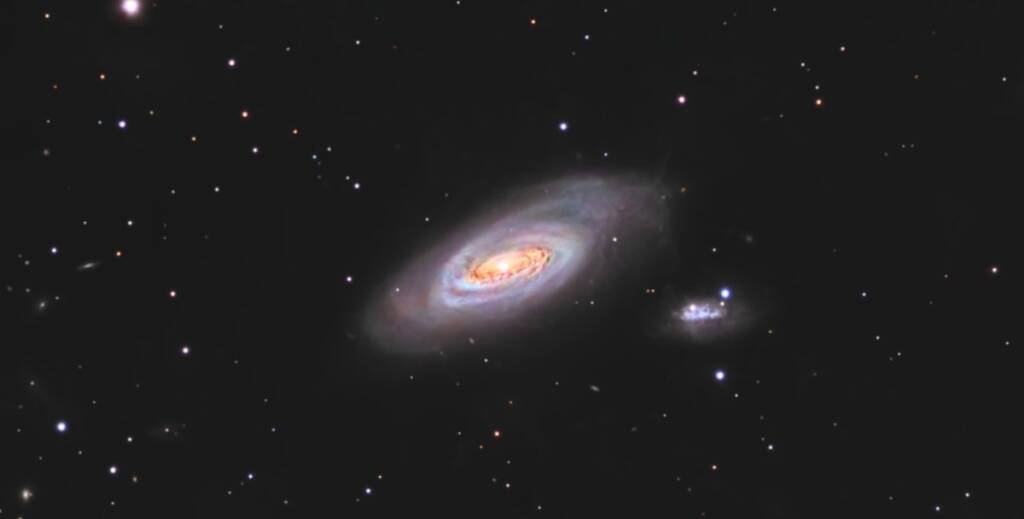
- Spiral – this is a type of stellar system characterized by a flat disk with a nucleus and arms arranged in a spiral. Spiral arms are rich in young, hot, blue stars, while the nucleus often contains older, red stars. They constitute about 75% of the bright galaxies in the sky, contain a lot of gas and dust, and intensely form new stars. They are divided into ordinary spiral galaxies and barred spiral galaxies.
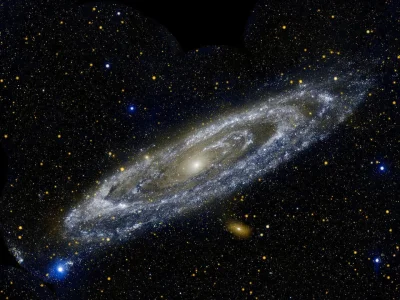
- Ordinary (type SA) – a disk-shaped structure with distinct spiral arms emerging directly from the nucleus, without a central bar. e.g., Andromeda Galaxy (M31).
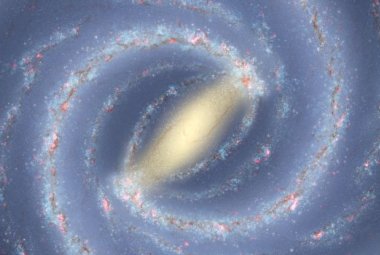
- With a bar (type SB) – a structure in which the arms do not emerge directly from the nucleus, but from the ends of a central bar-shaped structure (belt) built of stars, such as the Milky Way.
Regarding the largest ordinary spiral galaxy (not possessing a central bar, classification SA), this title is often attributed to the galaxy UGC 2885 (called „Godzilla’s Galaxy” or Rubin’s Galaxy). It is located about 232–274 million light-years from Earth in the constellation Perseus. It has a diameter of about 438,000 light-years, meaning it is over 2.5 times wider than the Milky Way.
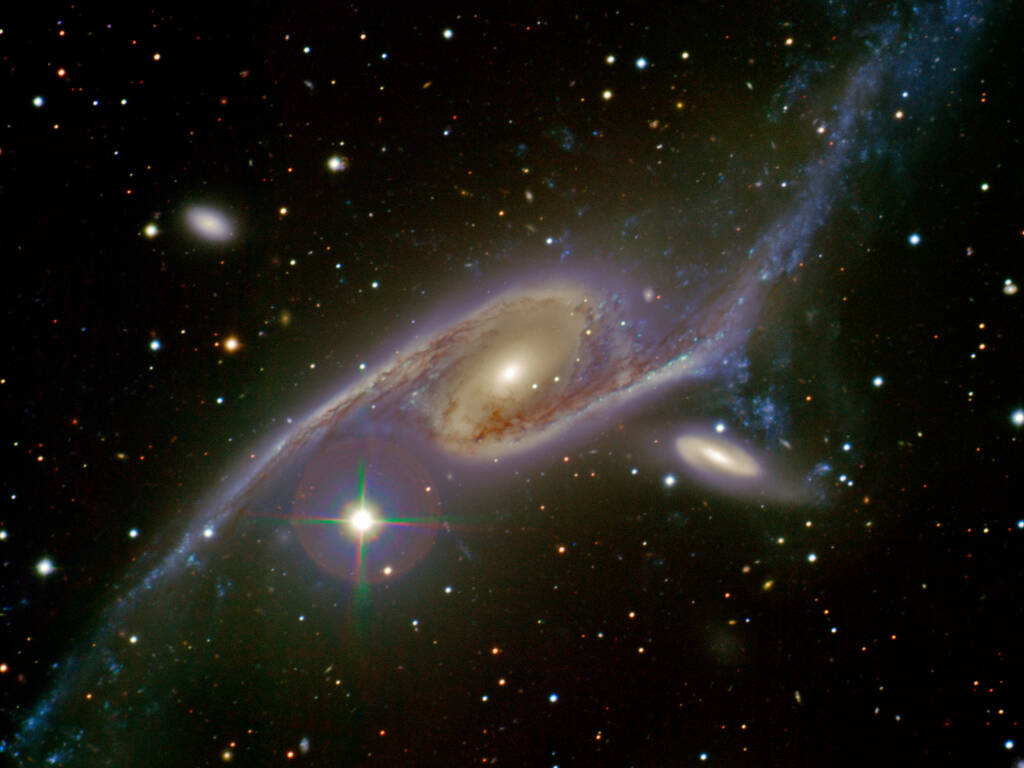
The largest known barred spiral galaxy is NGC 6872 (Condor Galaxy) – it is a giant (type SBb/P) located in the constellation Pavo, about 212 million light-years away. Recognized as one of the largest known spiral galaxies, it has a diameter of over 522,000 light-years (more than 5 times more than the Milky Way). Its unusual, elongated shape is the result of strong gravitational interactions with the neighboring lenticular galaxy IC 4970.
Spiral galaxies are dynamic, and their spiral arms are density waves that move through the disk, compressing gas and triggering the formation of new stars.
- Elliptical – this is a type of galaxy with a regular, spherical or ellipsoidal shape, smooth structure, and brightness decreasing from the center to the edges. They consist mainly of old stars and contain very little dust and interstellar gas, which means a lack of intense star-forming processes. They are among the oldest and largest structures in the Universe. They occur in various sizes – from dwarf (a few thousand light-years) to giant elliptical (up to 3.3 million light-years). Depending on the observed flattening of the galaxy, elliptical galaxies are divided into eight types from E0 to E7. Therefore, E0 type galaxies have a nearly circular shape in the sky. The most well-known example of an E0 type galaxy is Messier 89 (M89).
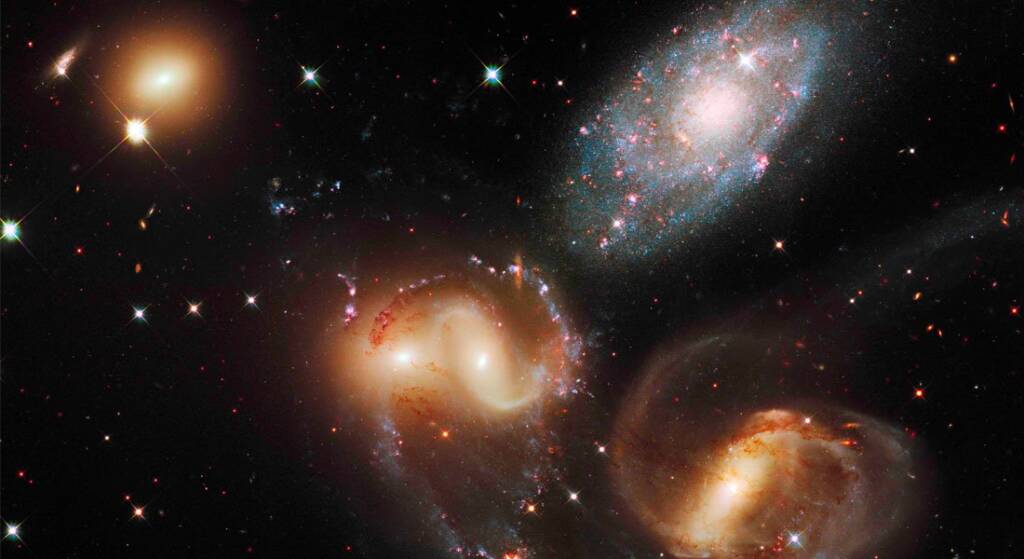
E1, E2… denote galaxies with increasing flattening. E7 type galaxies are the most flattened and resemble an ellipse with an axis ratio of 1:3. No galaxies with flattening greater than E7 have been observed.
An example is the galaxy M87 (Virgo A) in the Virgo cluster. It is a giant elliptical galaxy in the constellation Virgo, located about 53-55 million light-years away.
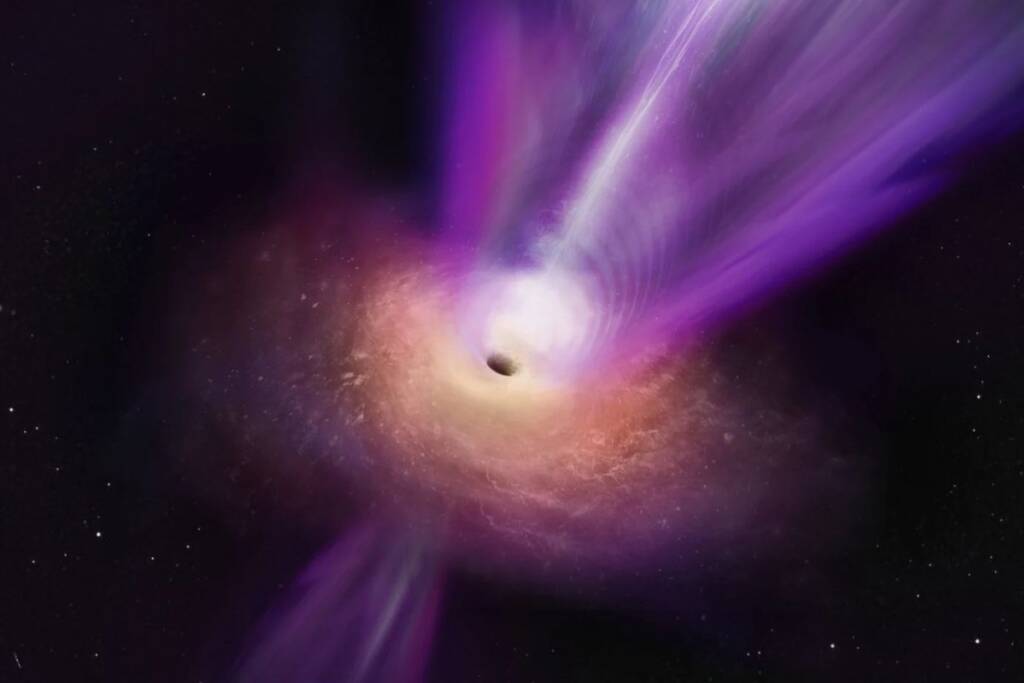
It is the main, brightest component of the Virgo Cluster, containing up to 100 trillion stars. It is famous for the supermassive black hole (M87*) at its center, the first one ever captured in a photo (2019), which generates a powerful jet. It has a mass estimated at billions of solar masses, and its image was recorded by the Event Horizon Telescope.
Unique in this category of galaxies is the giant galaxy IC 1101. It belongs to the Abell 2029 galaxy cluster and is its main component. It is the largest known galaxy (in terms of size, not mass); its diameter is about 4 million light-years. It contains about 400 times more stars than the Milky Way and can be up to 2000 times more massive due to the large amount of gas and dark matter. Its shape more closely resembles a lens.
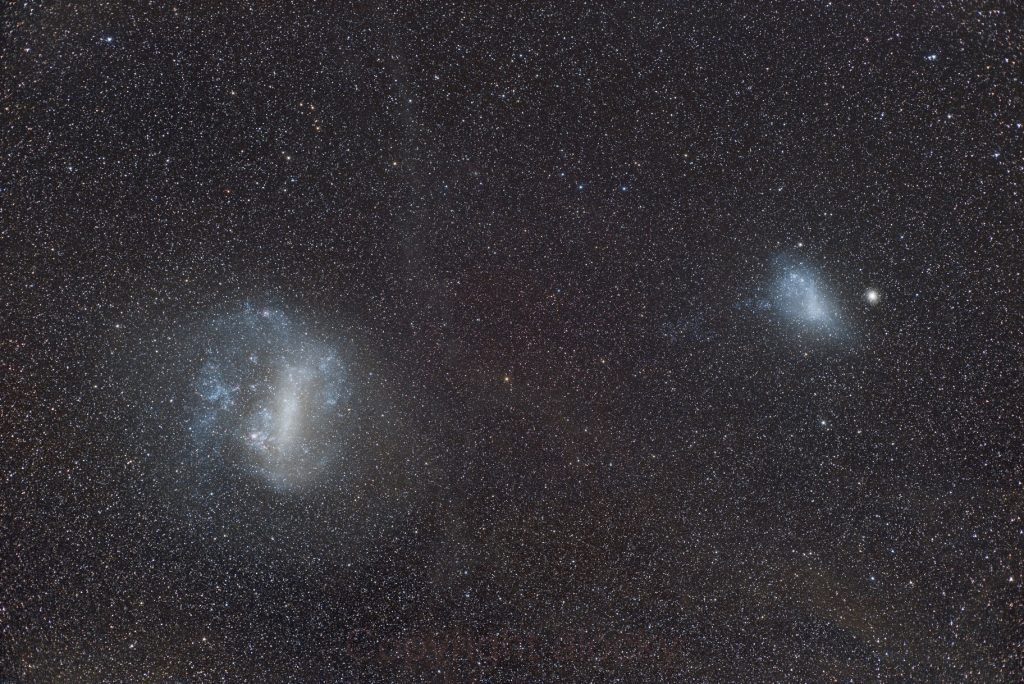
Irregular – these are stellar systems lacking a symmetrical shape, a central core, and spiral arms, which do not fit into the Hubble classification. They are usually smaller formations, rich in gas and dust, providing a site for intense new star formation. Their chaotic appearance is often the result of gravitational interactions with other galaxies. They have no defined shape and are often formed as a result of collisions. They look „torn” or deformed. They are typically smaller than spiral galaxies. Examples include the Magellanic Clouds (Large and Small), which are visible from the Southern Hemisphere and are satellite galaxies of the Milky Way. Both galaxies, belonging to the Local Group, are rich in young stars and nebulae, making them a „cosmic laboratory” for studying star formation. Both clouds are gravitationally connected and linked by the so-called Magellanic Stream.
Among all types of galaxies, there are also dwarf galaxies corresponding to them in shape. These are small galaxies usually consisting of a million to several billion stars. They are significantly smaller than typical galaxies (such as the Milky Way), often serving as its satellites. They are characterized by low luminosity and often a high content of dark matter. They usually have a diameter of less than 40,000 light-years. An example is the dwarf galaxy named NGC 5949. Thanks to its proximity to Earth – it is located about 44 million light-years from the Solar System, in the constellation Draco, which places it in the cosmic neighborhood of the Milky Way – this object is an ideal target for astronomers to study dwarf galaxies.
Galaxies form galaxy groups, clusters, and superclusters.
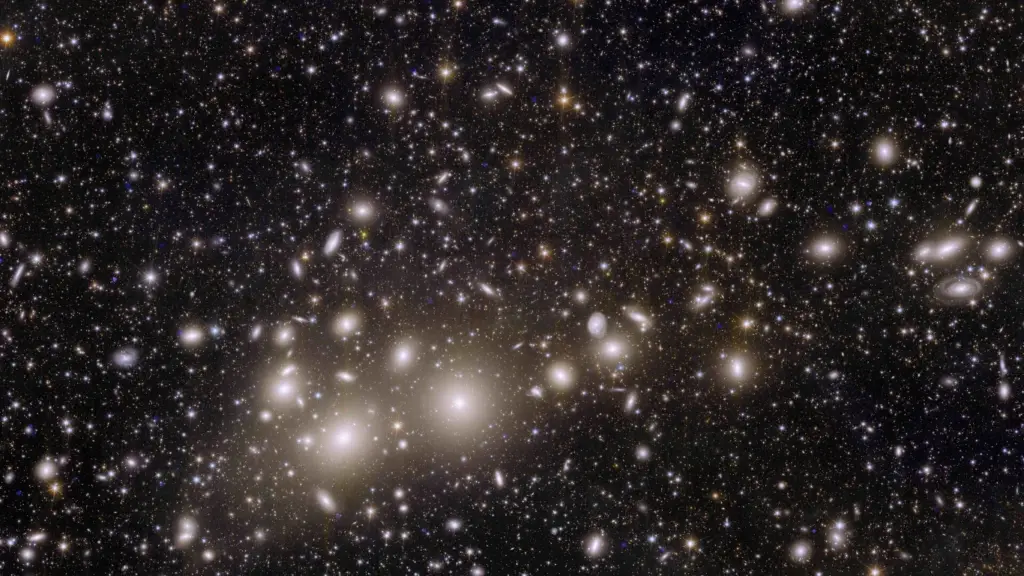
Galaxy groups – these are small, gravitationally bound systems usually containing from a few to about 50 galaxies, distributed over an area with a diameter of up to approximately 1-2 megaparsecs (Mpc). They are the smallest clusters of galaxies, often dominated by one or two bright galaxies. They consist of spiral, elliptical, and dwarf galaxies. Usually, one or a few bright galaxies dominate, surrounded by weaker satellites. Only a small fraction of galaxies in the Universe are not gravitationally bound to others (so-called field galaxies); most belong to groups or larger structures. Our Galaxy (the Milky Way) belongs to the Local Group, which contains over 50 galaxies, and its main components are the Milky Way and the Andromeda Galaxy.
Galaxy clusters and superclusters – these are some of the largest known structures in the Universe, constituting huge systems consisting of groups and clusters of galaxies. They usually span hundreds of millions of light-years and concentrate thousands of galaxies, forming filamentary structures separated by voids. They reach sizes on the order of 100-500 million light-years, and their mass can be [missing value] solar masses.
Unlike smaller clusters, superclusters are not tightly gravitationally bound (they do not relax), but rather drift, stretching along with the expansion of the Universe. Galaxy superclusters are the „titans” of the cosmos, and their distribution forms the so-called cosmic web, which is the result of gravitational instability in the early Universe. Our Milky Way belongs to the Local Group, which is part of the Laniakea Supercluster.
In summary, without galaxies, the Universe would be a homogeneous, almost empty space filled with gas. It is in galaxies that most of the visible matter is concentrated, enabling complex physical processes.