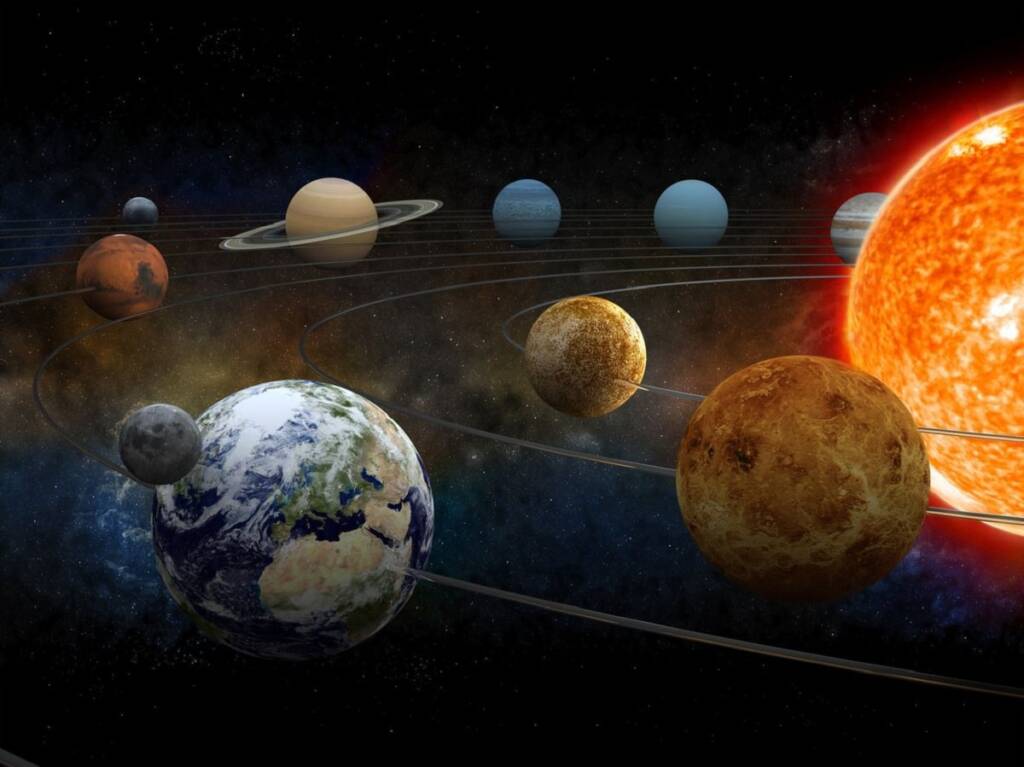
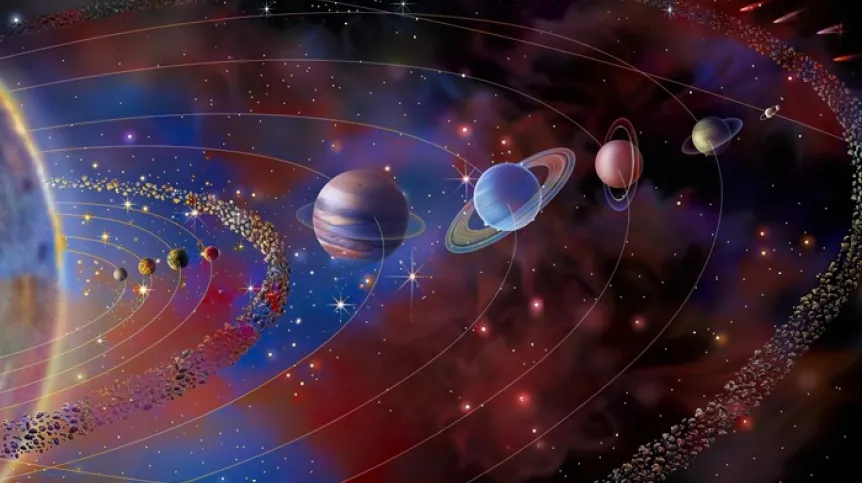
The Solar System – is a planetary system in the Orion Arm of the Milky Way galaxy, consisting of a central star – the Sun – and the celestial bodies gravitationally bound to it. It includes 8 major planets, their moons (over 205 known), dwarf planets (e.g., Pluto), as well as millions of asteroids (mainly between Mars and Jupiter), comets and meteoroids orbiting in elliptical orbits, and interplanetary dust and gas.
Location of the Solar System
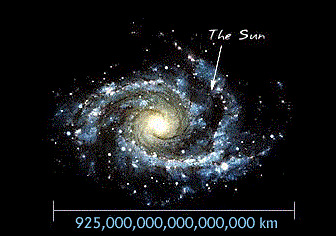
The location of the Solar System in the Galaxy is probably one of the factors conditioning the evolution of life on Earth. Its orbit in the Galaxy is close to a circle, and the orbital speed is roughly the same as the orbital speed of the galactic arms, which means that passage between the arms happens rarely. In the spiral arms, supernova explosions occur much more frequently than between them, which can have a catastrophic impact on the climate and biosphere of planets; some scientists speculate that part of the extinctions on Earth could have been caused by such phenomena. Earth is located in a relatively stable place, and therefore favorable to the evolution of life. The Solar System also lies far enough from the densely star-filled regions of the Galactic center, where close passages of stars could dislodge bodies from the Oort Cloud and send many comets to the interior of the Solar System, causing catastrophic collisions. Intense radiation from the Galaxy’s core could also destroy life on Earth.
Structure of the Solar System
The center of the Solar System is the Sun, a main-sequence star of spectral type G2, which contains 99.86% of the known mass of the System and dominates it gravitationally. Jupiter and Saturn, the two largest bodies orbiting the Sun, account for more than 90% of the remaining mass of the system.
Most of the orbits of large bodies orbiting the Sun are located close to the plane of Earth’s orbit, known as the ecliptic, while the orbits of comets and Kuiper Belt objects are usually inclined at a greater angle to the ecliptic. All planets and most other bodies orbit the Sun in the direction of its own rotation (counter-clockwise, looking down from the Sun’s north pole). There are also exceptions such as Halley’s Comet.
The orbital motion of celestial bodies orbiting the Sun was described by Johannes Kepler, formulating the laws of planetary motion. According to Kepler’s First Law, each body orbits (approximately) in an ellipse, and the Sun lies at one of the foci of that ellipse. The closer a body is to the Sun, the faster it moves. The orbits of planets are close to a circle, however, many comets, asteroids and Kuiper Belt objects orbit in highly elongated ellipses, and their distance from the Sun changes during the orbit. The maximum approach to the Sun is called perihelion, and the greatest distance – aphelion.
Due to the vast differences in distance ratios, many visualizations of the Solar System show planetary orbits at similar distances to each other. In reality, with a few exceptions, the further a planet or asteroid belt orbits from the Sun, the more the distance between its orbit and the orbit of the previous body increases. For example, Venus is on average 0.33 au further than Mercury, while Saturn – 4.3 au further than Jupiter, and Neptune – 10.5 au further than Uranus. Attempts were made to determine the relationship between these distances (see: Titius-Bode Law), however, no theory of this type found an explanation and was not accepted.
Key components of the Solar System are:
Sun: Central, largest star, constituting approx. 99.8% of the mass of the entire system.
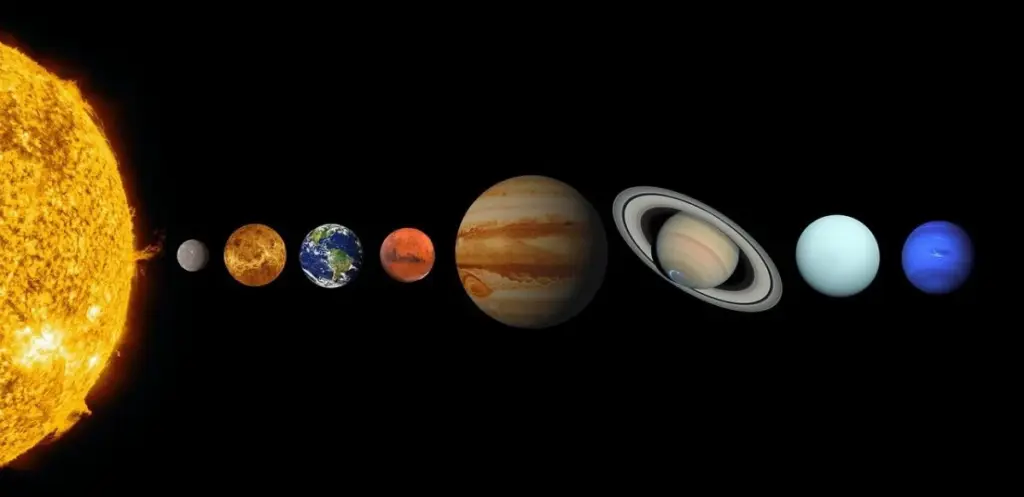
Asteroid belt – Mercury, Venus, Earth, Mars (rocky/inner planets) and Jupiter, Saturn, Uranus, Neptune (gas giants/outer planets).
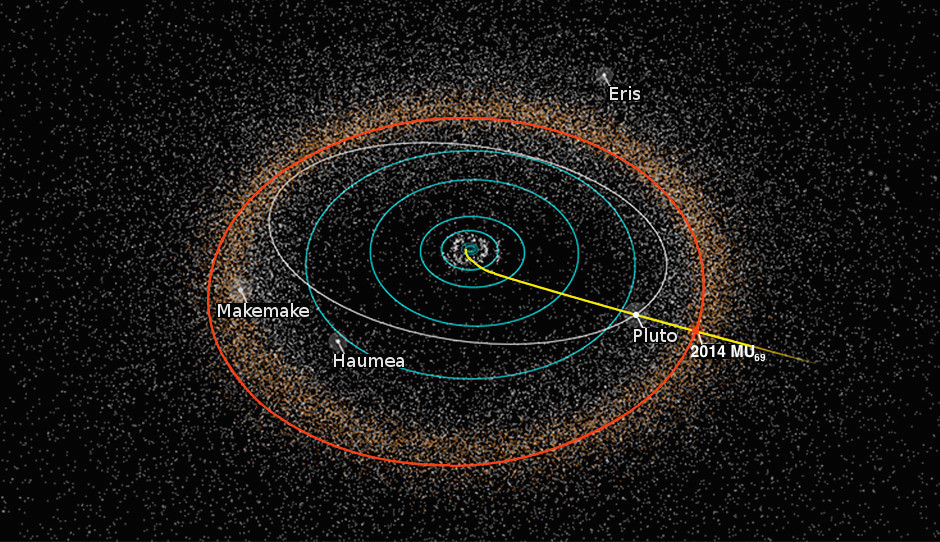
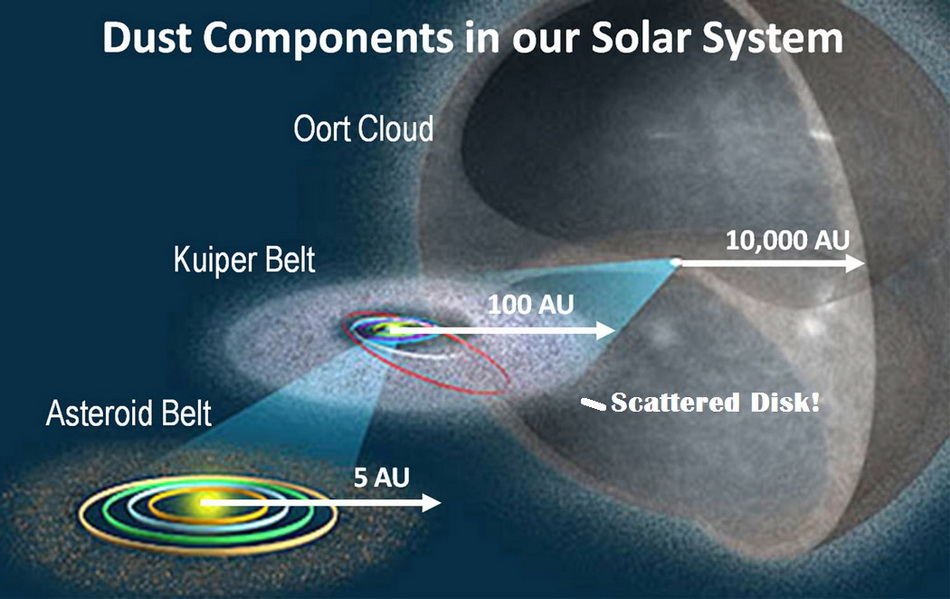
Kuiper Belt – is a huge ring of planetoids built mainly of ice. It extends at distances of 30–50 au from the Sun. It consists mainly of small Solar System bodies, but some of its largest objects, such as Quaoar, Varuna or Orcus, may under the IAU definition be recognized as dwarf planets in the future. Over a thousand objects have been identified, of which several have a diameter of approx. 1000 km or larger. It is estimated that there are over 100,000 objects in the belt with a diameter exceeding 50 km consisting of rocky-ice objects. Kuiper Belt objects can be roughly divided into “classical” ones and those in orbital resonance with Neptune, i.e. those whose orbital period is related to the planet’s orbital period. A 2:3 resonance means that the body orbits the Sun twice during three orbits of the Sun by Neptune. This type of resonance concerns objects periodically approaching the Sun in orbital motion more closely than Neptune, e.g. Pluto. From the name of this dwarf planet, objects in such resonance are called plutinos. The “classical” part of the belt contains objects not in resonance with Neptune and extends roughly from 39.4 to 47.7 au. They are called cubewano, taken from the designation of the first object of this type discovered, 1992 QB1 – currently (15760) Albion.
Scattered disc overlaps the Kuiper Belt, but extends much further outwards. This area is believed to be the source of most short-period comets. Probably the scattered disc objects were thrown into erratic (irregular) orbits by the gravitational interaction of Neptune, which moved in a more distant orbit during the formation of the Solar System (see: planetary migration). Most scattered disc objects (SDO) have perihelia in the Kuiper Belt, but aphelia extend up to 150 au from the Sun. SDO orbits are also strongly inclined to the ecliptic plane, and are often almost perpendicular to it. Some astronomers consider the scattered disc as part of the Kuiper Belt and use the term “scattered Kuiper Belt objects”.
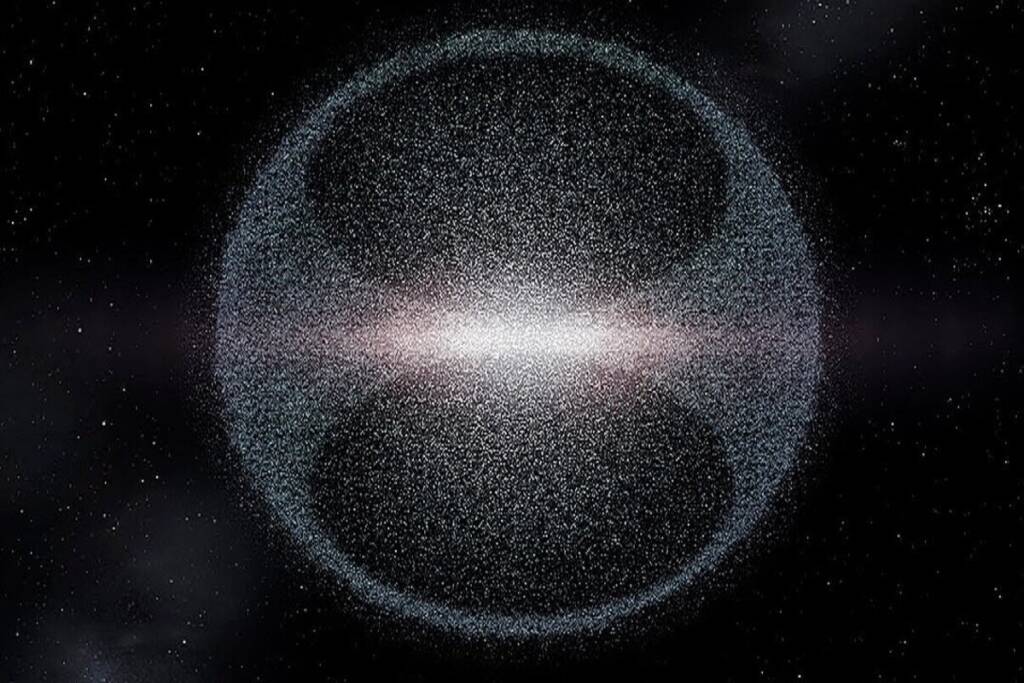
Hypothetical Oort Cloud – is a very large group of objects (from a billion to a trillion), built mainly of ice, forming a flattened part in the inner part, and further a spherical envelope of the Solar System. It extends from 300 to 50,000 au (almost a light year) from the Sun, and maybe even twice as far. Presumably, it consists of planetesimals ejected from the inner regions of the System as a result of the gravitational interactions of large planets in the early stages of its formation. The structure of the cloud is subject to the influence of other stars, their close passages, which happened in the past and will happen in the future, can dislodge comets from it towards the planets.
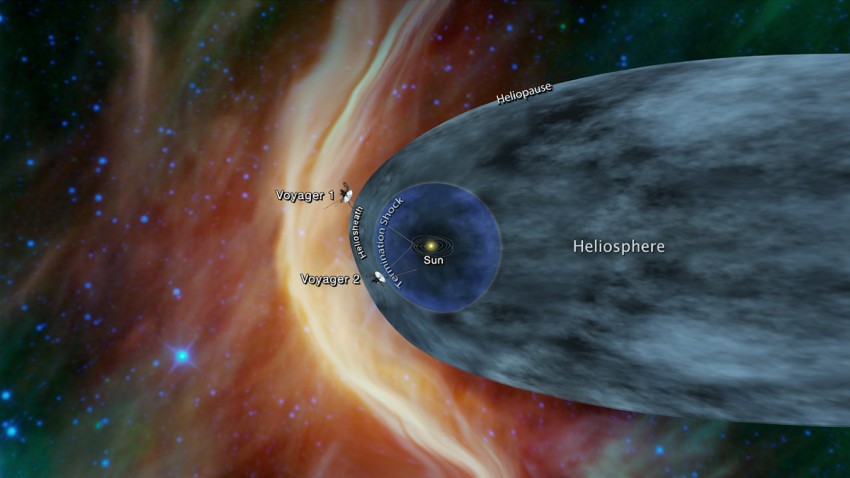
Heliopause – is the outer, conventional boundary of the Solar System, where the solar wind (the stream of particles from the Sun) loses its power and collides with the interstellar medium. It acts as a protective shield (heliosphere) against cosmic radiation. It is located about 120-123 astronomical units from the Sun. Beyond this boundary, solar matter ceases to dominate, and matter from interstellar space begins. The opposite of the Heliopause is the Heliosphere – the area around the Sun in which the pressure of the solar wind prevails over the pressure of galactic winds, creating a “bubble” of material ejected by the Sun.
Five Solar System objects classified as dwarf planets are:
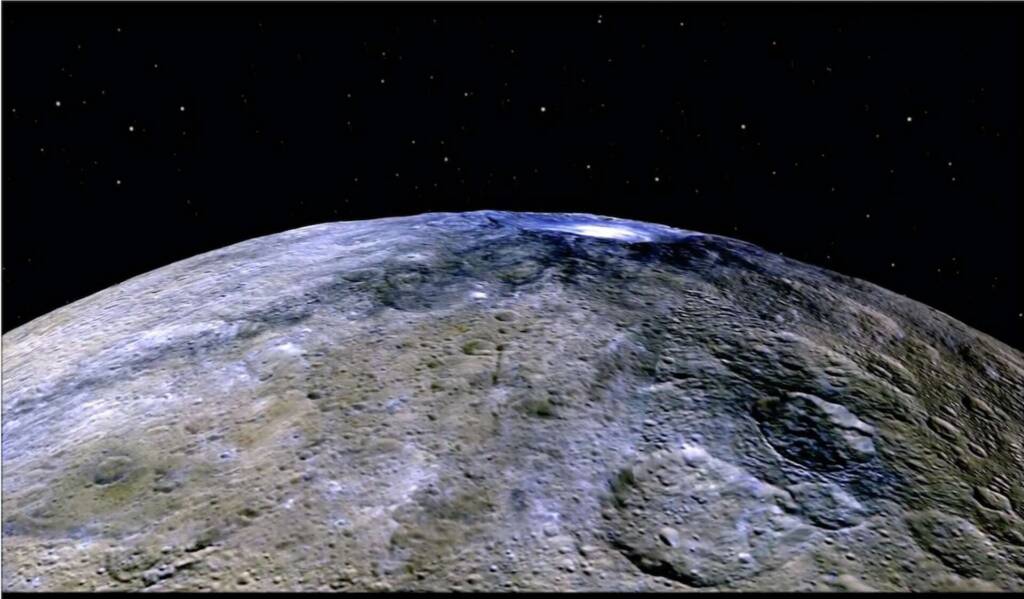
Ceres – is the largest and earliest discovered object in the asteroid belt. It has a diameter of 952.4 km, its mass accounts for about 1/3 of the total mass of the belt. After its discovery in 1801, it was considered a planet, but discoveries of similar objects led to it being referred to as a minor planet or asteroid. In 2006, it was reclassified – it was recognized as a dwarf planet.
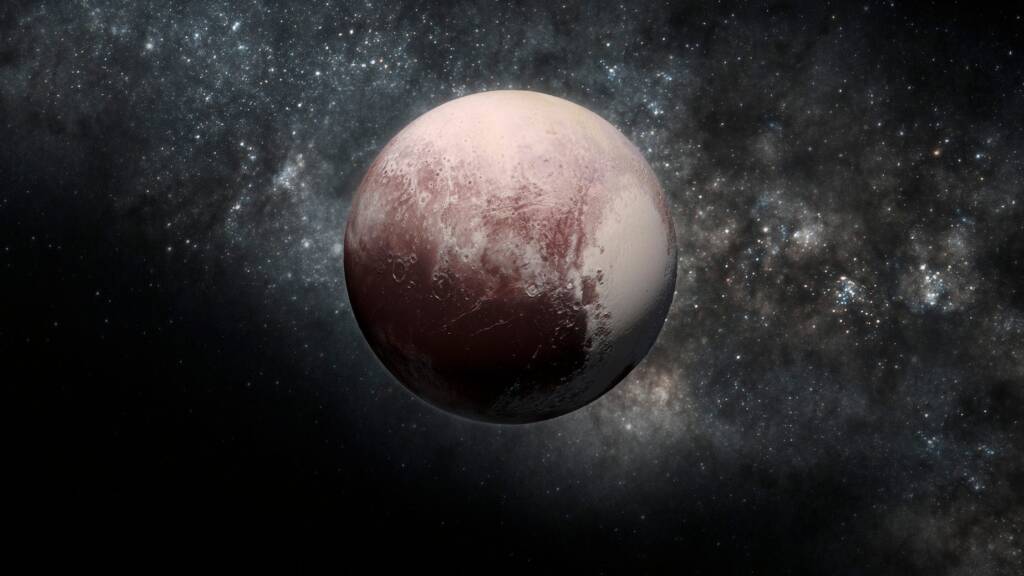
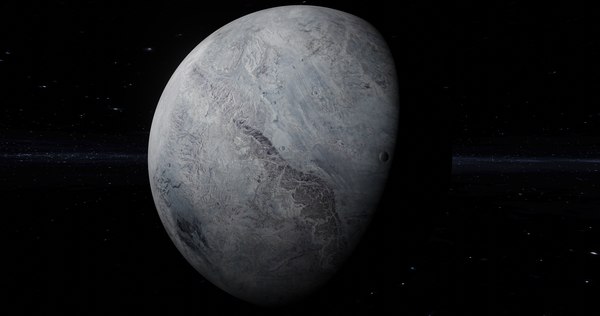
Pluto (until August 24, 2006 recognized as the 9th planet of the System), is the largest known object in the Kuiper Belt. When it was discovered in 1930, it was recognized as the ninth planet; the situation changed in 2006 with the introduction of a new definition of a planet. Pluto has a relatively eccentric orbit inclined at an angle of 17 degrees to the ecliptic plane and extending from 29.7 au at perihelion (inside Neptune’s orbit) to 49.5 au at aphelion. Its largest moon Charon has a mass only 7 times smaller than Pluto, which is why it forms a double dwarf planet with Pluto, meaning that the point around which they orbit (barycenter) is located in the space between them. Four significantly smaller moons, Nix, Hydra, Kerberos and Styx, orbit Pluto and Charon in more distant orbits.
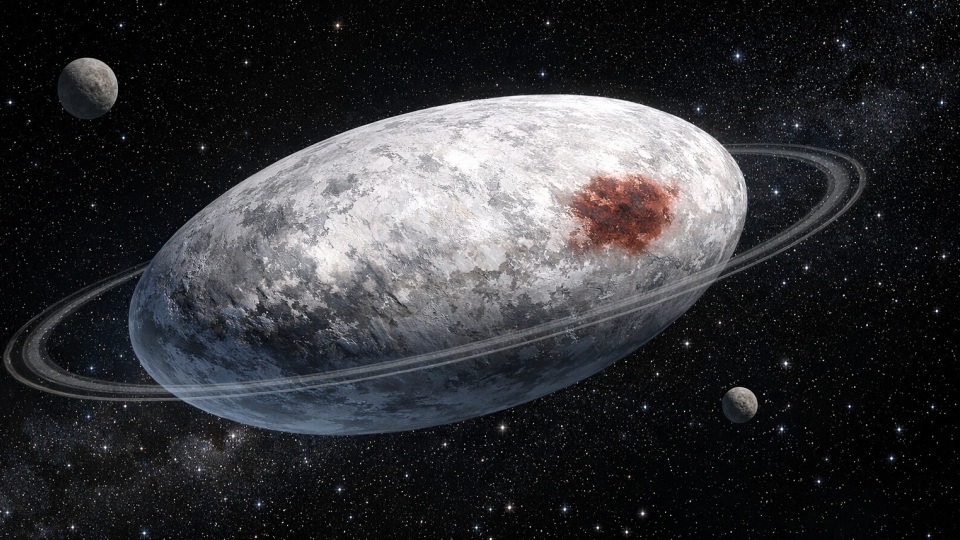
Haumea – is an unusual, fast-rotating dwarf planet located in the Kuiper Belt beyond the orbit of Neptune, known for its elongated, egg-like shape, having two moons (Hi’iaka and Namaka) and a ring. It is a trans-Neptunian object that, due to its rapid rotation (approx. 4h), has taken a form close to an ellipsoid.
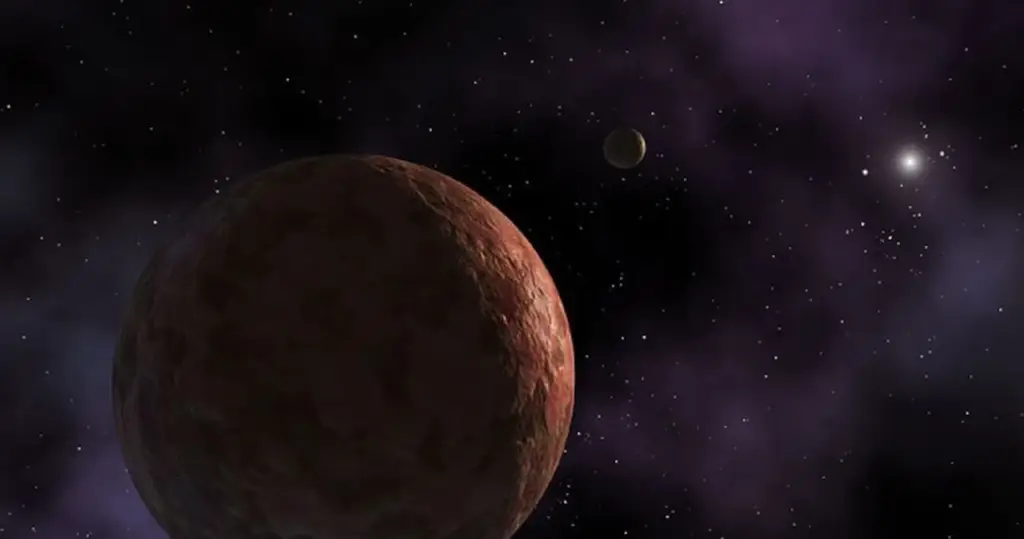
Makemake – the second largest object in the Kuiper Belt, a dwarf planet with a diameter of about 3/4 of Pluto’s diameter, is one of the few Kuiper Belt bodies without a discovered satellite. Its extremely low average temperature (about 30 K) makes its surface most likely covered with methane and ethane ice. Its orbit is strongly inclined to the ecliptic plane at an angle of 29°, and its orbital period around the Sun is nearly 310 Earth years.
Eris – the largest known object in the scattered disk. Its discovery caused a debate over a new definition of a planet, because this body was no smaller than Pluto, and it was even thought to be larger. According to modern measurements, it has a diameter of approximately 2330 km, almost the same as Pluto. However, it has the largest mass of the known dwarf planets. It has one known moon, Dysnomia. Like Pluto, its orbit is highly eccentric; Eris has a perihelion at a distance of 38.2 au from the Sun (Pluto’s average distance), and an aphelion at 97.6 au and is steeply inclined to the ecliptic.
Planetoids
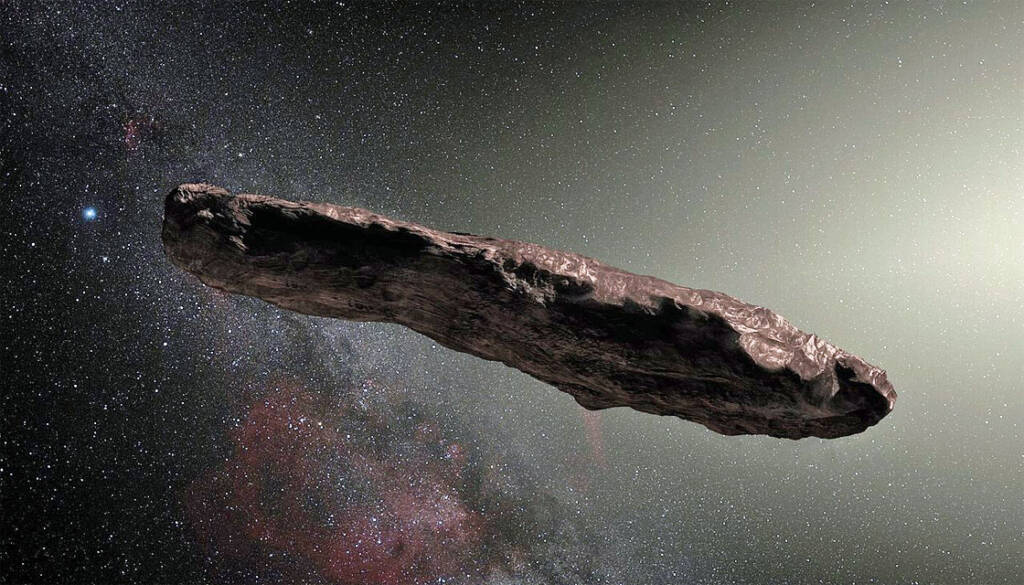
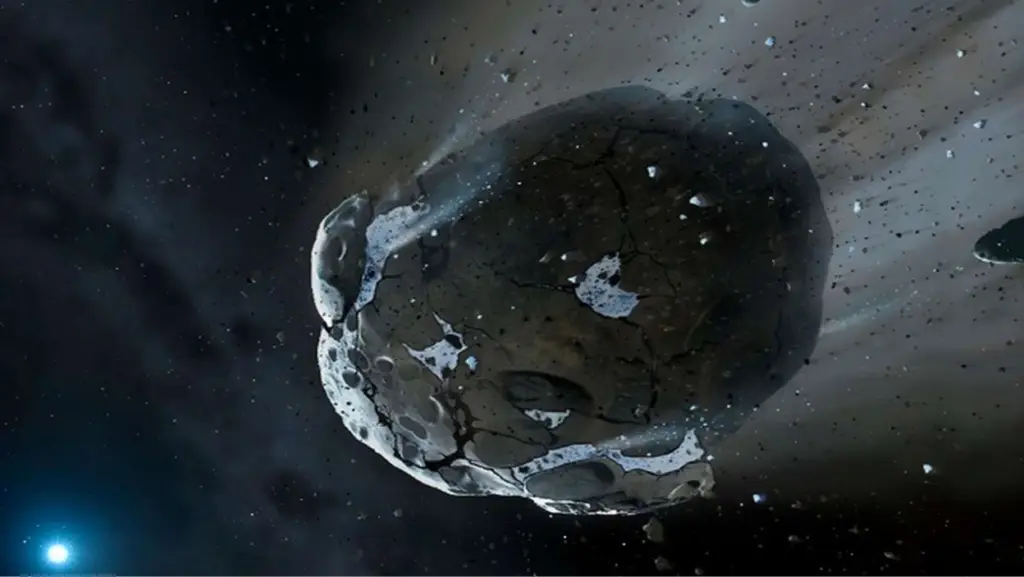
These are mostly small bodies of the Solar System, consisting mainly of rocky and metallic minerals.
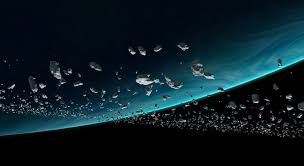
The main asteroid belt occupies an orbit between Mars and Jupiter, in the area from 2.12 to 3.3 au from the Sun. It is believed to be a remnant of the Solar System formation process, i.e., matter that failed to combine into a larger object due to the gravitational influence of Jupiter.
The size of planetoids ranges from hundreds of kilometers to microscopic sizes. All planetoids except Ceres are classified as small Solar System bodies, but some, such as Vesta and Hygieia, may be recognized as dwarf planets if it turns out they have achieved hydrostatic equilibrium (meaning their own gravity has given them a nearly spherical shape).
By 2002, about 40,000 objects with a diameter of more than 1 km had been identified in the asteroid belt, and their estimated number could range from 700,000 to 1.7 million. However, the total mass of the planetoids probably does not exceed one-thousandth of the Earth’s mass. The asteroid belt is not very dense; space probes usually fly through it without collision. Planetoids with diameters between 10 and 10⁻⁴ m are called meteoroids.
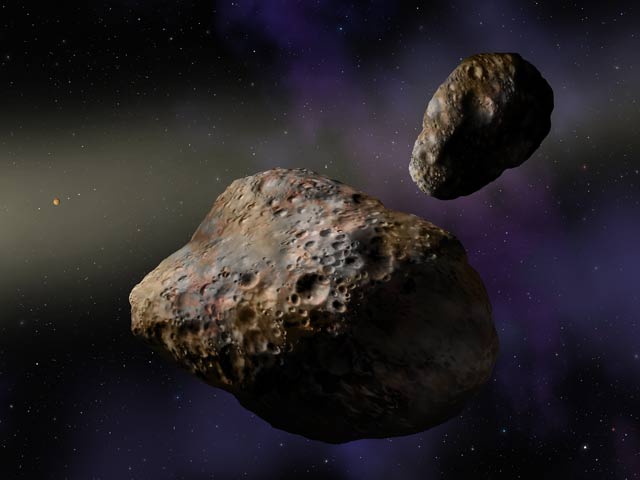
Some planetoids have satellites. They are usually called asteroid moons, and if both bodies are of similar size, they are considered a double planetoid.
Planetoids in the main belt are divided into groups based on their orbital characteristics. They are also often linked by a common origin. Some short-period comets also originate from the asteroid belt, which were probably one of the sources of water on Earth.
Smaller bodies of the Solar System
In addition to the planetoids of the main belt and the Kuiper Belt, there are many groups (families) of planetoids moving in other orbits in the Solar System.
Trojans are planetoids located at the L₄ and L₅ libration points of Jupiter, Neptune, Mars, and Earth. These are gravitationally stable areas that keep the body in a shared orbit with the planet.
Hilda family planetoids are in a 2:3 resonance with Jupiter; that is, they orbit the Sun three times for every two orbits of Jupiter.
Centaurs are planetoids orbiting between the orbits of Saturn and Neptune.
Near-Earth objects are four groups of planetoids, many of which cross the orbits of the inner planets.
Comets
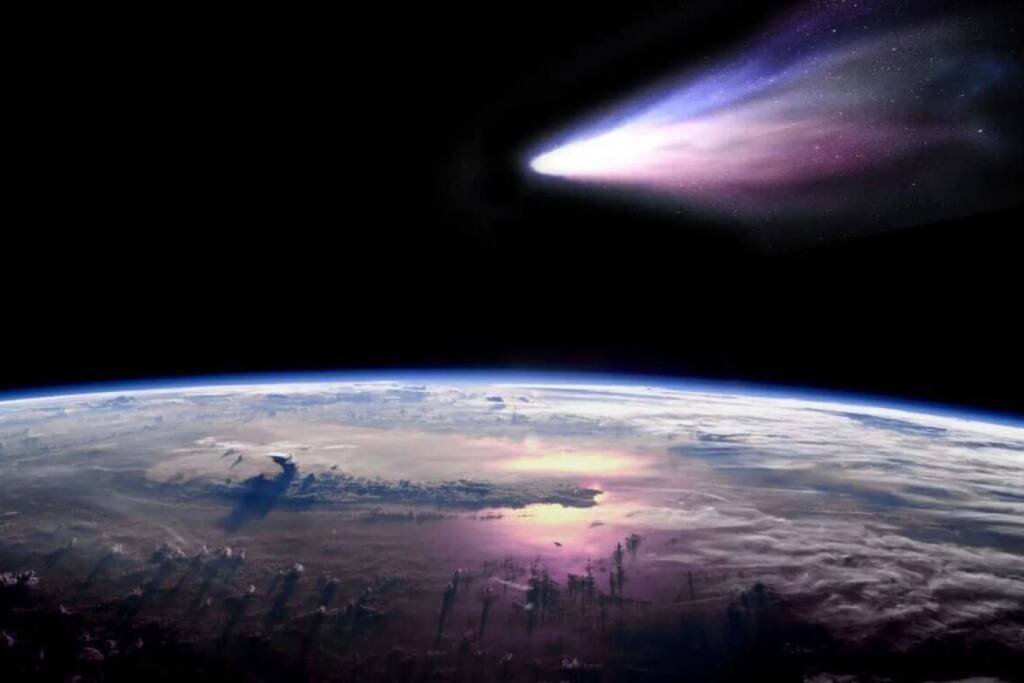
These are small Solar System bodies, usually only a few kilometers in diameter, composed mostly of ice. Their orbits are highly eccentric; usually, perihelion is near the orbits of the inner planets, while aphelion is far beyond the orbit of Pluto. When a comet approaches the Sun, its icy surface begins to sublimate, creating a coma – a long tail of gas and dust often visible to the naked eye from Earth.
Many groups of comets, such as the Kreutz group, originate from the breakup of a primary comet. Some comets moving in hyperbolic orbits may come from outside the Solar System, but accurately determining their orbits is difficult. Old, inactive comets, whose icy parts have already evaporated under the influence of heating by the Sun, are classified as planetoids.
Short-period comets move in orbits whose stability does not exceed two hundred years. The orbits of long-period comets last for thousands of years. Long-period comets, such as comet Hale-Bopp, probably originate from the Oort Cloud. they are likely formed as a result of two bodies in the Kuiper Belt or Oort Cloud approaching each other, which can be knocked out of their orbits and directed towards the inner part of the Solar System, where they are observed as comets, or be thrown into interstellar space.
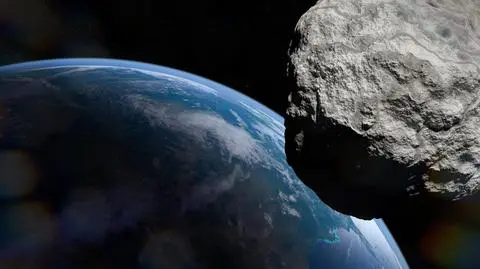
Comets and planetoids can collide with planets, therefore they pose a potential threat to life on Earth. The last comet collision with a planet was observed on July 16, 1994, when comet Shoemaker-Levy 9 collided with Jupiter. On Earth, there are a number of impact craters that are traces of the fall of comets or planetoids.