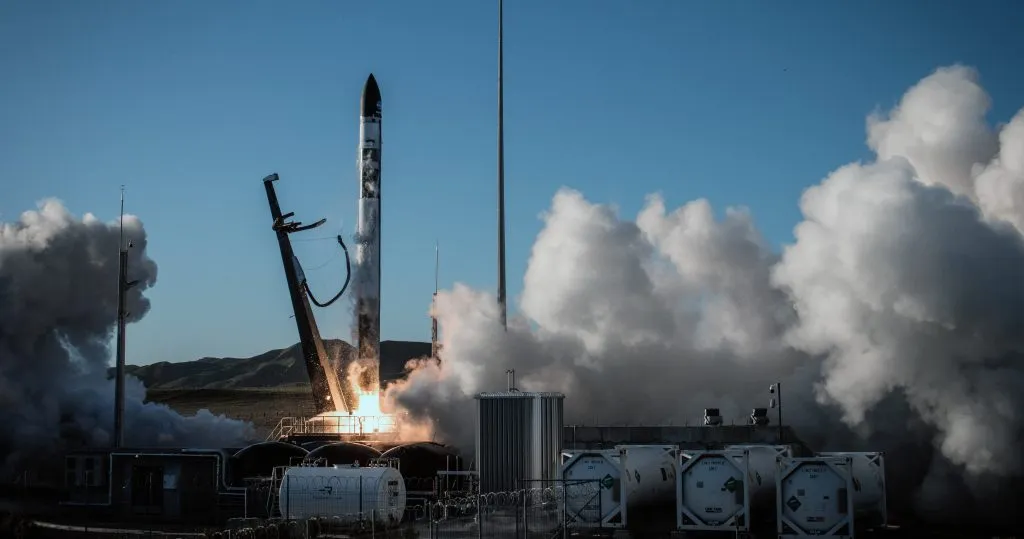
Space probe – an unmanned, almost always automated spacecraft designed to conduct scientific research in outer space. Space probes are launched by carrier rockets or on board space shuttles. Thanks to probes, breakthrough data about the solar system has been provided.
As of now, five space probes have left (or are currently leaving) the Solar System: Voyager 1 and 2, Pioneer 10 and 11, and the slightly younger New Horizons. It is known how far away they are and where they can theoretically be seen in the sky. Contact is still maintained with three of them.
Most important space probes:
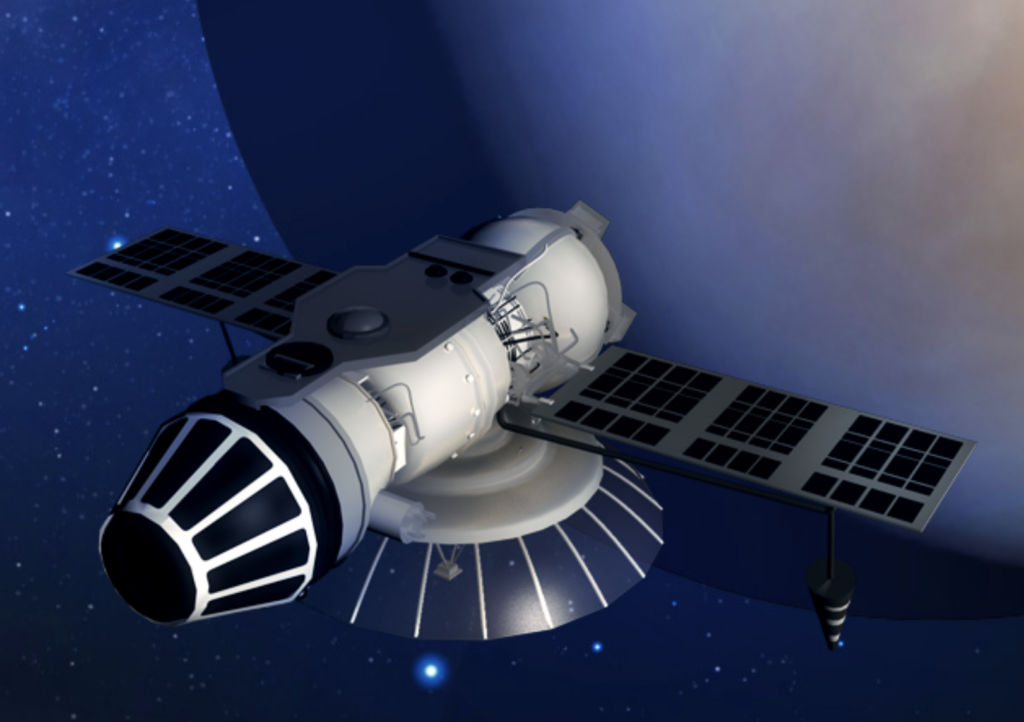
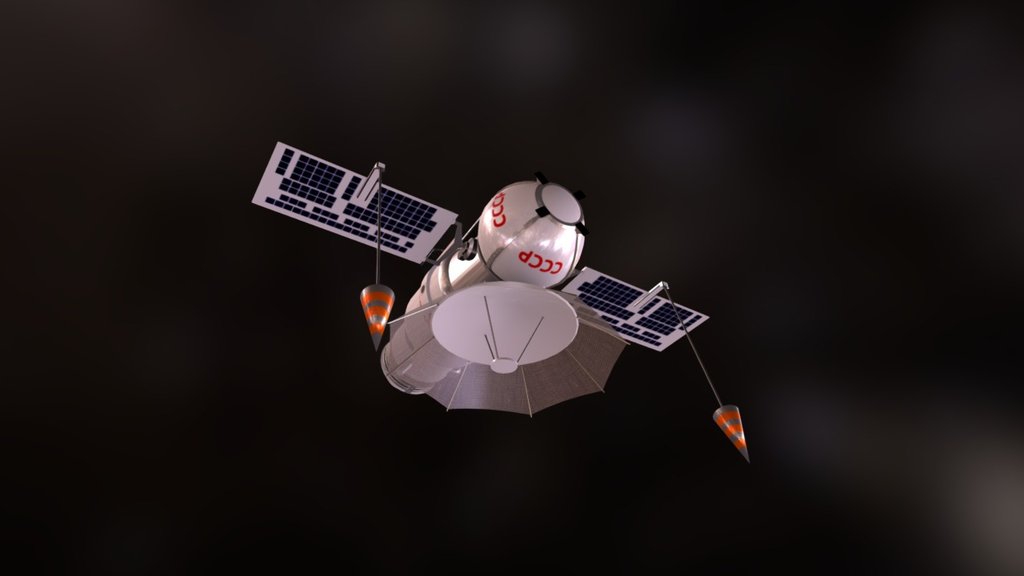
Venera 7 – is a Soviet unmanned space probe that made history as the first device in history to land on another planet (Venus) and transmit data from there to Earth. This mission was part of the Venera program, aimed at studying the atmosphere and surface of Venus.
Here are the key details regarding the Venera 7 mission:
Launch: The probe was launched on August 17, 1970.
Landing: On December 15, 1970, the lander settled on the surface of Venus.
Landing process: During the descent through the thick atmosphere, the probe’s parachute partially failed, resulting in a faster descent and a hard landing (speed of approx. 16.5 m/s). The probe tipped over onto its side, which limited the operation of the antennas but did not destroy the device.
Data from the surface: Despite the difficult conditions, Venera 7 transmitted a signal for about 53 minutes, of which about 20-23 minutes were directly from the planet’s surface.
Discoveries:
Temperature: It was confirmed that extreme temperature prevails on the surface, estimated at about 475°C (± 20°C).
Pressure: Pressure measurements showed that it is about 90-92 times higher than on Earth (pressure of approx. 90 atm).
Atmosphere: The composition of the atmosphere was confirmed, consisting of 97% carbon dioxide.
Construction: The lander was specially reinforced to survive the crushing pressure and high temperature, which was key to success after failed earlier landing attempts (e.g., Venera 3).
Venera 7 proved that landing on Venus is possible, paving the way for subsequent, more advanced probes from the Venera series.
Mariner Program – a program of American space probe missions designed to conduct research on Mercury, Venus, and Mars. The Mariner program was initiated by NASA in 1960 and was implemented by the Jet Propulsion Laboratory.
In the years 1962 – 1973, a total of 10 Mariner probes were sent, 3 of which were destroyed or failed during launch. Mariner probes made the first successful flybys of the planets closest to Earth and took the first close-up photographs of the surfaces of Mars and Mercury. Mariner 9 became the first artificial satellite of another planet. Mariner 10 performed the first gravity assist maneuver.
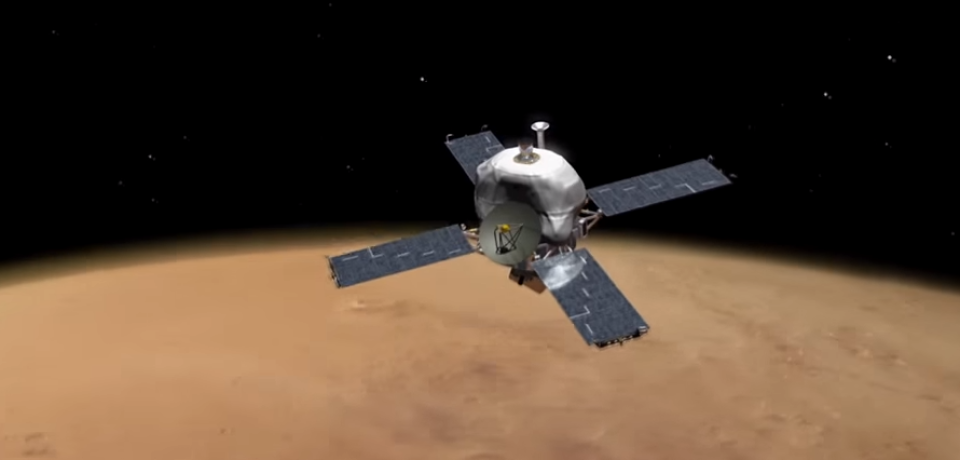
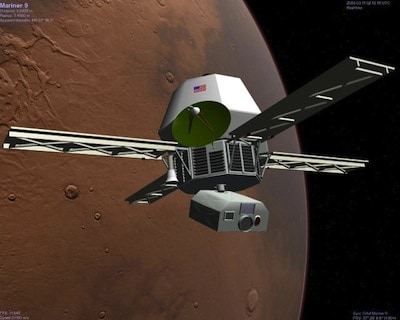
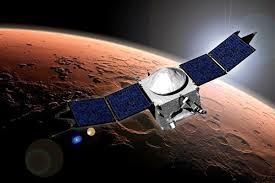
Mariner 9 – a NASA space probe launched by an Atlas Centaur rocket on May 30, 1971. Its goal was to reach the orbit of Mars and thus become the first artificial satellite of another planet, as well as to take photos and conduct a series of scientific studies. It reached its destination on November 14 of the same year, 13 days before the Soviet Mars 2 probe (which had launched 11 days earlier than it) and became the first artificial satellite of Mars.
The first photos of Mars were taken in late October 1971, but due to a giant dust storm on the planet’s surface, they were not very accurate. The storm ended in January 1972, and from then on, the photos transmitted by the probe were of very good quality. In total, Mariner sent 7329 photos of Mars to Earth – more than predicted in the combined research program of Mariner 8 and 9 (covering 85% of its surface) and its two moons, Deimos and Phobos. The photos were used to select landing sites for the Viking landers in the mid-70s. Valles Marineris – a vast system of canyons on Mars – was named in honor of the probe.
The total mass of the probe was 997.9 kg (including 439.1 kg of fuel). It had an octagonal shape with four solar battery panels measuring 215 x 90 cm each. The total span (the distance between the ends of opposite panels) was 6.89 m. The batteries provided 800 W of power near Earth and 500 W in Mars orbit. The solar cell system did not supply energy directly to the instruments but powered a nickel-cadmium battery, which after charging had a voltage of 26-38 V. Mariner 9 was equipped with two television cameras, an infrared radiometer (IRR), ultraviolet (UVS) and infrared (IRIS) spectrometers, and radio equipment with two antennas – a parabolic one with a diameter of 1 m and an omnidirectional one mounted on a mast 1.44 m long.
After the gas used for satellite attitude control was exhausted, Mariner 9 was turned off on October 27, 1972. According to NASA estimates at the time, the probe was to remain in Mars orbit for about 50 years. It probably entered the atmosphere and hit the planet’s surface in 2020. Mariner 9 proved that Mars is geologically active and revolutionized knowledge about this planet.
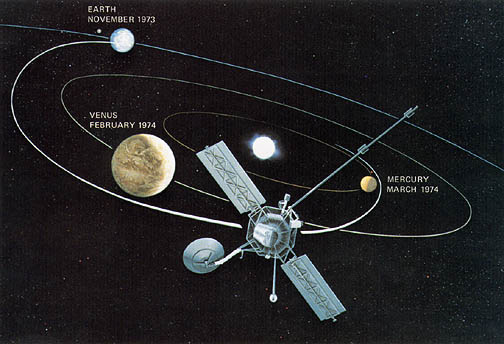
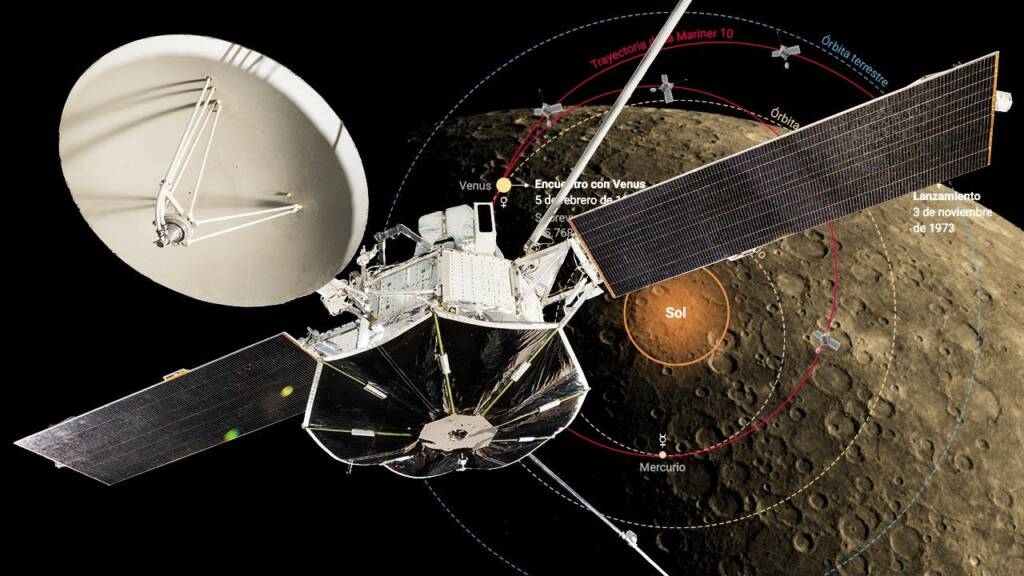
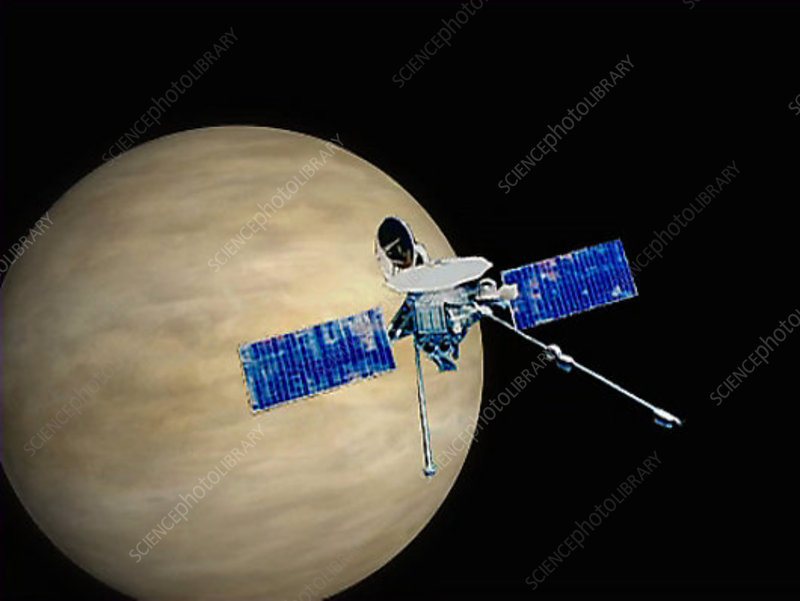
Mariner 10 – the last unmanned space probe from the Mariner program launched on November 3, 1973, by the American space agency NASA. It was sent about two years after Mariner 9 reached Mars. The goal of the Mariner 10 mission was to study the surface and physical characteristics of Mercury and Venus, as well as to study interplanetary space. It is the first human-built vehicle to reach Mercury and the first space probe to visit two planets (Venus and Mercury) and use gravity assist to change its orbit. The probe used Venus’s gravity (flyby on February 5, 1974) to reduce speed and head towards Mercury.
Mariner 10 was equipped with the following scientific instruments:
2 television cameras equipped with Cassegrain telescopes with a mirror diameter of 150 mm
infrared radiometer
2 ultraviolet spectrometers of different types
2 magnetometers
telescope for studying charged particles
plasma analyzer
The launch mass of the probe was 502.9 kg (including 29 kg of fuel and nitrogen used for ship attitude control). The total mass of scientific instruments was 79.4 kg. The hull was in the shape of a prism with octagonal bases, its height was 46 cm, and its diameter was 1.39 m. The probe was equipped with two solar battery panels placed on opposite sides of the hull; the span of Mariner 10 after their full deployment was 8 m. The batteries provided a maximum of 820 W of power. Due to the need to protect such cells from the effects of an excessive radiation flux, as they approached the Sun, both wings were gradually positioned more and more obliquely relative to the incident light. In addition, the entire hull was protected by a special heat shield. The probe was equipped with a rocket engine with a thrust of 222 N powered by hydrazine. Data was transmitted at a maximum speed of 117.6 kb/s.
Mariner 10 approached Mercury three times in the years 1974-1975 (March 1974, September 1974, March 1975), transmitting over 2700 photos. This mission provided the first close-up photos of Mercury, mapping about 45-57% of its surface, which is covered with craters and resembles the Moon, the existence of a weak magnetic field and a thin atmosphere (helium), and also took pioneering photos of the atmosphere of Venus. Ultraviolet photos revealed the cloud structure and super-rotation of the upper layers of the atmosphere.
Due to fuel exhaustion (gas in the attitude control system), maneuvers were stopped in March 1975 and the probe became an artificial satellite of the Sun. Mariner 10 was the last mission of the Mariner series (subsequent designs were transformed into Voyager probes). For over 30 years, it remained the only probe that studied Mercury, until the MESSENGER mission in 2008.
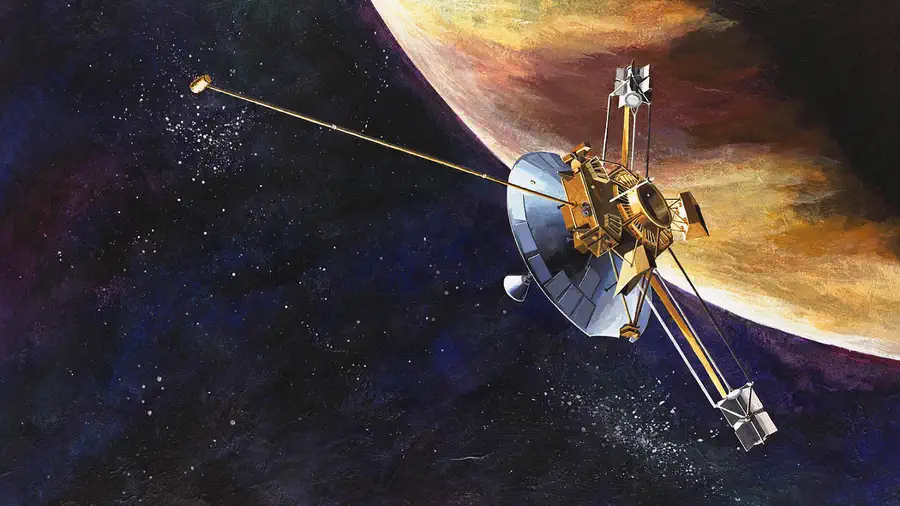
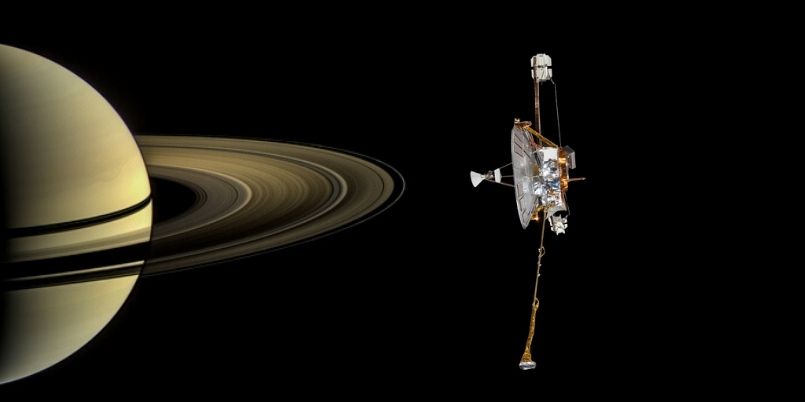
Pioneer 10 – is an American, unmanned NASA space probe, launched on March 3, 1972, which was the first to fly through the asteroid belt and explored Jupiter (1973). It was the first human-made object to reach escape velocity from the Solar System, studying interstellar space until the last signal in 2003. The probe was equipped with numerous scientific instruments, including a magnetometer, radiation detectors, and equipment for studying cosmic dust.
On board was placed a gold-plated aluminum plate (Pioneer plaque) with drawings depicting a human, the position of the Sun, and the probe in the Milky Way, which was intended to be a “calling card” for extraterrestrial civilizations.
Pioneer 11 – is an American NASA space probe, launched in April 1973, which was the first to explore Saturn (1979) and performed a close flyby of Jupiter (1974). The mission, being a twin to Pioneer 10, provided key data about the outer Solar System, discovering new moons and rings of Saturn, and is currently heading into interstellar space. The last signal from the probe was received in November 1995.
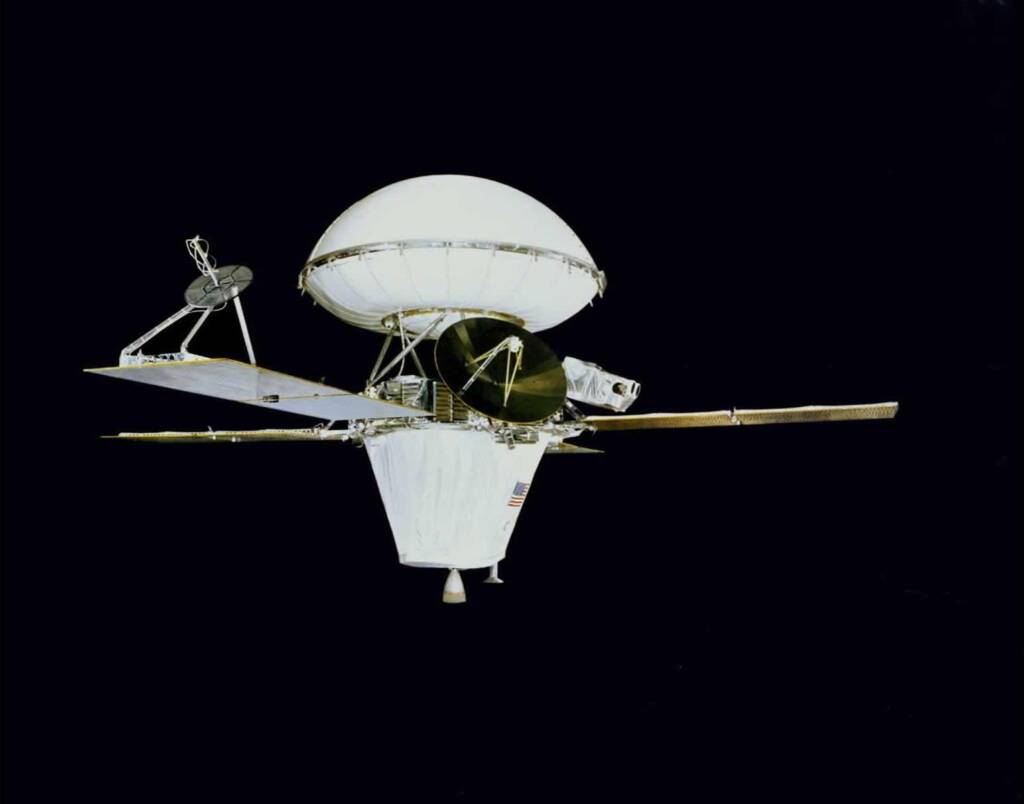
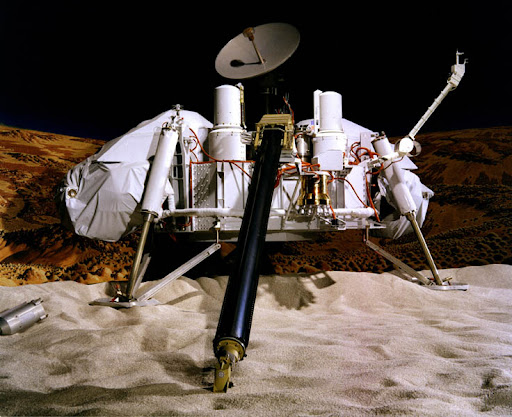
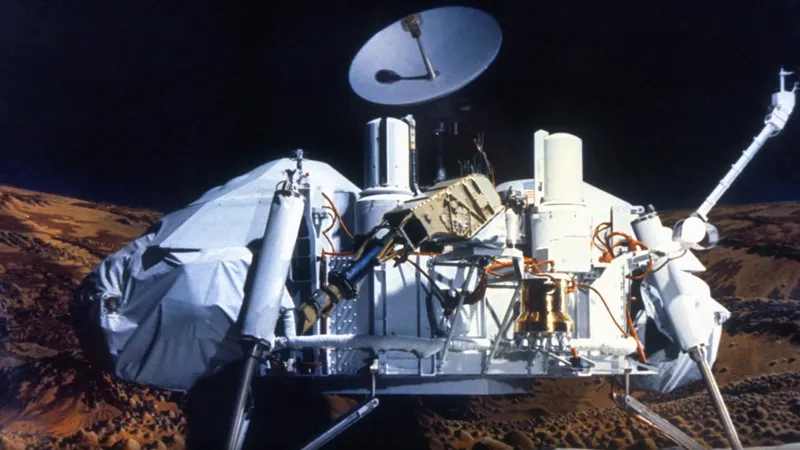
Viking – a program realized by NASA in 1975. It included two unmanned probes (Viking 1 and Viking 2), each consisting of an orbiter and a lander. The mission aimed to search for life on Mars and to study its atmosphere and surface.
Main tasks of the orbiter:
delivering the lander to Mars
conducting observations of the planet’s surface to determine a landing site for the lander
acting as a communication relay between the lander and Earth
conducting its own scientific research – including taking photos of the surface, searching for water, measuring temperatures, and studying Mars’ gravitational field
Tasks of the lander:
conducting a series of meteorological and seismological studies, examining the chemical composition, magnetic properties, and physical characteristics of the Martian atmosphere and surface, including soil samples
performing a series of experiments to check for the possibility of photosynthesis, the occurrence of metabolism, and gas exchange, as an attempt to verify the hypothesis of the existence of organic life on Mars
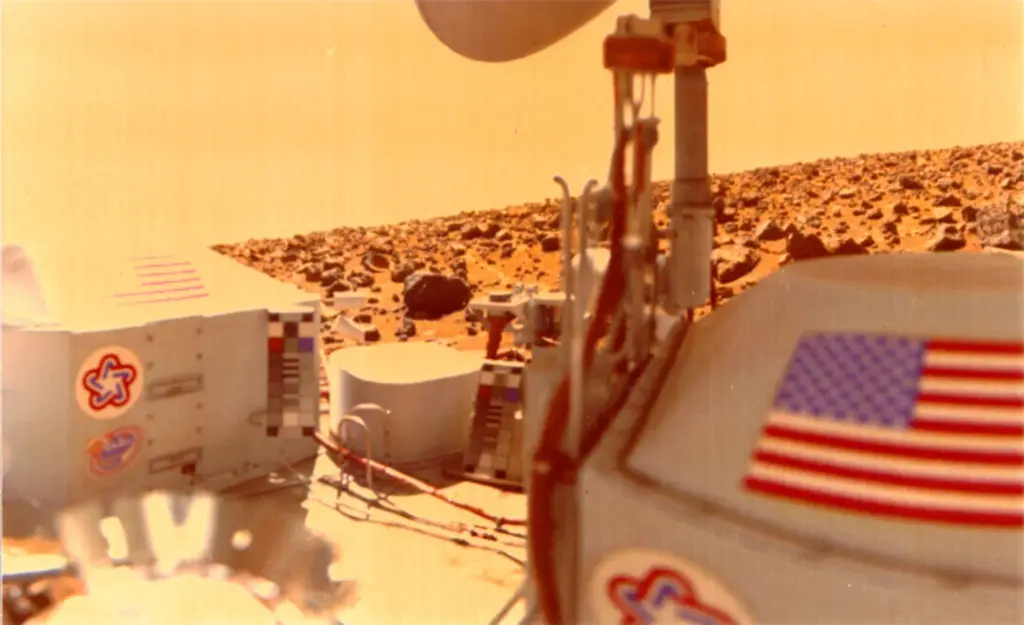
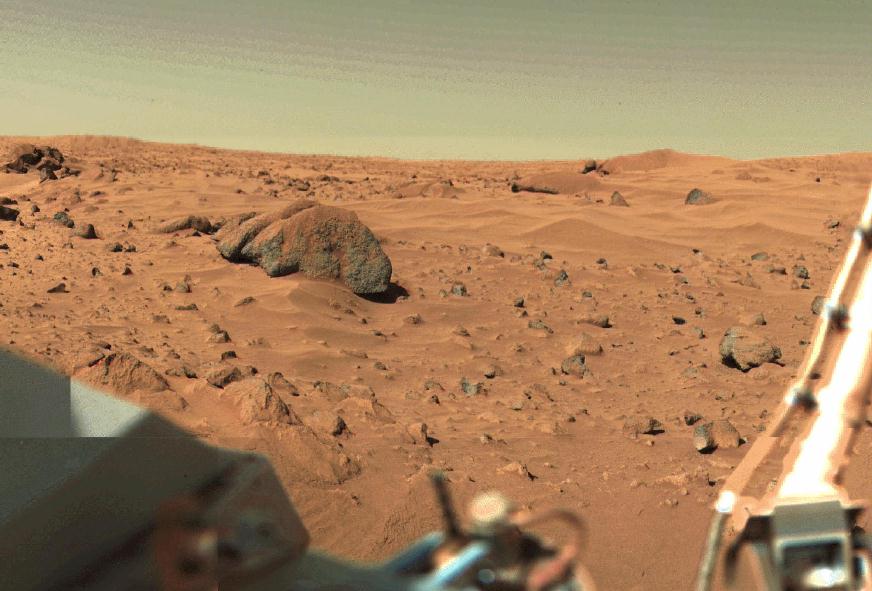
taking photos of the landing site – the planet’s surface, atmosphere, moons, the Sun, as well as the lander itself and its equipment
Viking 1 – an unmanned space probe from the Viking program (orbiter and lander), launched on August 20, 1975, by the American space agency NASA. After being launched using a Titan IIIE/Centaur rocket and a 10-month flight toward Mars, the Orbiter began transmitting photos of the planet 5 days before entering orbit, which it reached on June 19, 1976.
The probe’s flight required course corrections in the initial phase because the trajectory was not leading directly to Mars’ orbit but was passing the planet at a distance of 67,000 km. The purpose of selecting such an initial trajectory was to avoid a collision of the rocket’s second stage with the surface of Mars, which could have interfered with the research results.
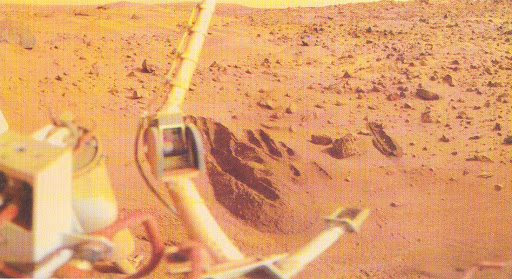
The landing on Mars, originally planned for July 4, was delayed due to detected terrain irregularities until a safer location was found. On July 20, the Viking 1 lander separated from the orbiter and landed safely on the surface at 11:56:06, becoming the first successful lander on the Red Planet. Transmission of the first photos of the surface occurred 25 seconds after landing.
Viking 2 – an American NASA space probe (orbiter and lander) that in 1976 completed the second successful landing on Mars in history, after Viking 1. The Viking 2 probe was launched from Cape Canaveral by a Titan 3E rocket with a Centaur upper stage on September 9, 1975. It reached Mars’ orbit on August 7, 1976. On September 3, the lander separated and landed on the planet’s surface on the Utopia Planitia plain on the same day at 22:37:50 UTC.
Viking 2 landed approximately 6,400 km (4,000 miles) from the Viking 1 landing site, providing unique data from a different latitude. It studied the atmosphere and surface, transmitting thousands of photos. The lander transmitted a total of 3,542 photos.
Key information about the Viking mission:
Took over 50,000 photos of Mars, analyzed soil, and studied the atmosphere.
The landers did not find conclusive evidence of the existence of life but provided unique data about the Martian environment.
Both Viking orbiters took a combined total of over 52,000 photos, mapping 97% of Mars’ surface. The orbiters operated until 1980, and the landers until 1980-1982.
Biological experiments gave inconclusive results, not definitively confirming the existence of life, but indicating chemically active soil.
The Viking probes revolutionized knowledge about Mars, paving the way for future robotic missions. Measurements of time dilation were successfully completed, proving to be consistent with the predictions of Einstein’s General Theory of Relativity.
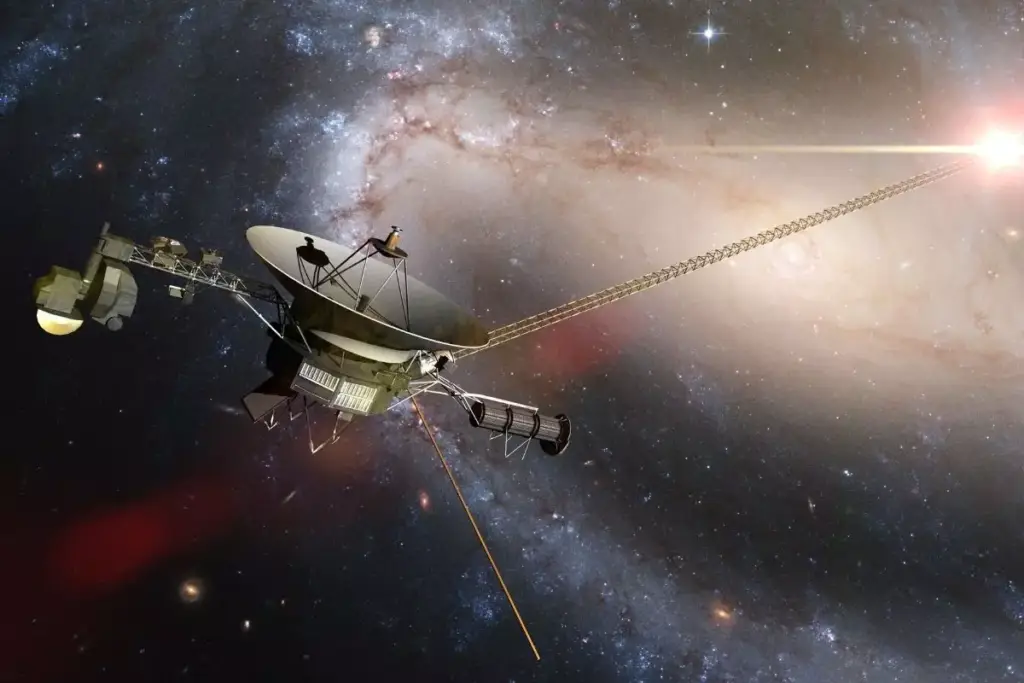
Voyager 1 – is an unmanned NASA space probe, launched on September 5, 1977, to explore the outer planets of the Solar System. As the farthest human-made object from Earth (over 164 au in 2024), in 2012 it became the first machine to enter interstellar space, continuing to study the edges of the heliosphere. Initially, the probe was intended to explore Jupiter and Saturn and their moons. After achieving this goal in 1979-1980, Voyager 1 headed towards the outer boundaries of the Solar System. The probe is still operational and transmitting scientific data, becoming the longest-running space mission. It is powered by radioisotope thermoelectric generators (RTG). In 2024, the probe was over 24 billion kilometers from Earth. The radio signal needs over 22 hours to reach Earth from the probe.
Voyager 2 – is an unmanned NASA space probe that began its journey on August 20, 1977, from Cape Canaveral. Thanks to a rare planetary alignment, it visited Jupiter (1979), Saturn (1981), and as the only one reached Uranus (1986) and Neptune (1989), discovering new moons, rings, and volcanic activity. In November 2018, Voyager 2 crossed the heliopause, leaving the heliosphere and entering interstellar space. The probe is located at a distance of over 20 billion kilometers from Earth. It has been operating continuously for 48 years, transmitting data despite the dwindling power supply.
Voyager 2 is, alongside its twin probe Voyager 1, the longest-running space mission in history. The Voyager and Pioneer probes carry materials (e.g., Voyager Golden Record) aimed at presenting life on Earth to potential alien civilizations. These probes used the gravitational assist of planets to reach the speeds necessary to leave the Solar System.
Magellan – NASA’s unmanned space probe, created to study the planet Venus. Initially, the probe was to be called the Venus Radar Mapper. It was later named after the Portuguese explorer Ferdinand Magellan, who in the 16th century was the first to sail through the Strait of Magellan into the Pacific Ocean.
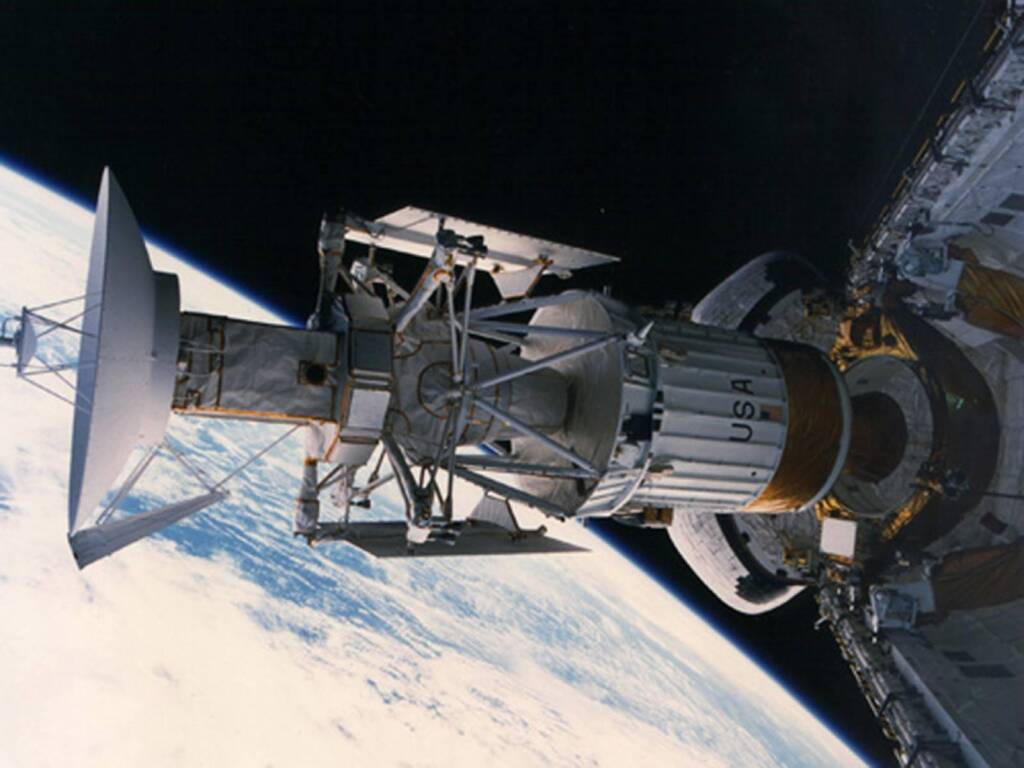
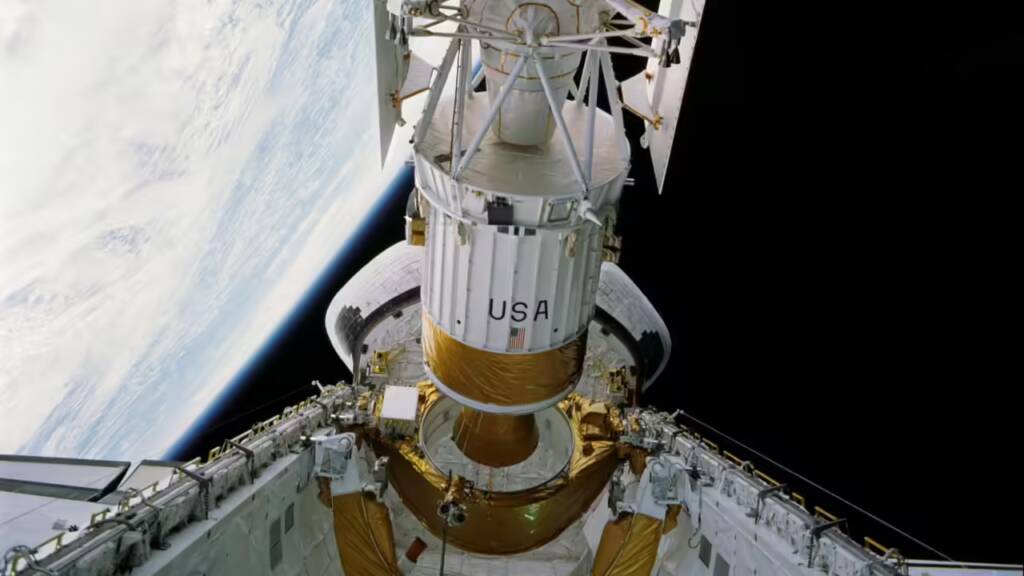
Magellan was launched into low Earth orbit on May 4, 1989, aboard the space shuttle Atlantis during the STS-30 mission. On May 5, after five Earth orbits, at an altitude of 296 km, the probe left the shuttle’s cargo bay. It was directed onto an interplanetary trajectory by an additional solid-fuel propulsion stage (Inertial Upper Stage). On August 10, 1990, after 15 months of travel, the probe entered an elliptical, nearly polar orbit around Venus, with a pericenter of 294 km.
The main goal of the mission was to accurately study the planet using synthetic aperture radar, which allowed for the creation of maps of Venus’s surface, which is invisible in visible light due to a very thick layer of clouds. The probe also made maps of Venus’s gravitational field and measurements of object heights using a radar altimeter.
On October 11, 1994, the probe was directed into the planet’s atmosphere, where it partially burned up on October 13 or 14. It is assumed that some of its fragments may have fallen to the surface. The last signal from the probe was received on October 12 at 10:02 UTC.
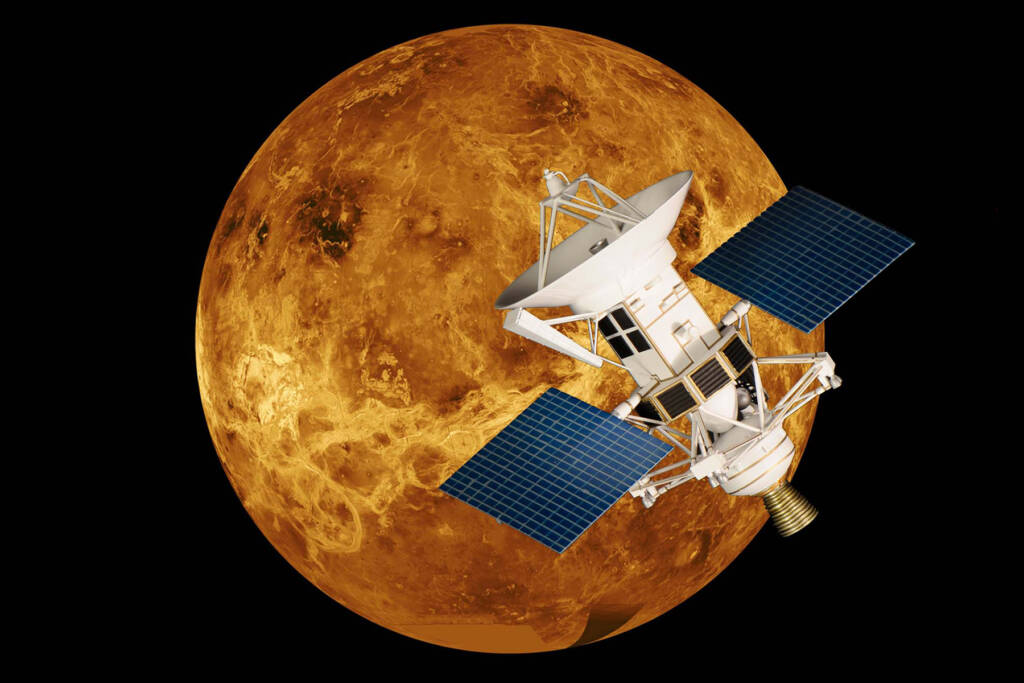
The entire design of the vehicle was based on the construction of the Lacrosse satellite. The vehicle was built partially using spare components remaining from previous NASA missions. Magellan’s hull was 4.6 m long, ending in a high-gain parabolic antenna with a diameter of 3.7 meters. It served for communication with Earth and as a radar antenna. The vehicle’s main antenna, as well as the frame and maneuvering engines, were built as spares for the Voyager mission. The medium-power antenna came from the Mariner 9 project. The total height of the craft was 6.4 m. The probe was equipped with two square solar battery panels, the span of which was 9.2 m. They provided 1200 W of power at the beginning and 1029 W at the end of the mission. Energy was stored by nickel-cadmium batteries with a capacity of 30 Ah each. Together with the propulsion stage and fuel, Magellan weighed 3460 kilograms at launch. The probe itself without fuel weighed 1035 kg. Magellan was three-axis stabilized using three reaction wheels.
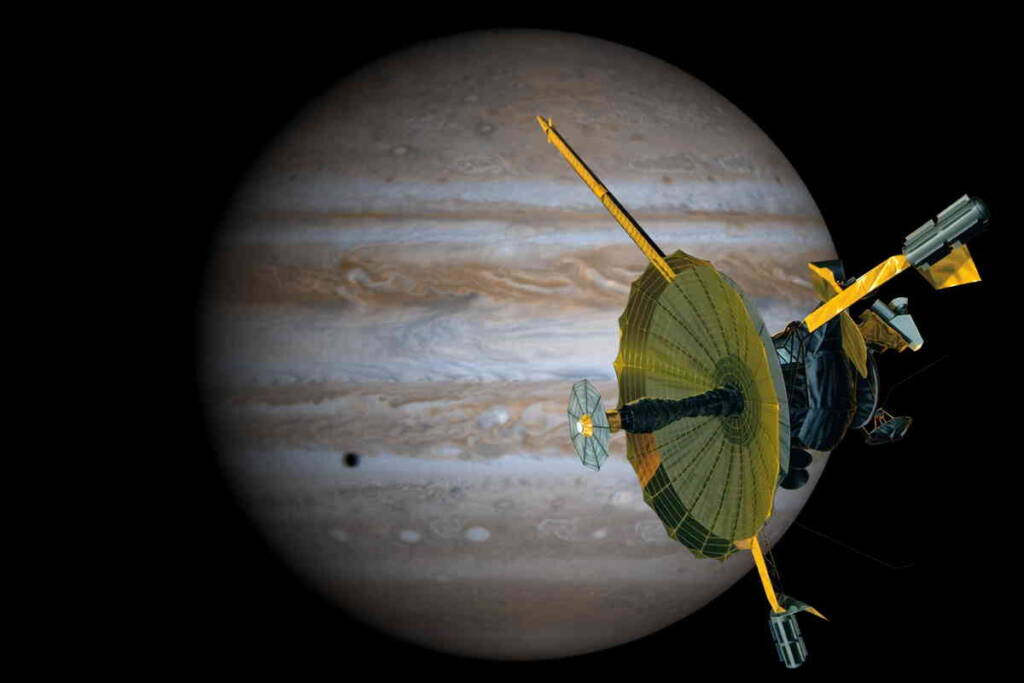
Galileo – is an American unmanned NASA space probe, launched by the space shuttle Atlantis in 1989 to explore Jupiter, its moons, and atmosphere. During the journey, it performed flybys of Venus, Earth, and the Moon, and was the first to explore asteroids (Gaspra and Ida). It was the first artificial satellite of Jupiter (since 1995) and the first in history to send a probe deep into its atmosphere, as well as closely studying asteroids. The mission ended in 2003 with the intentional burning of the probe in the planet’s atmosphere.
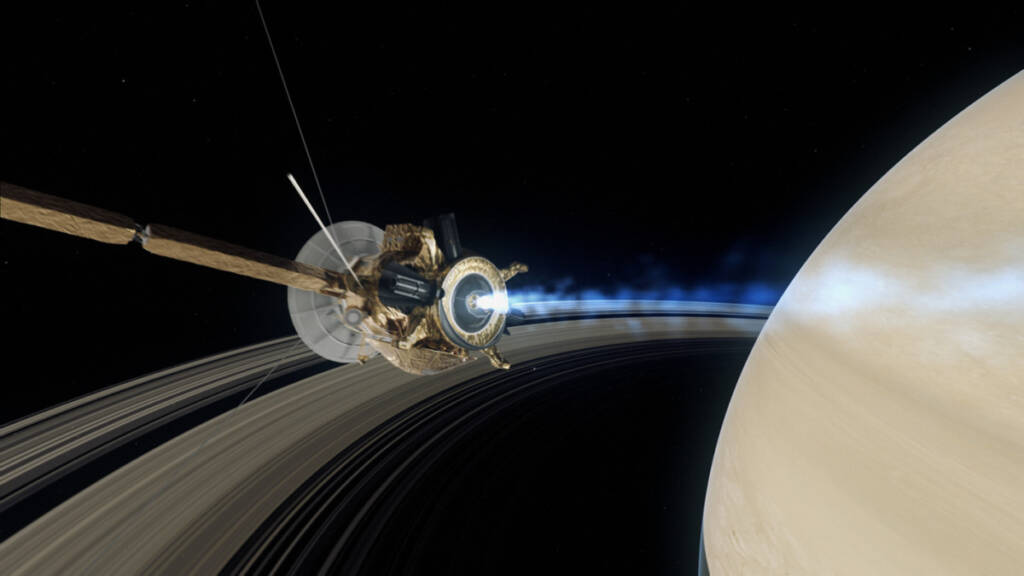
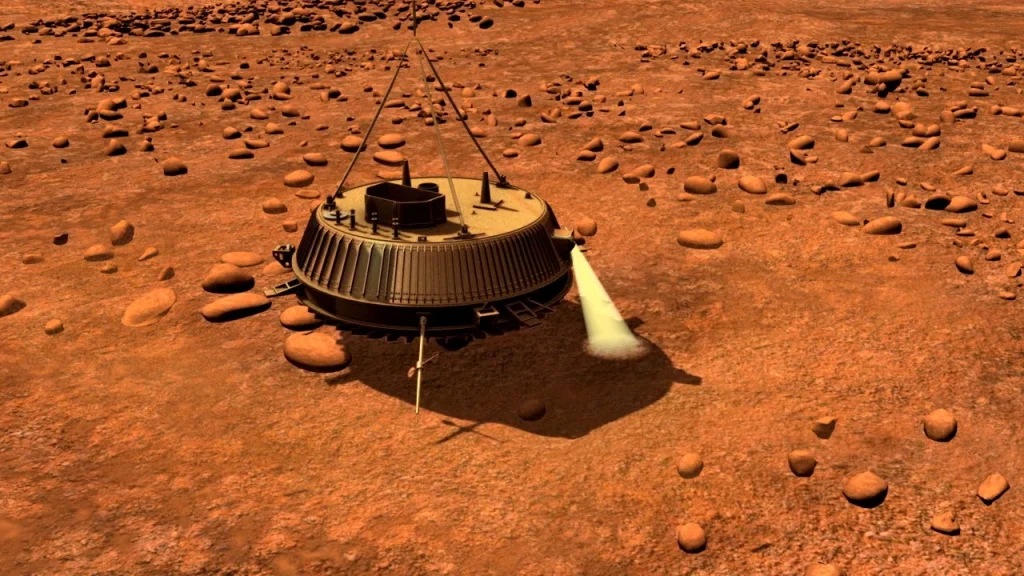
Cassini-Huygens – is a joint unmanned space mission of NASA, ESA, and ASI, lasting from 1997–2017, whose goal was to study Saturn, its rings, and moons. The probe consisted of the Cassini orbiter (studying the system from orbit) and the Huygens lander, which in 2005 landed on Titan. This mission revolutionized knowledge about the gas giant, discovering, among others, geysers on Enceladus. This mission studied Saturn, its rings, and moons, and the Huygens probe landed on Saturn’s largest moon – Titan. The symbolic start of the mission can be considered the date October 15, 1997, when the Titan 4B – Centaur rocket launched, carrying the priceless cargo. The launch took place at 08:43 Universal Time from Cape Canaveral Air Force Station in Florida, USA. The entire payload, consisting of the Cassini probe and the Huygens lander, weighed 5.6 tons, making it too heavy to fly directly to Saturn. For this reason, the probe had to use gravitational assists. This is a maneuver that uses the gravity of an object, mainly a planet, to change the flight trajectory and gain speed. The probe first flew towards Venus, then circled the Sun, approached Venus again, returned to the vicinity of its home planet, flew past Jupiter, and finally reached its destination, which was Saturn.
After reaching Saturn’s orbit in 2004, the probe began studying its rings and the planet itself. Above all, it was possible to much more accurately determine the thickness of the rings. On December 25, 2004, the Huygens lander detached from the probe and flew towards the only moon in the Solar System that has an atmosphere – Titan. It reached it after 22 days of flight and operated on its surface for 4 hours. It lasted so briefly because of the low temperatures on the moon, reaching as low as -180 degrees Celsius. During this not-too-long time, the lander provided scientists with invaluable information about the surface and atmosphere of the moon. The most famous element of the entire mission was the discovery of seas and lakes of liquid methane and ethane.
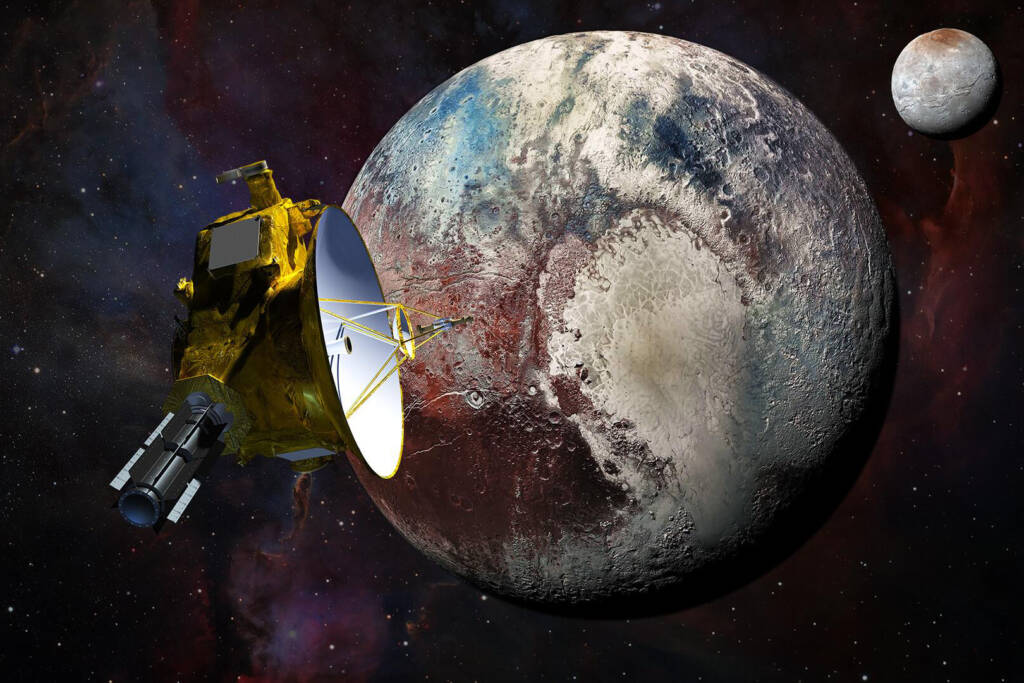
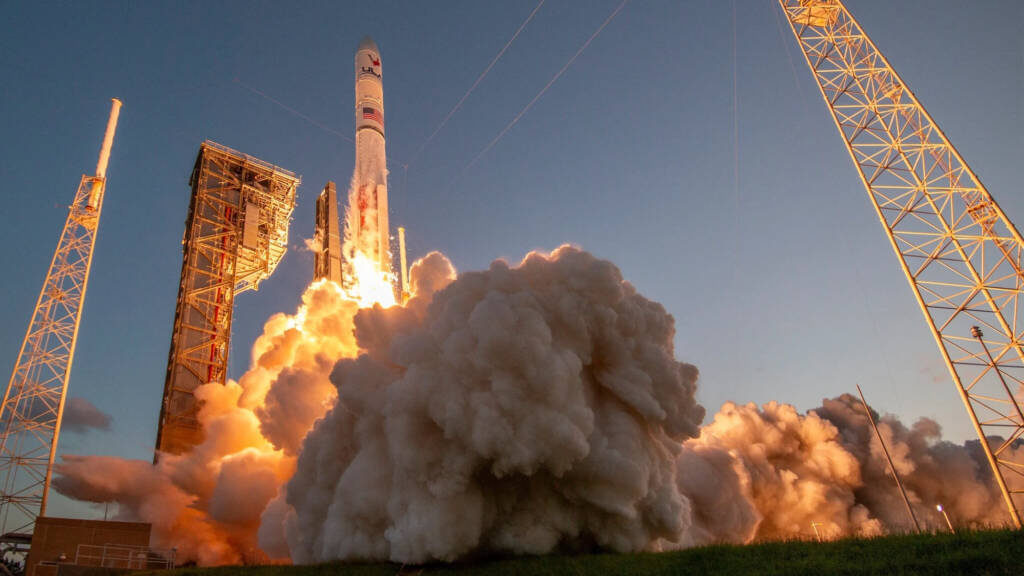
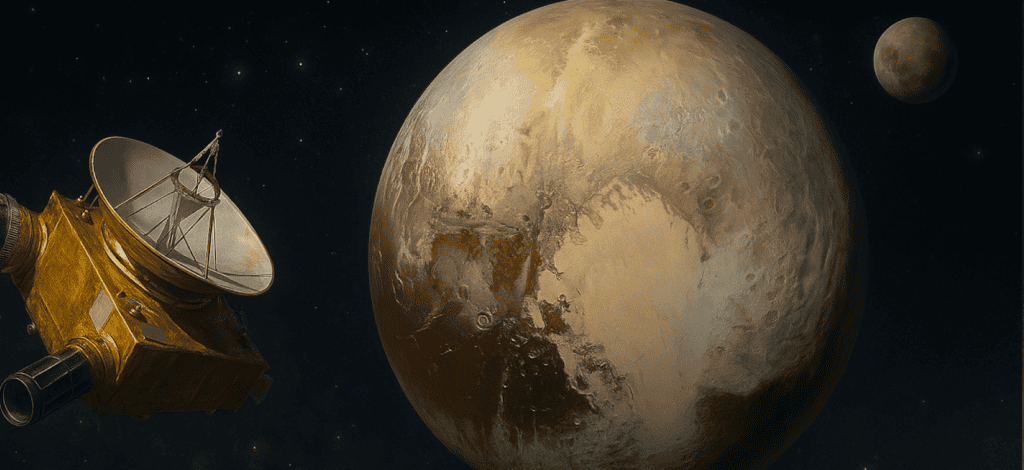
New Horizons – is an unmanned NASA space probe, launched in 2006 using an Atlas V 551 (AV-010) rocket. The main goal was to explore Pluto, its moons, and objects in the Kuiper Belt. The first flyby mission past Pluto was realized on July 14, 2015; the probe approached Pluto to a distance of about 12,500 km, as well as its moons (Nix, Hydra, Kerberos, and Styx), discovering, among others, a diverse landscape and active geological processes and providing detailed photos of this dwarf planet. The spacecraft, weighing 478 kg, was primarily intended to study objects from the Kuiper Belt during the flyby and take the most accurate photos of Pluto to date. It is powered by a radioisotope thermoelectric generator on plutonium (RTG), which allows it to operate for decades. It is located over 8 billion kilometers from Earth (as of the end of 2023), traveling beyond the Solar System.
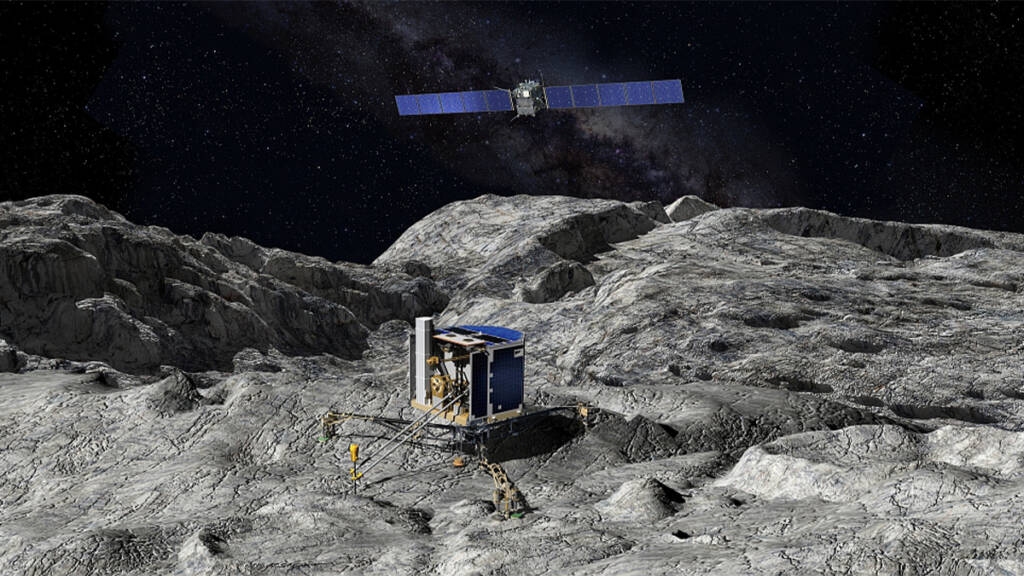
Rosetta – launched in 2004, was a pioneering mission of the European Space Agency (ESA), which was the first in history to explore a comet (67P/Churyumov-Gerasimenko) up close. On November 12, 2014, the probe entered its orbit and released the Philae lander, which settled on the comet’s surface, conducting “in-situ” research. During the already more than 10-year journey, they provide key data on the evolution of the Solar System. Rosetta was the first probe to use solar panels for power so far from the Sun (beyond the main asteroid belt).
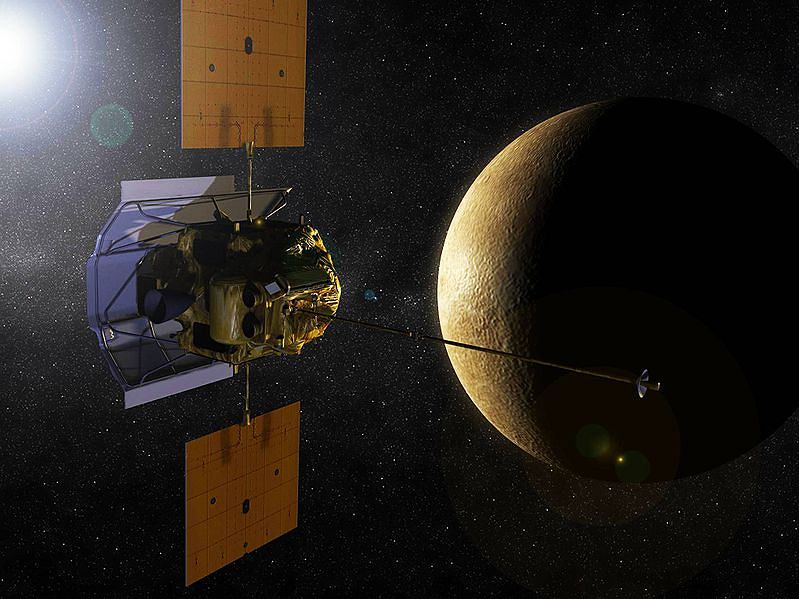
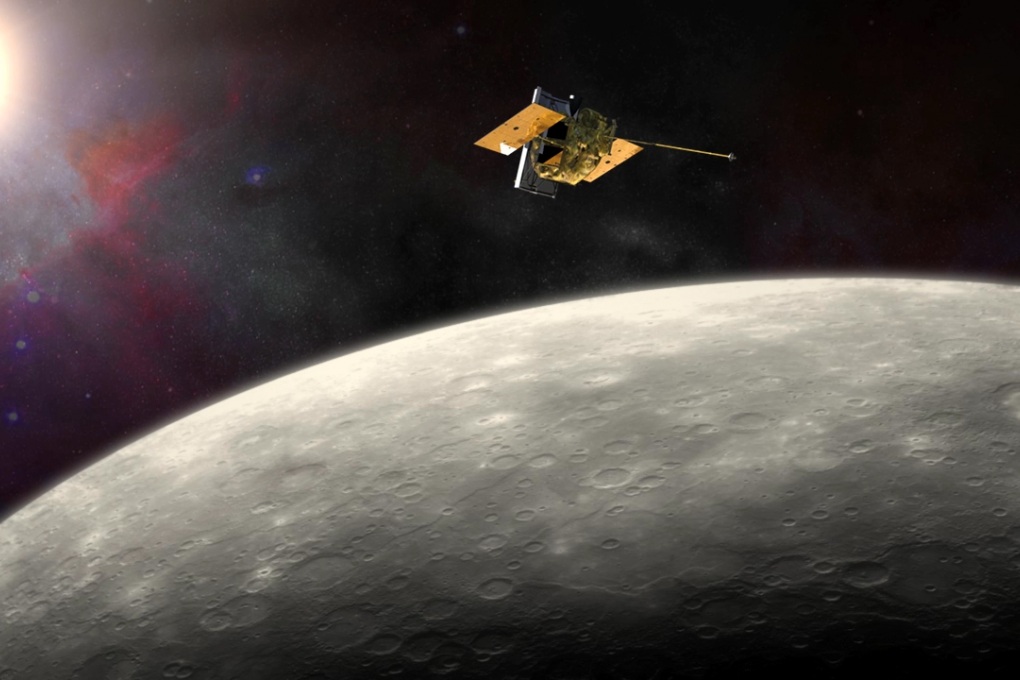
Messenger – a NASA space probe whose mission was to study the planet Mercury. It was the first mission dedicated to this planet since Mariner 10, i.e., in 33 years. The probe was launched on August 3, 2004.
The probe was designed to study the characteristics and environment of Mercury from a circumplanetary orbit. Its task was to learn about the chemical properties of the planet’s surface, its geological history, the nature of its magnetic field, the size and state of its core, and the nature of the planetary exosphere and magnetosphere.
Messenger received commands from Earth and transmitted data via X-band phased array antennas (circular polarization).
The probe required special protection against solar radiation, which is particularly intense in the vicinity of Mercury – solar radiation intensity there is 11 times higher than on Earth, and Mercury’s surface temperature reaches 450 °C. All systems were maintained at room temperature thanks to one entire side of the spacecraft being covered with a high-temperature resistant ceramic shield. This required the probe to always face the Sun with its shielded side.
The probe’s orbital mission was planned for one Earth year (4 Mercurian years), but it was extended twice. It finally ended on April 30, 2015, with the spacecraft crashing into the planet’s surface.
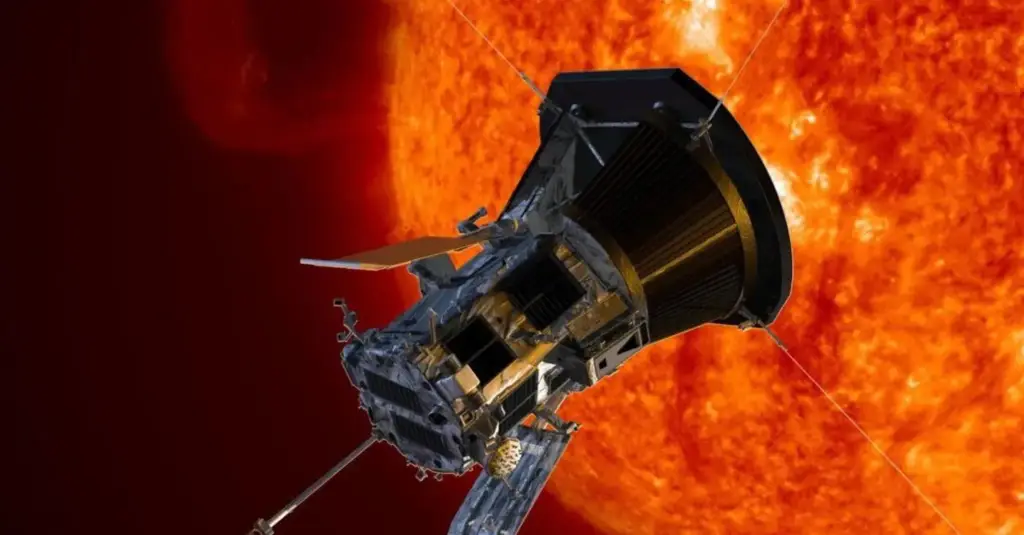
Parker Solar Probe – is an unmanned NASA space probe, launched in 2018, whose goal is to study the Sun’s outer corona from a record-breaking close distance. It is the first object in history to directly “touch” the Sun, flying through its atmosphere to investigate heating processes and the solar wind. It is the fastest human-made object. In December 2024, it approached at a record-low distance (approx. 6 million km from the surface), reaching a speed of over 690,000 km/h (approx. 192 km/s) and took photos of the Sun’s atmosphere from the closest distance we have ever seen. The probe is equipped with an advanced thermal shield made of carbon composites, which protects the instruments from temperatures exceeding 1300 degrees C. This mission is part of NASA’s “Living with a Star” program, aimed at understanding aspects of the Sun-Earth system that affect life and technology on Earth, including satellite communication.