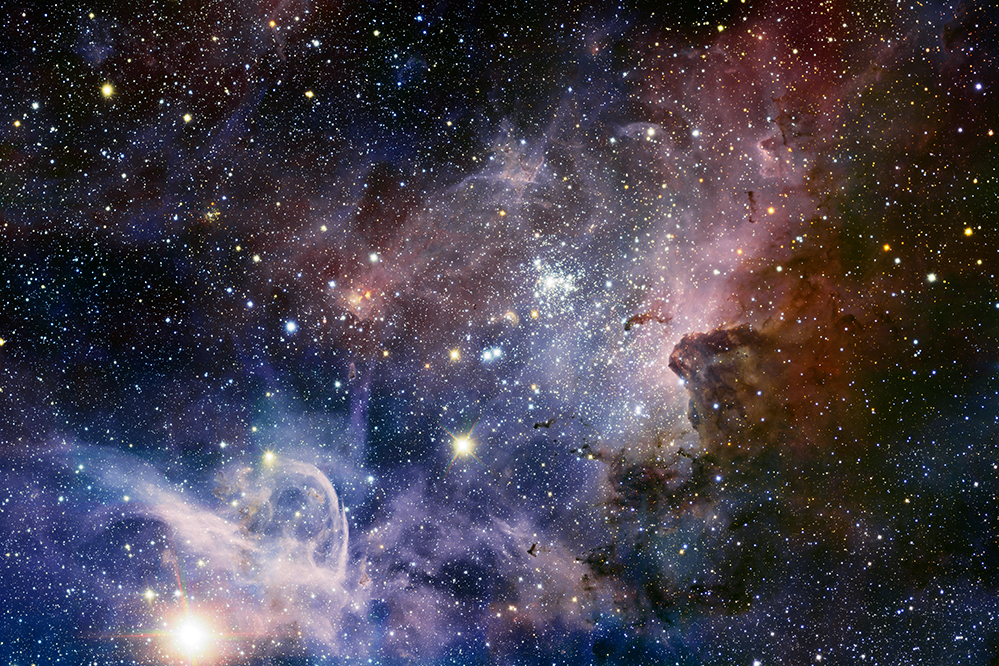
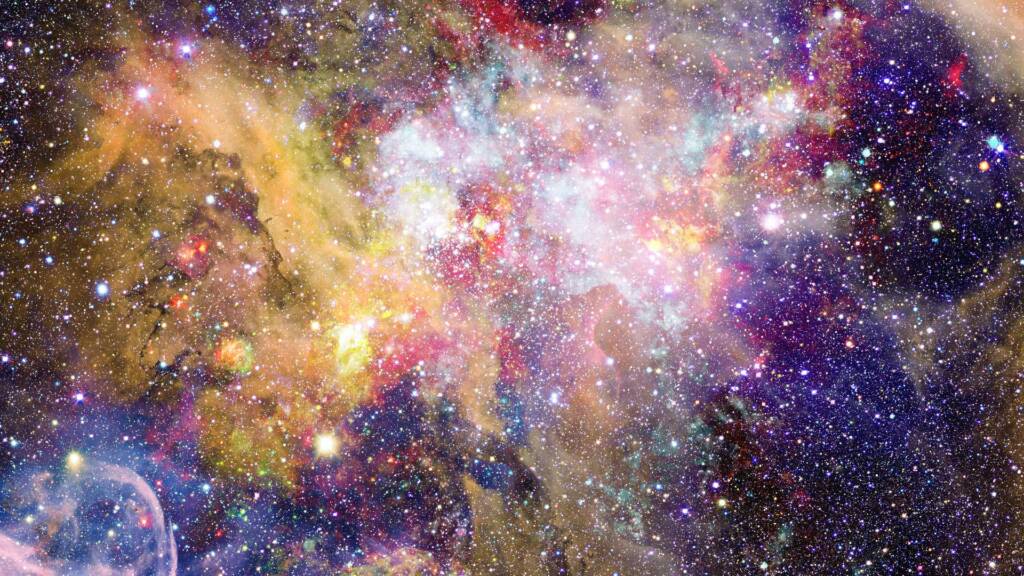
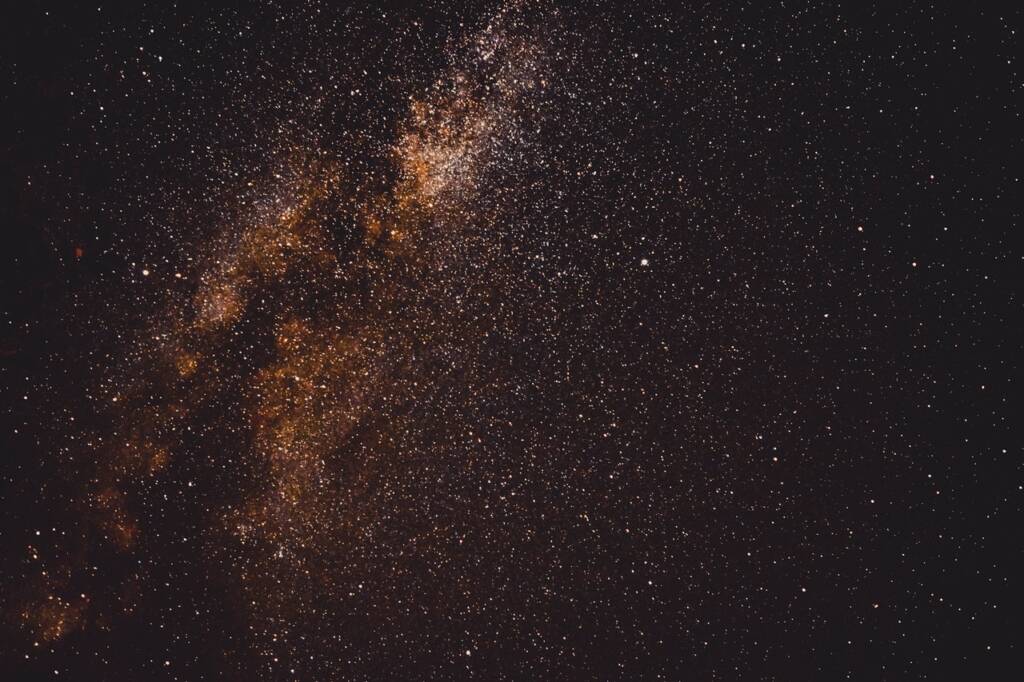
Universe (Cosmos) – is the entirety of spacetime, matter, and energy. It is hierarchically organized, including a countless number of galaxies that form clusters and filaments. According to the ΛCDM model, it is believed that the Universe consists of approximately 68% dark energy, 27% cold dark matter (non-baryonic), and only about 5% ordinary matter such as stars, planets, gas, and dust.
The area from which light has reached Earth is called the Observable Universe. All visible matter consists mainly of hydrogen and helium, with a small addition of heavier elements produced by stars.
The Universe is the subject of study in cosmology, and knowledge about it is acquired mainly through the analysis of radiation (light) emitted by celestial bodies. The Universe is also known as the Cosmos, from the Greek kósmos – order. This second term also has a narrower meaning: it can refer to outer space, surrounding the Earth’s atmosphere, i.e., outer space and the celestial bodies other than Earth filling it. For example, a space flight is an extra-terrestrial flight, its passenger is an astronaut, hypothetical extra-terrestrial beings are aliens, and cosmic radiation comes from beyond Earth.
Main components and structure of the cosmos:
Dark Energy (A) – is responsible for the accelerated expansion of the Universe.
Cold Dark Matter (CDM) – is „cold” matter, which means it moves at non-relativistic speeds (slow) and interacts gravitationally, creating large-scale structures (halos around galaxies) and binding galaxies together.
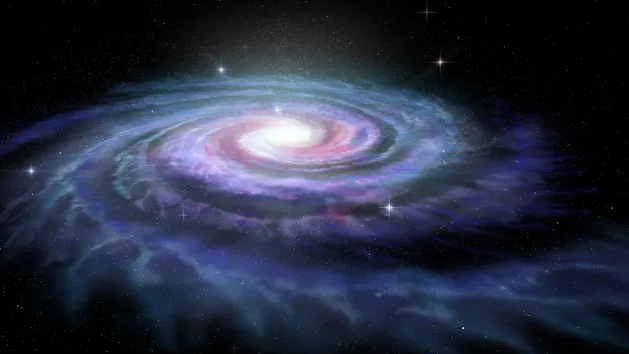
Galaxies – are the basic, large-scale organizational units of matter, consisting of a countless number of stars, dust, and gas, held together by gravity (e.g., the Milky Way).
Galaxies are not distributed uniformly. They form groups and clusters of galaxies bound by gravity.
Superclusters are the largest structures, consisting of many clusters.
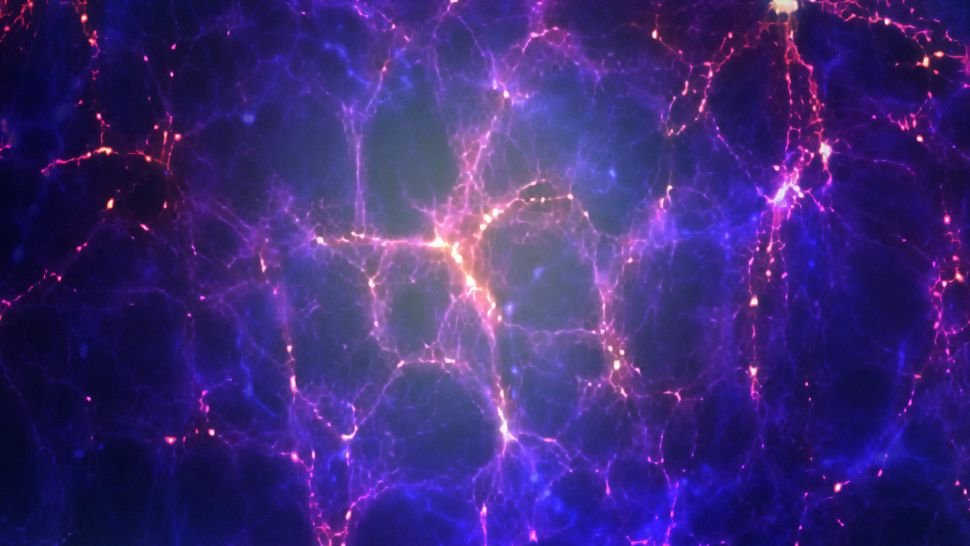
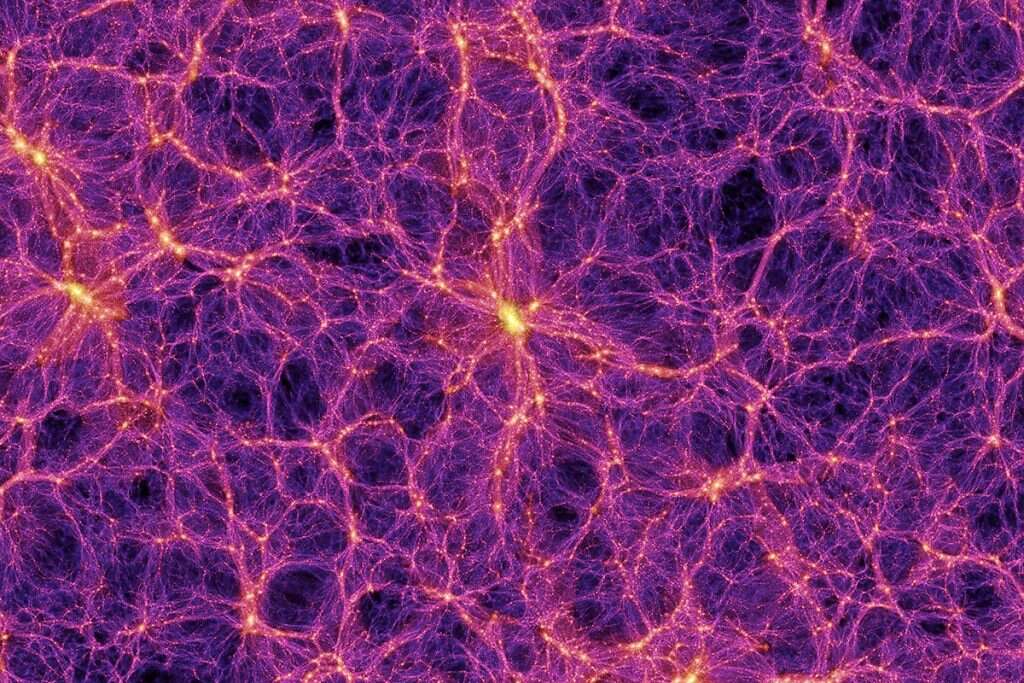
Filaments surrounding empty spaces are the largest structures of the Universe. Filaments look like giant threads, stretching over distances from 70 to 150 megaparsecs, forming boundaries between giant voids. They are a concentration of clusters and superclusters of galaxies (e.g., Hercules-Corona Borealis Great Wall).
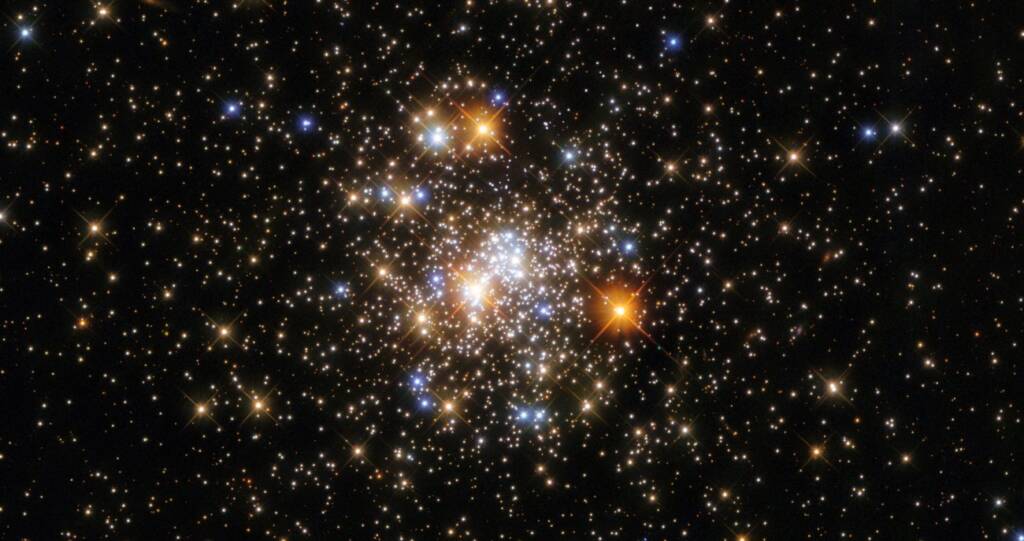
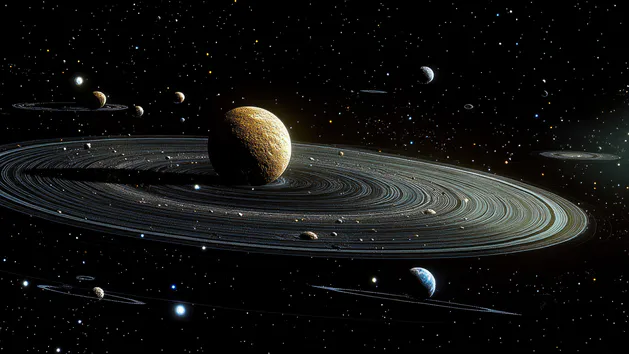
Planetary systems – are stars with planets, satellites (moons), asteroids, and comets orbiting them (e.g., the Solar System).
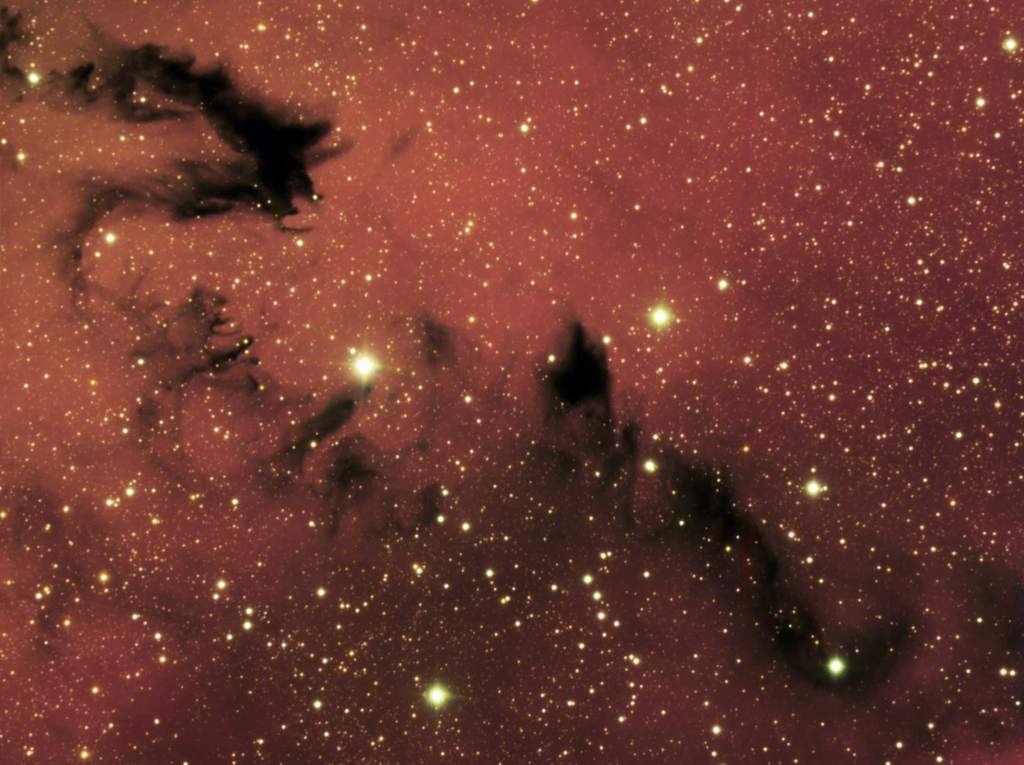
Interstellar and intergalactic matter – is the sparse gas and dust filling the space.
In summary, the cosmos is a structure of a „spongy” or „web-like” character, in which matter is concentrated along filaments, forming galaxies, and the whole is subject to constant evolution and expansion.