Kuiper Belt & scattered disk
Icy bodies beyond Neptune can be redirected inward by gravitational encounters. Many return in less than 200 years and travel close to the planets’ orbital plane.


Comets are small, fragile worlds of ice, rock, dust and frozen gases. Far from the Sun they remain dark and quiet; near it, sunlight transforms them into some of the most spectacular objects in the sky.
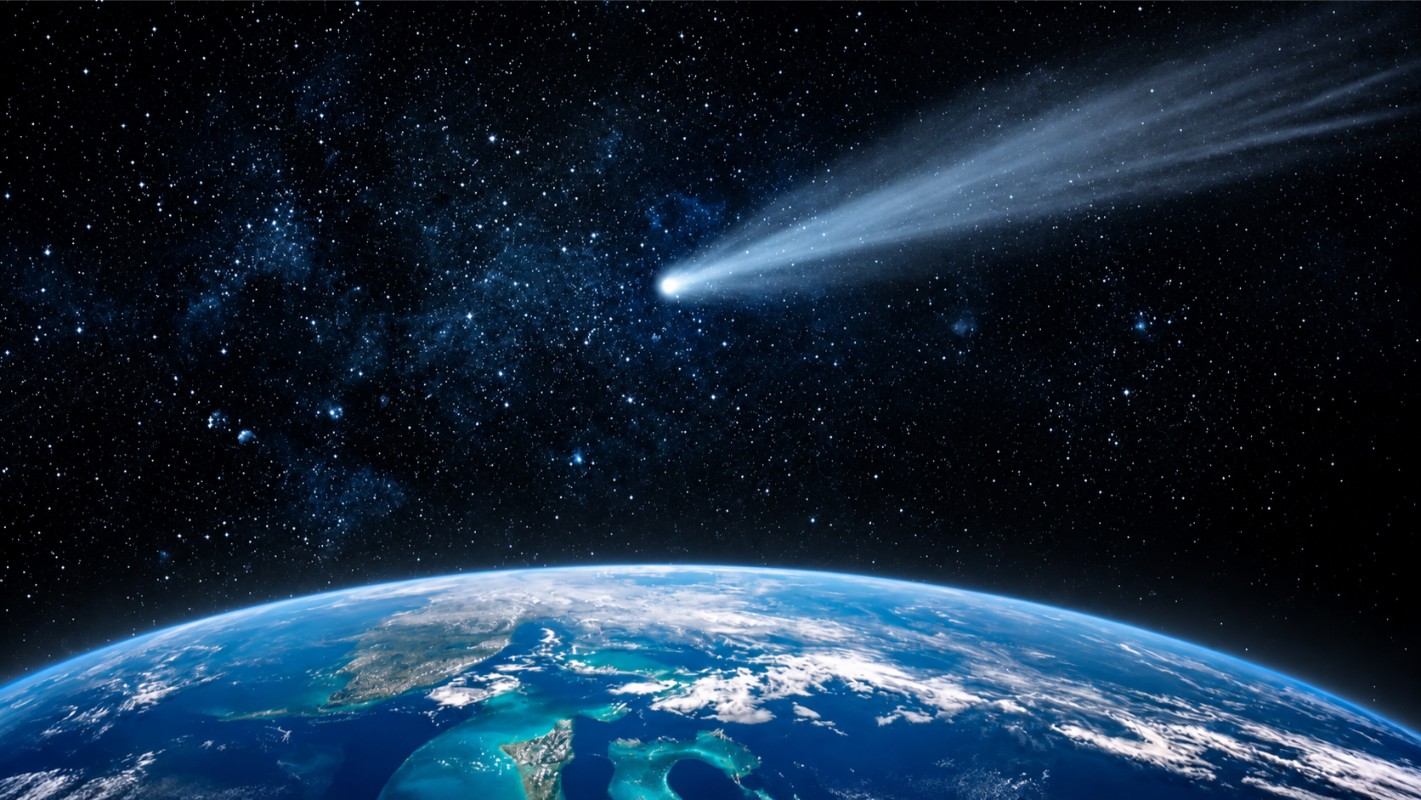
A comet is a small body orbiting the Sun, often on a highly elongated path. Its nucleus is a porous mixture of water ice, other frozen volatiles, dust and rocky material. The exact composition varies from one comet to another.
These bodies formed from material left over after the Sun and planets emerged about 4.6 billion years ago. That is why comet missions are not only journeys through space: they are investigations into the chemistry of the young Solar System.
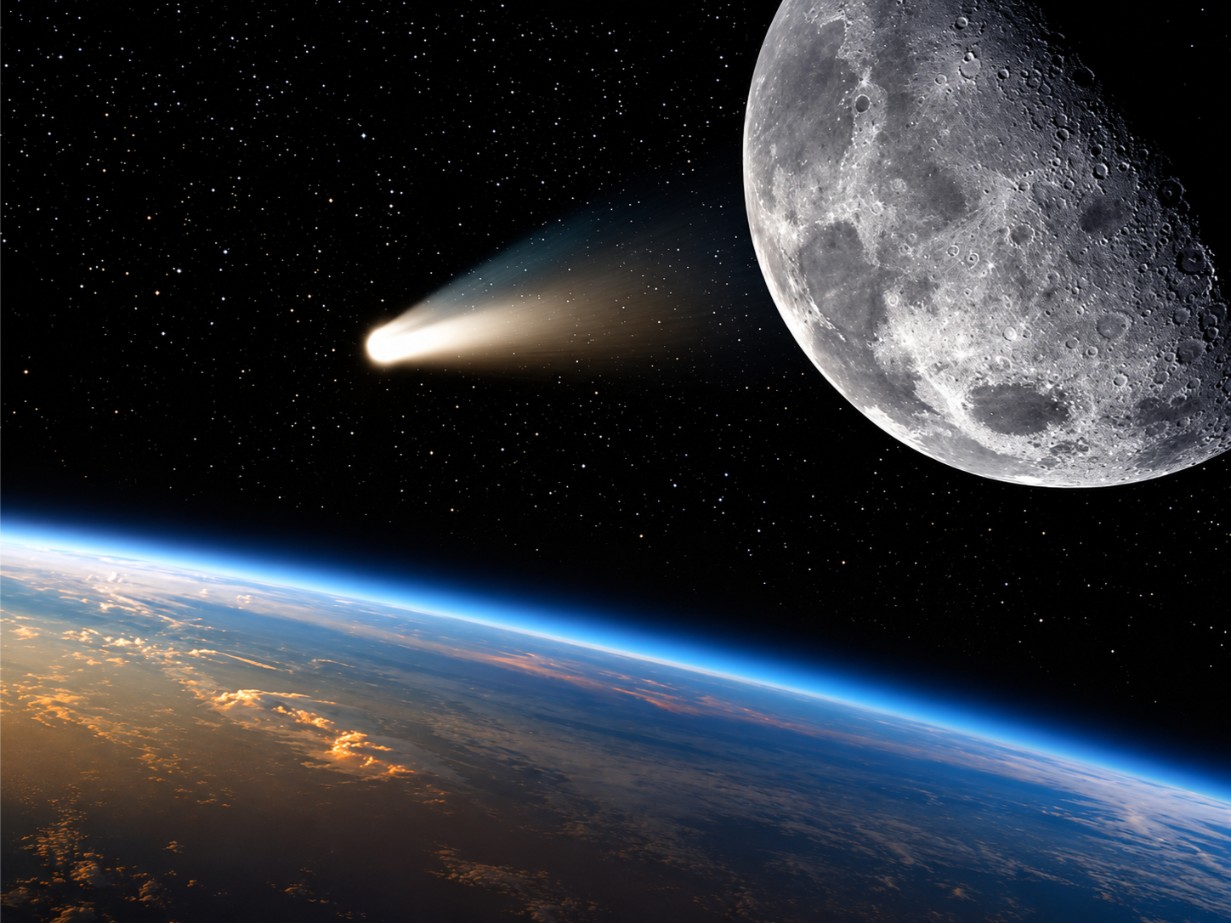
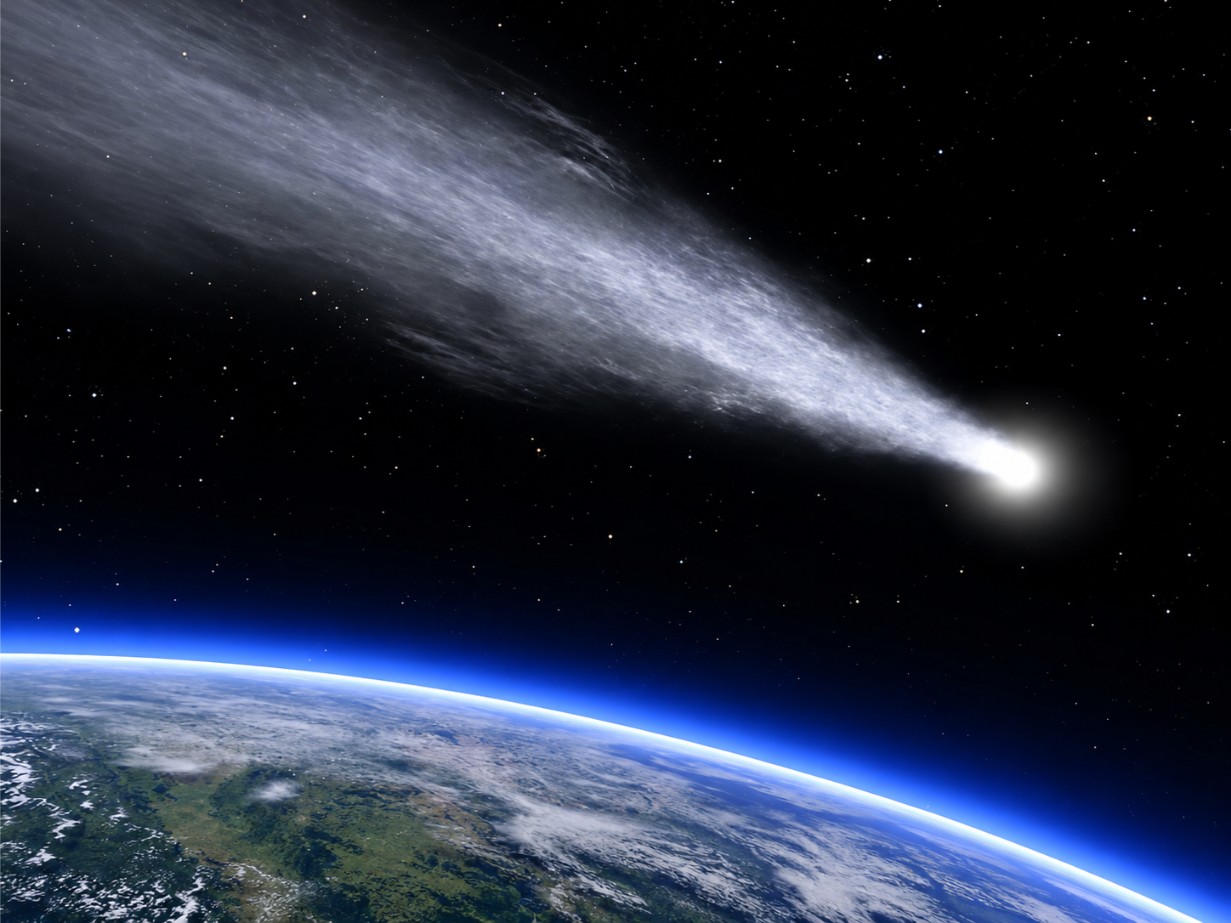
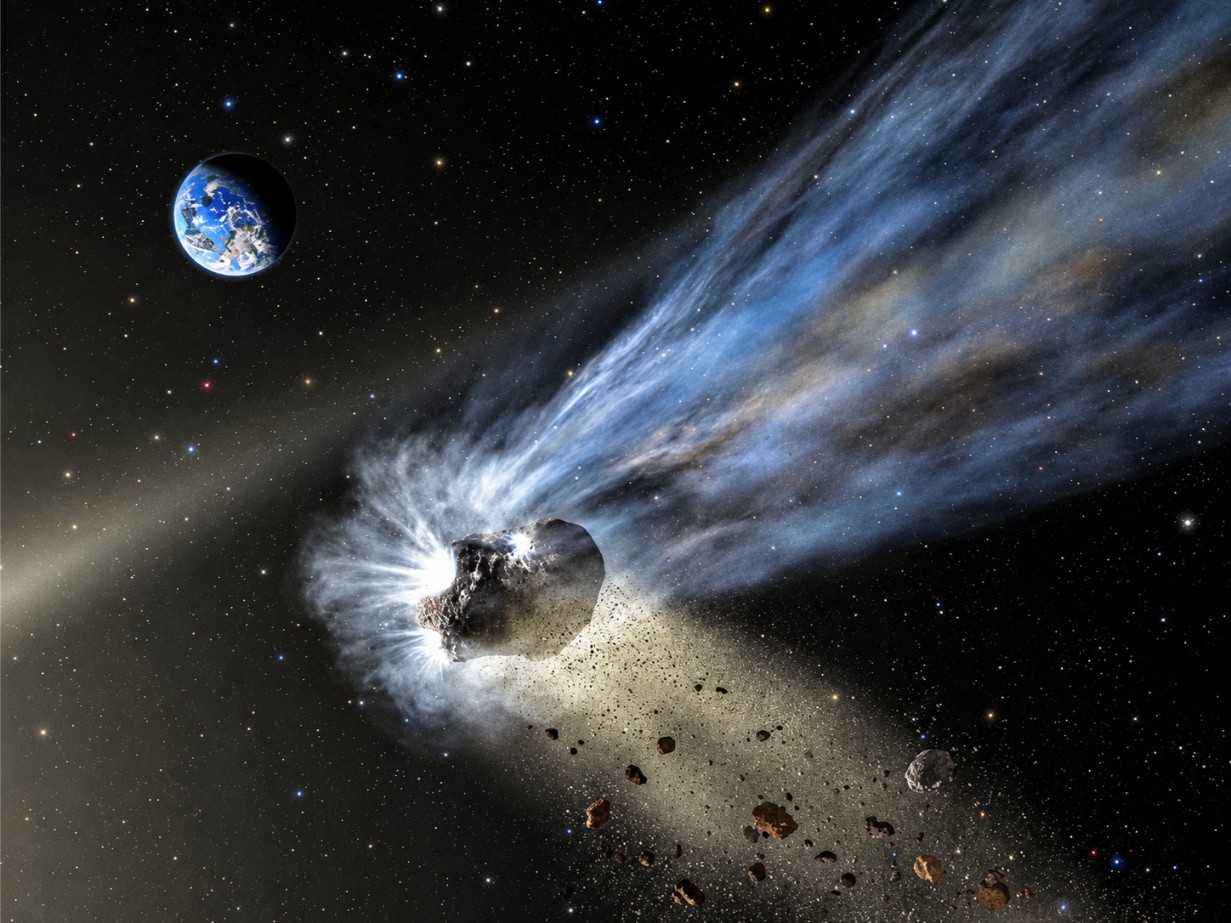
The solid core: typically only a few kilometres across, dark, irregular and rich in ice, dust and organic compounds.
As the comet warms, ice turns directly into gas. Escaping gas carries dust and creates a vast, diffuse atmosphere around the nucleus.
Icy bodies beyond Neptune can be redirected inward by gravitational encounters. Many return in less than 200 years and travel close to the planets’ orbital plane.
A vast, distant reservoir that has not yet been observed directly, but is inferred from comet orbits. Passing stars and galactic tides can send its bodies toward the Sun.
Rare visitors on unbound paths, such as 2I/Borisov, formed around other stars and offer a direct comparison with material from our own system.
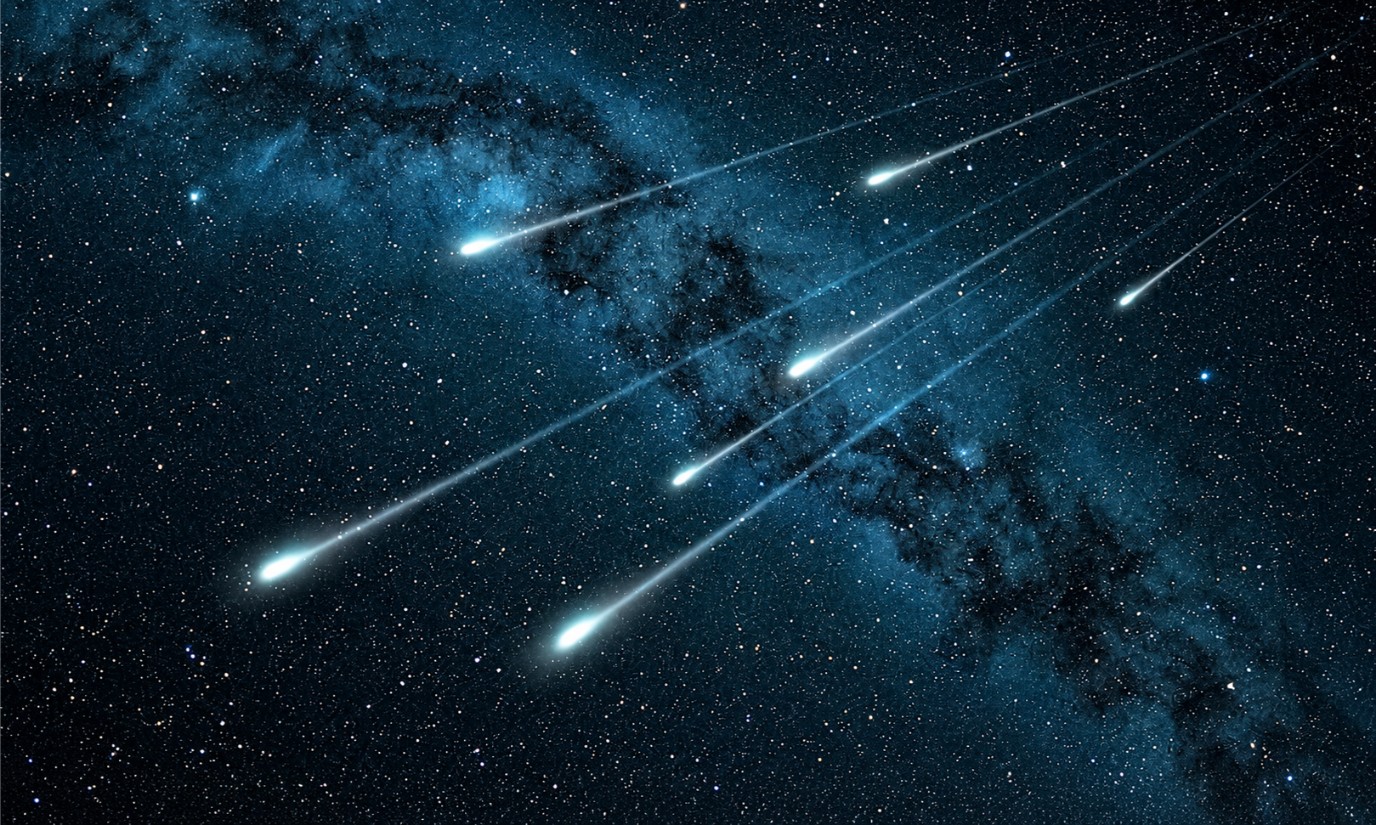
During repeated journeys around the Sun, a comet leaves particles along its orbit. When Earth crosses such a stream, the grains enter our atmosphere and burn up as a meteor shower.
"(《世界人权宣言》) Perseids are linked to comet 109P/Swift–Tuttle; the Draconids to comet 21P/Giacobini–Zinner. The parent comet can be far away when its old trail lights the sky.
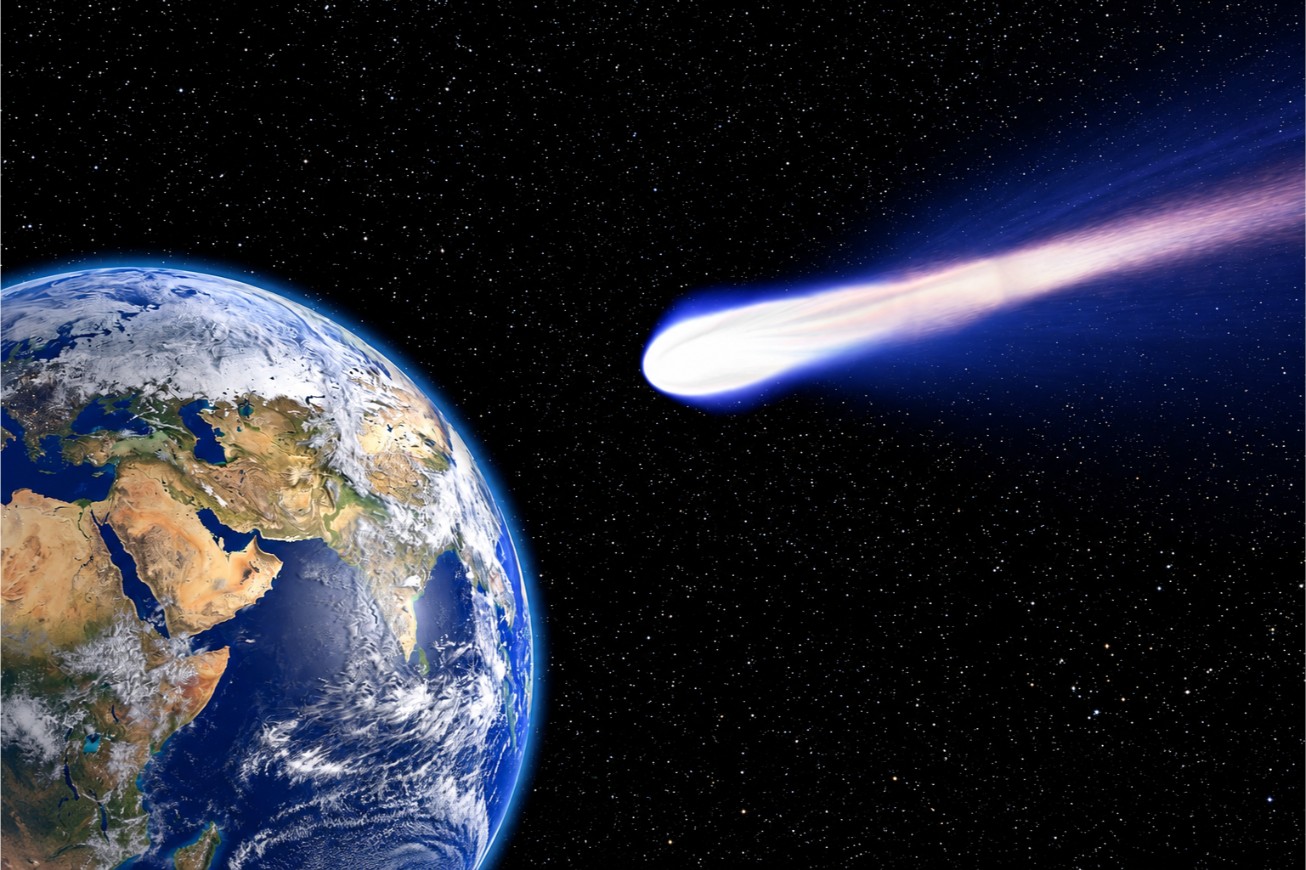
Edmond Halley’s orbital calculations turned a frightening apparition into a predictable celestial visitor. It last passed perihelion in 1986 and is expected again in 2061.
ESA’s Giotto spacecraft flew close to the nucleus in 1986, revealing a dark body with powerful jets and changing forever how comets were pictured.
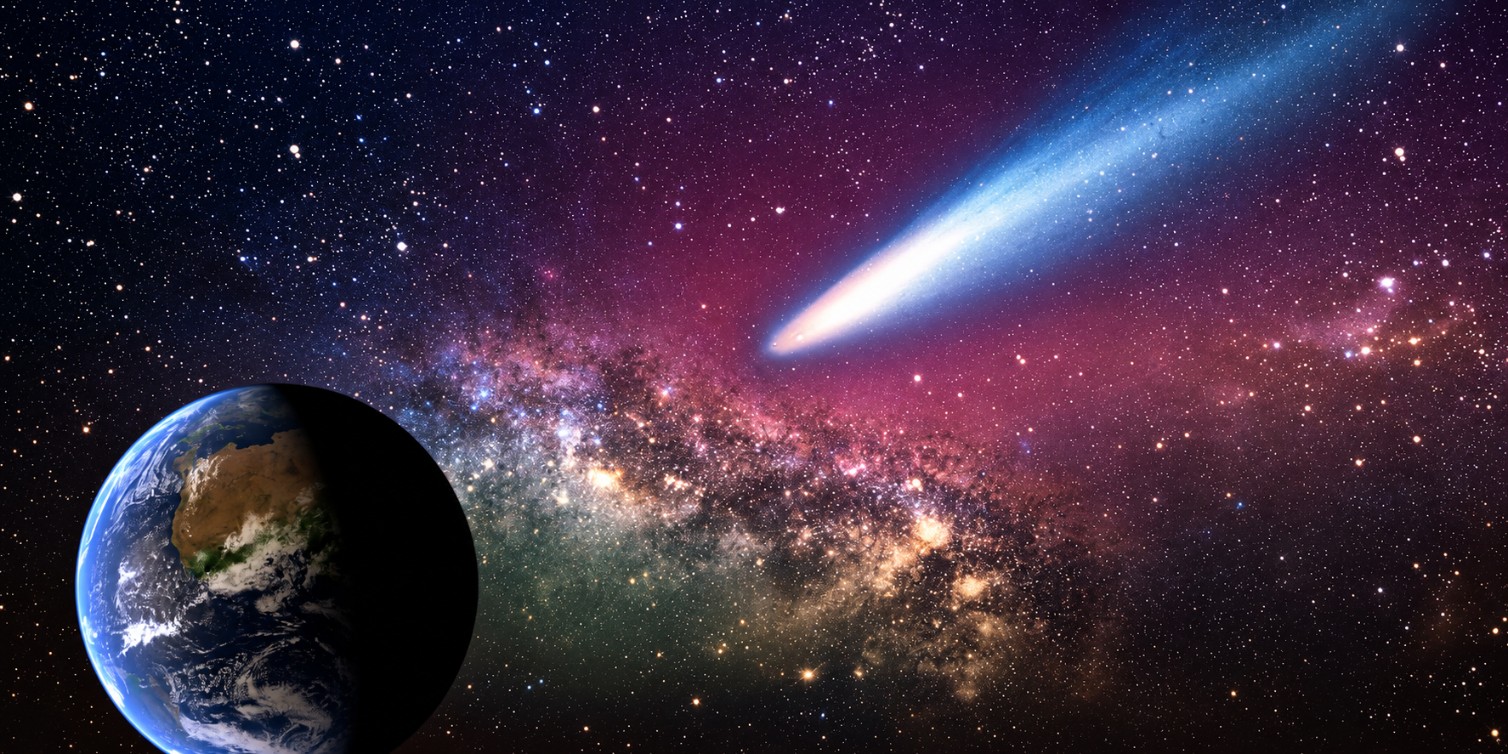
One of the most photographed comets of 2024, notable for its bright dust display and the apparent anti-tail produced by viewing geometry as Earth crossed the comet’s orbital plane.
Its changing geometry let observers see how a flat sheet of dust can look like a spike pointing toward the Sun—an optical perspective effect, not material flowing sunward.
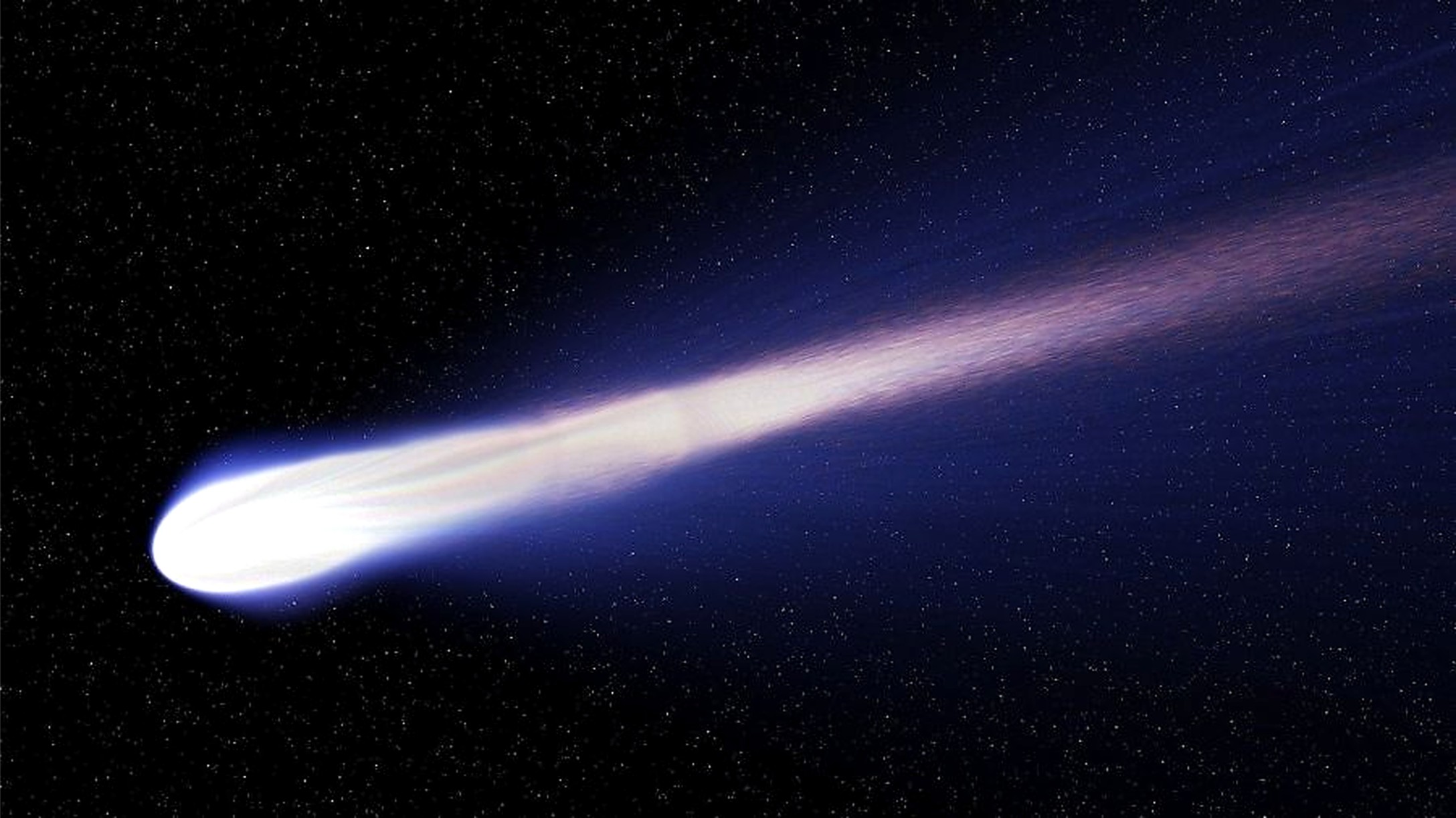
Exceptionally bright and active, Hale–Bopp remained visible to the unaided eye for about 18 months. Its distinct dust and ion tails made comet physics visible on a grand scale.
Its orbit was altered by planetary encounters. Current estimates place its next return thousands of years in the future.
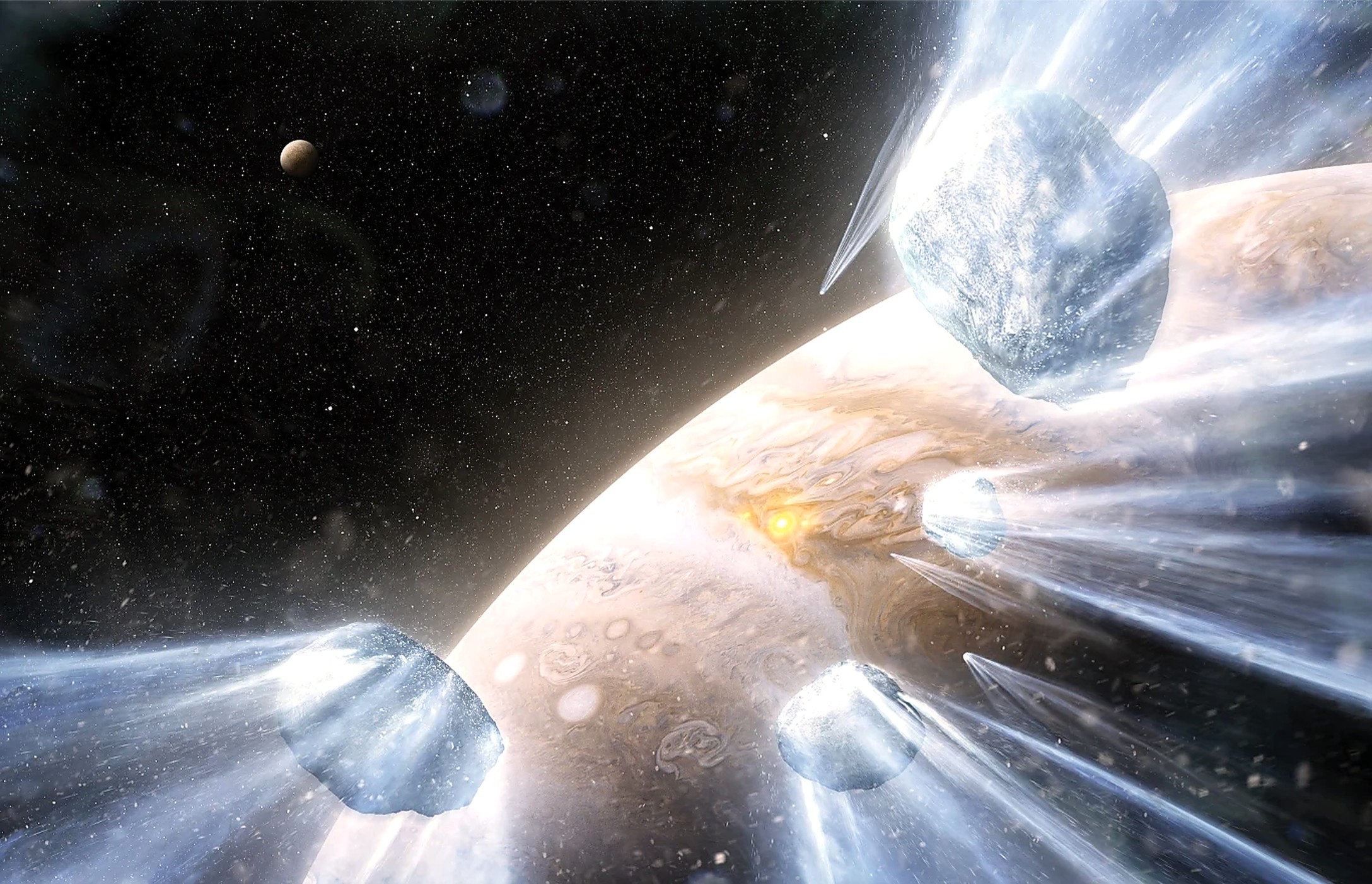
Jupiter’s gravity tore the comet into a chain of fragments. Their impacts produced dark scars in the planet’s atmosphere and gave science its first real-time view of a major Solar System collision.
The event became a natural laboratory for impact physics and a vivid demonstration that collisions still shape planetary systems.
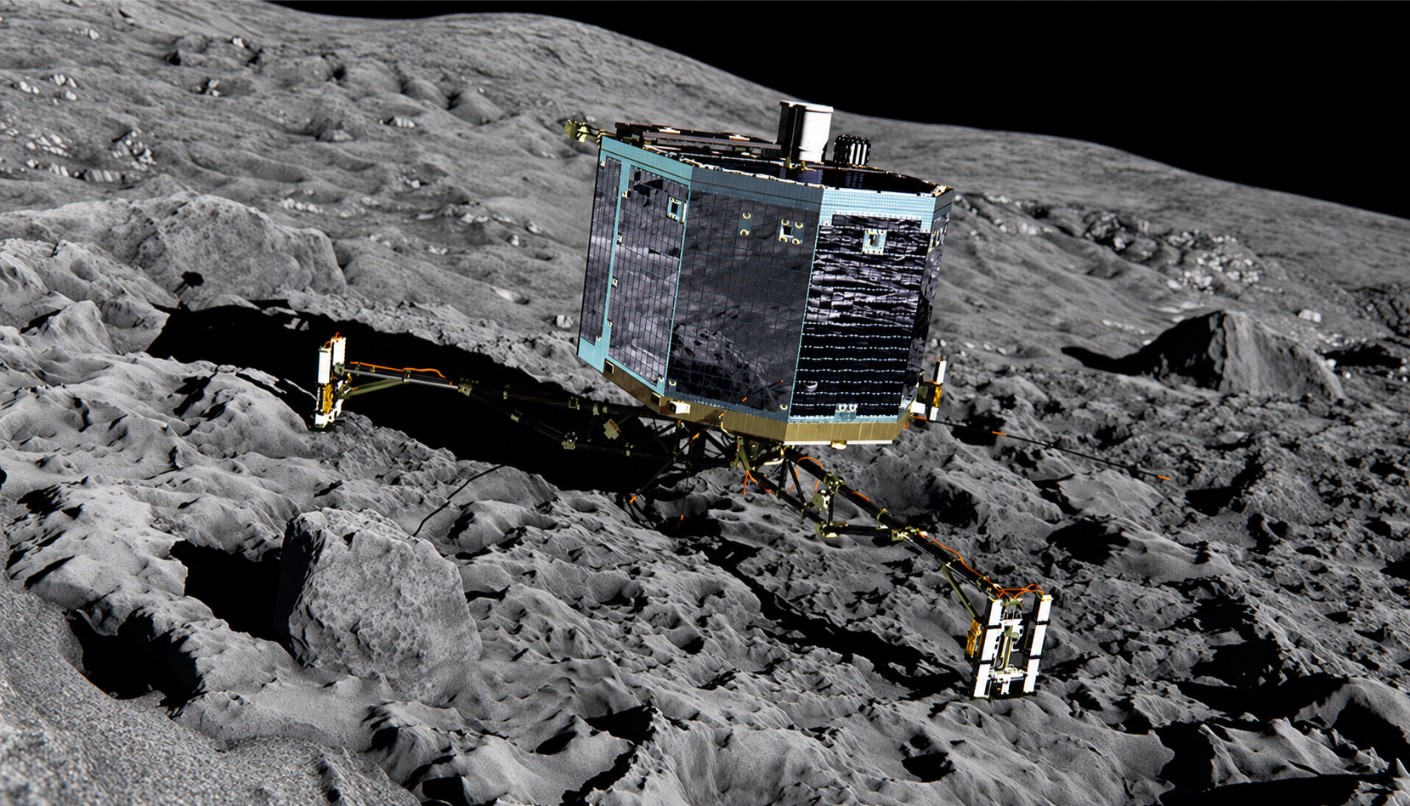
ESA’s Rosetta mission escorted the comet for more than two years. Philae made the first soft landing on a comet nucleus in 2014, despite bouncing before coming to rest.
Its “rubber-duck” shape, active jets and detected organic molecules showed that even a small comet is a complex, changing world.
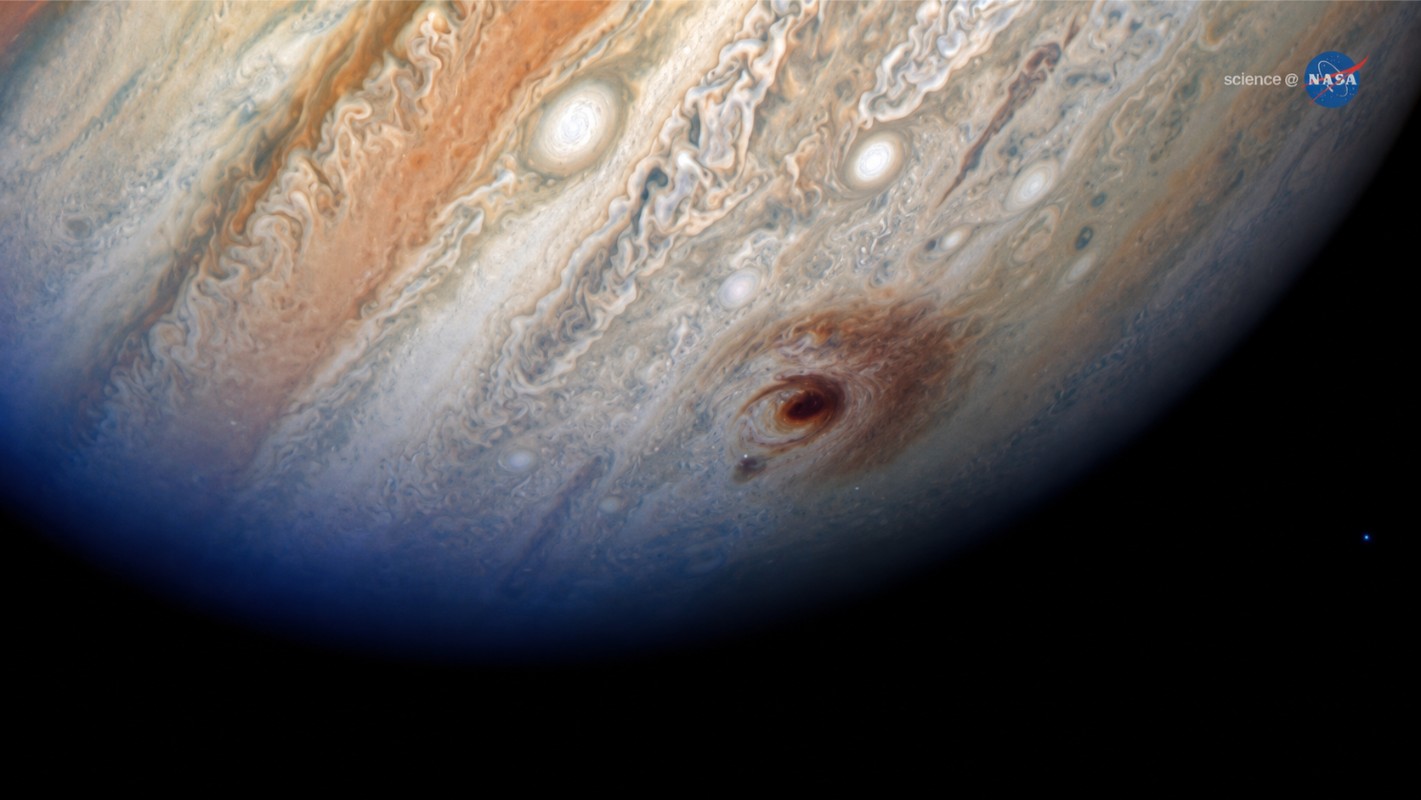
The dark marks left in Jupiter’s atmosphere persisted long enough to be tracked from Earth and by spacecraft, allowing researchers to follow how impact material spread through a giant planet’s atmosphere.
The impacts connected observation, atmospheric chemistry and numerical modelling—an unusually complete record of a collision beyond Earth.
| Object | Orbit / period | Key date | Scientific importance |
|---|---|---|---|
| 1P/Halley | Short-period, ~75–76 years | 1986; next 2061 | Predicted return; Giotto close flyby |
| C/2023 A3 | Long-period | 2024 | Bright dust display and anti-tail geometry |
| Hale–Bopp | Long-period | 1997 | Exceptional brightness and prolonged visibility |
| Shoemaker–Levy 9 | Captured and disrupted by Jupiter | 1994 impact | First major collision observed in real time |
| 67P | Short-period, ~6.4 years | 2014 landing | First soft landing on a comet nucleus |
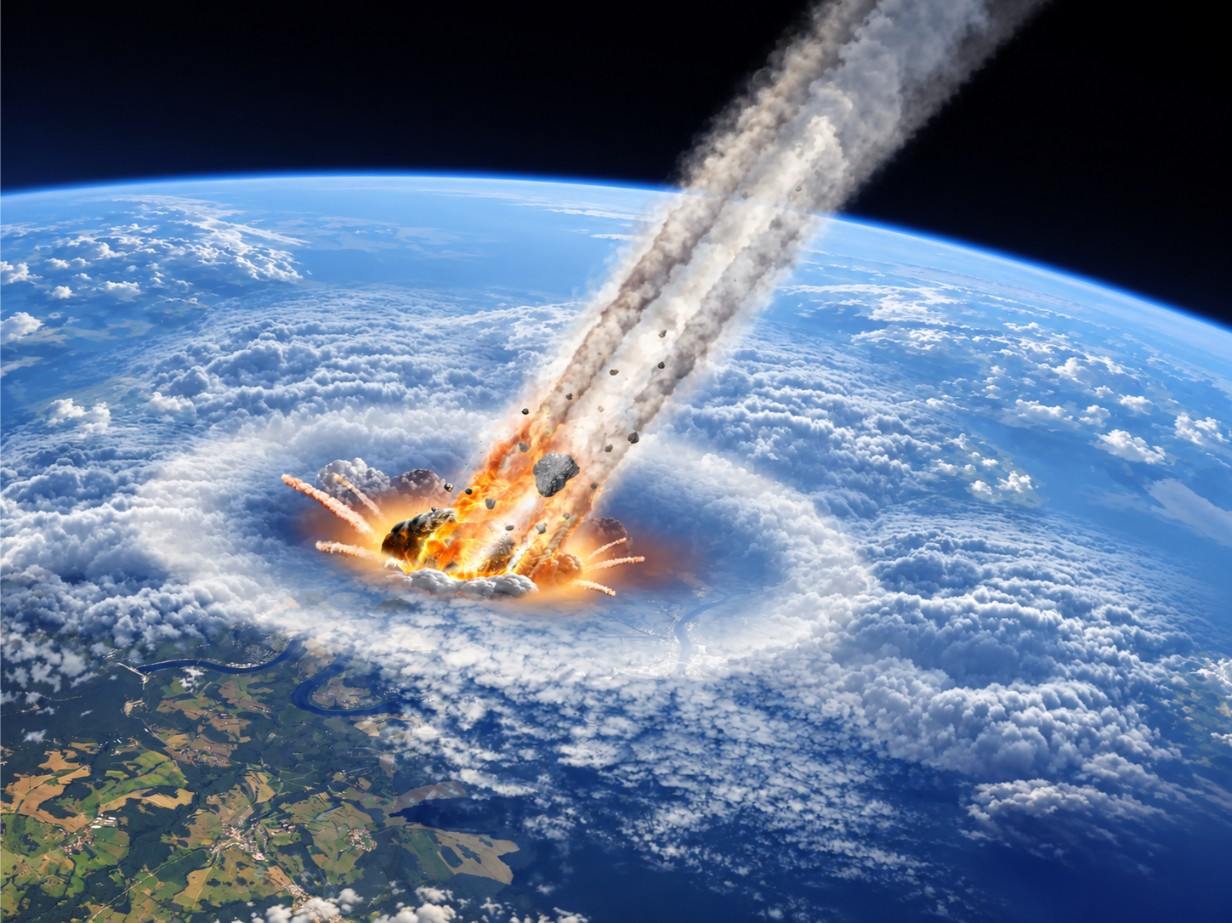
Comets can cross planetary orbits at very high relative speeds. A large impact would release enormous energy, but the probability of a dangerous comet impact in the near future is extremely low.
Long-period comets are the hardest case: they can arrive from almost any direction and may be discovered with less warning than most near-Earth asteroids. Planetary defence therefore depends on continuous sky surveys, rapid orbit calculation and international coordination.