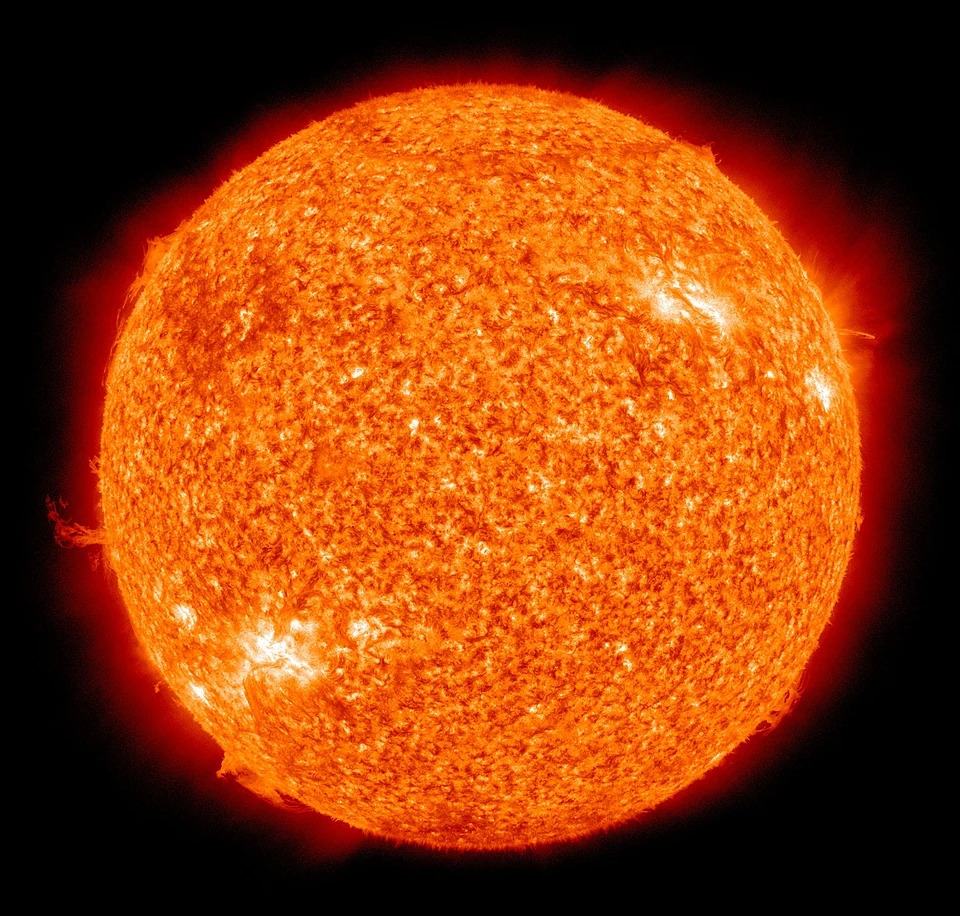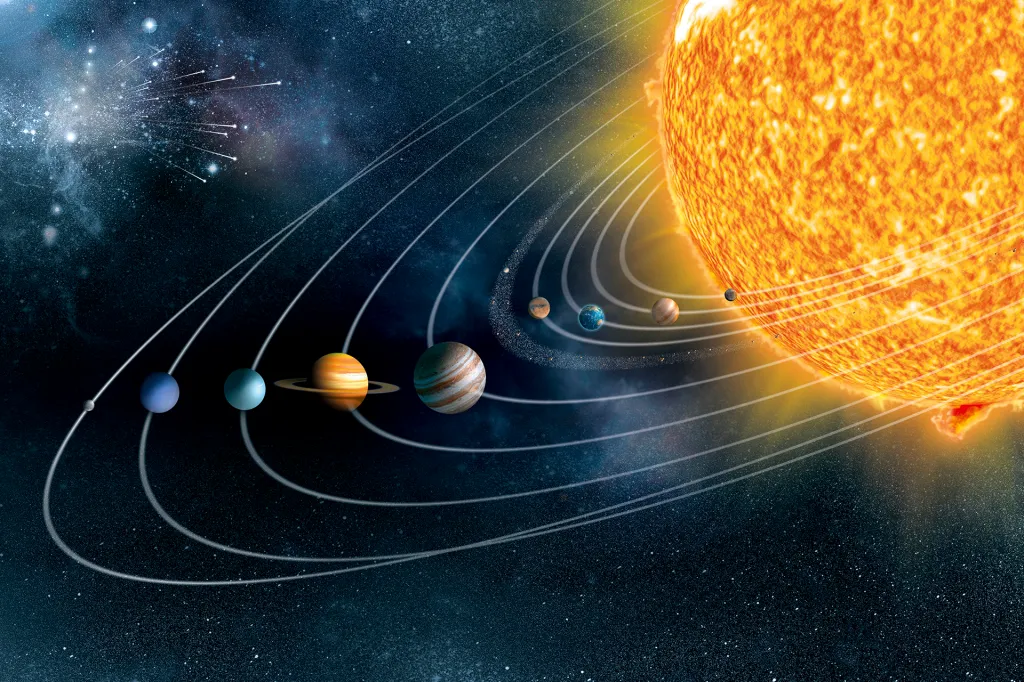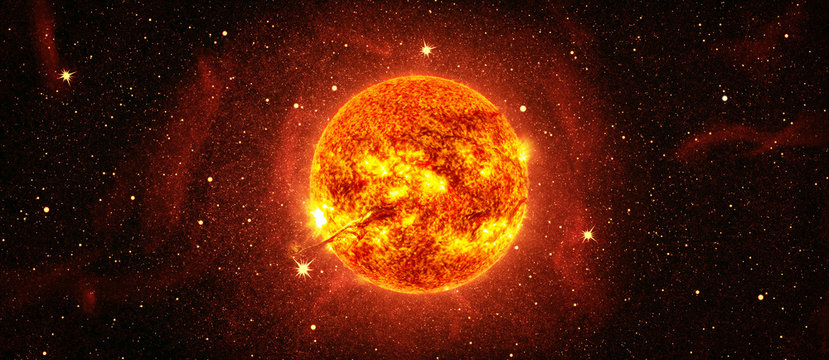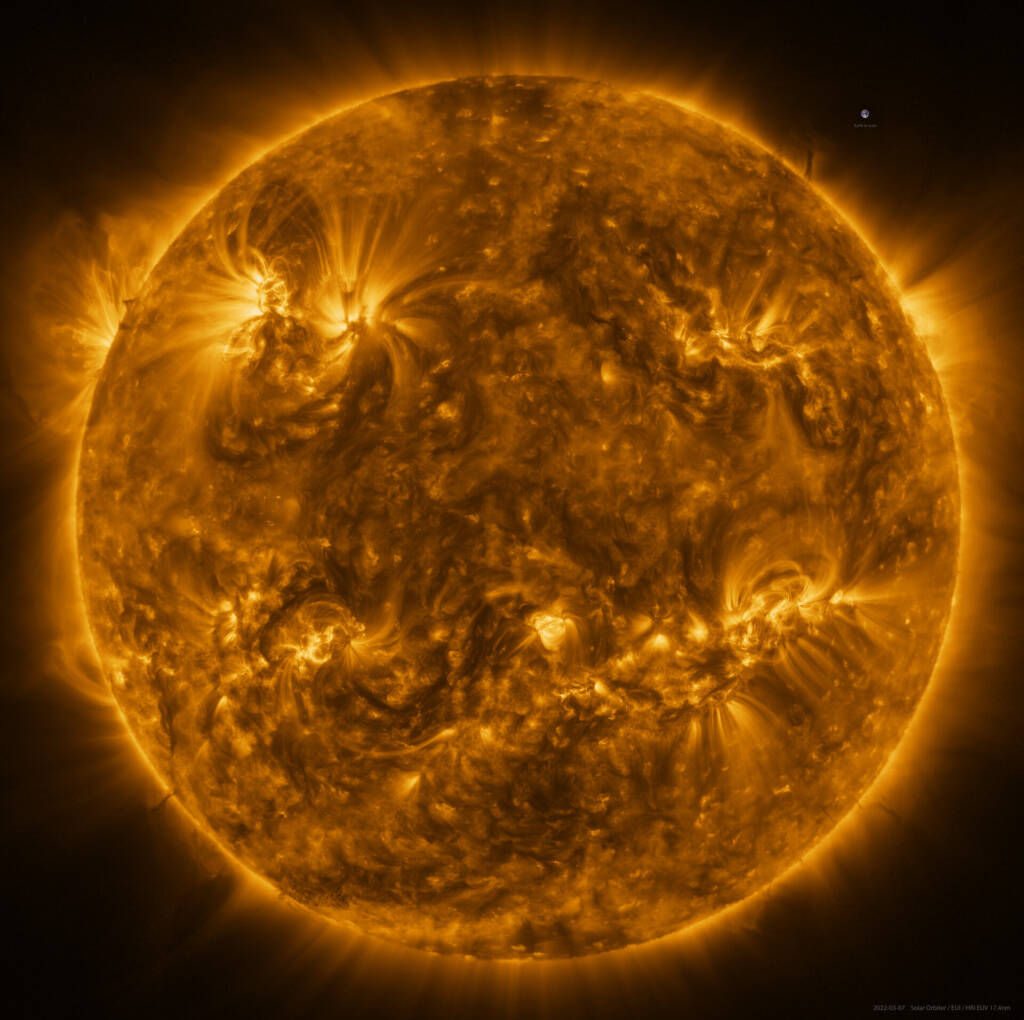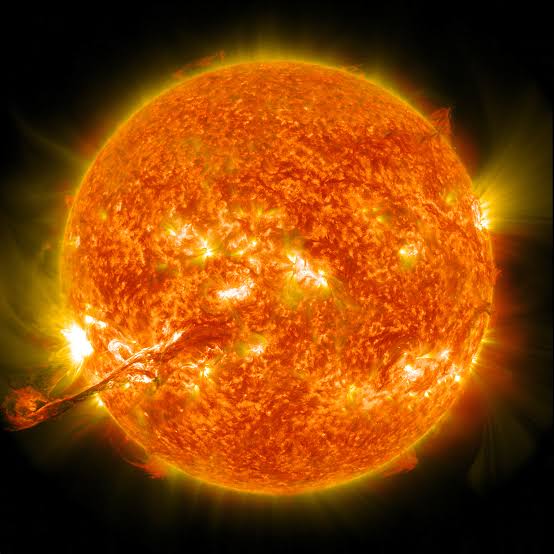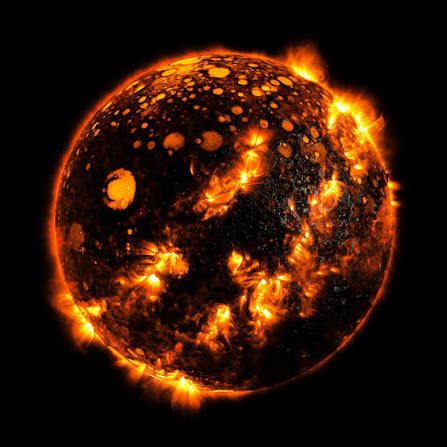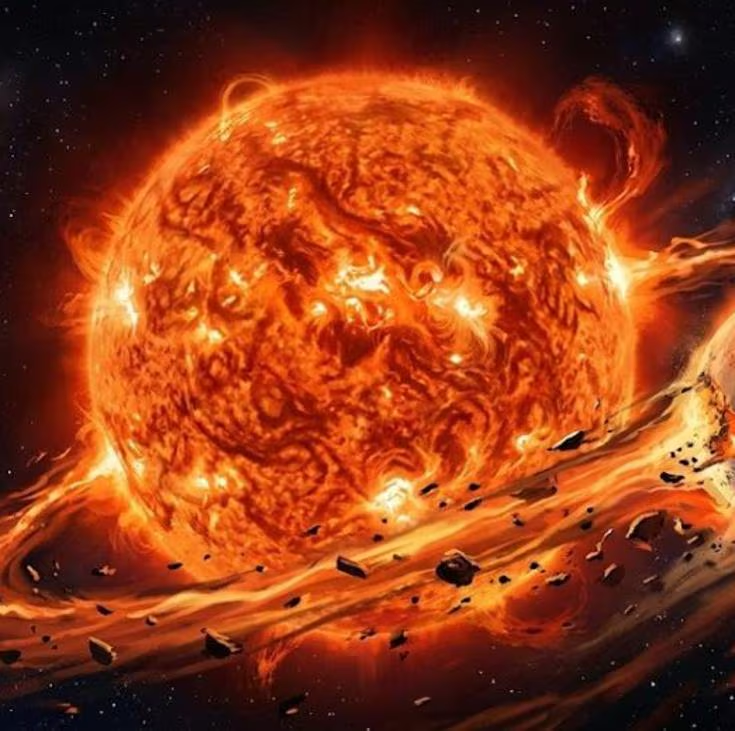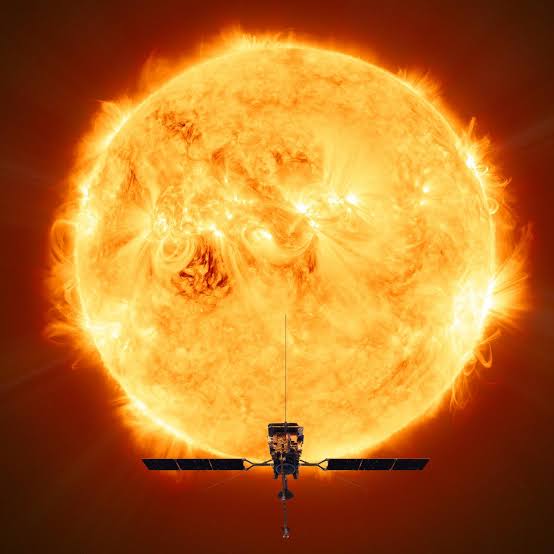
《太阳报》 is the central, dominating star of our planetary system, serving as the primary anchor around which Earth and all other Solar System bodies revolve. It is a dynamic, continuously pulsating sphere of incandescent plasma powered by thermonuclear fusion at its core. Accounting for virtually all the gravitational mass of the Solar System, the Sun acts as the ultimate engine of weather, ocean currents, seasonal cycles, and biological life on Earth. Its intense magnetic activity shapes a vast bubble in interstellar space known as the heliosphere, extending far beyond the orbits of the outermost planets.
Formed approximately 4.6 billion years ago from the gravitational collapse of a giant molecular cloud, the Sun is currently in its prime—a main-sequence star undergoing steady hydrogen-to-helium fusion. Through the emission of electromagnetic radiation and a continuous stream of charged particles known as the solar wind, the Sun connects directly to every planet in the system, driving complex space-weather phenomena, magnetospheric displays, and planetary atmospheric evolution. Understanding the physics, architecture, and dynamic behavior of the Sun provides the fundamental key to understanding not only our own cosmic home, but also billions of other star systems across the universe.
I. STELLAR METRICS AND COSMIC LOCATION
To grasp the nature of the Sun, one must analyze its exact position within our galaxy, its astronomical classification, its physical dimensions, and the light-speed relationship it maintains with the planets in its orbit.
1. The Sun’s Position in the Milky Way (Orion Arm, Galactic Radius)
On a cosmic scale, the Sun is situated within the Milky Way, a barred spiral galaxy containing an estimated 100 to 400 billion stars. The Sun resides in a relatively quiet, low-density region of the galaxy known as the Orion-Cygnus Arm (or simply the Local Arm), located between two major spiral arms: the Sagittarius Arm toward the galactic interior and the Perseus Arm toward the outer edge.
The Sun orbits the Galactic Center at a distance known as the galactic radius, which is roughly 26,000 to 28,000 light-years (approx. 8 kiloparsecs) from the core. It follows a nearly circular orbit at an average velocity of approximately 220 kilometers per second. At this speed, it takes the Sun roughly 225 to 250 million Earth years to complete a single revolution around the galactic center—a duration referred to as a cosmic year or galactic year.
This specific orbital position places the Sun well within the “Galactic Habitable Zone.” It is far enough from the chaotic, radiation-dense galactic core to avoid frequent supernova explosions and intense gamma-ray bursts, yet close enough to a region enriched with heavy elements needed to form rocky planets.
2. Spectral Classification and Star Type (Yellow Dwarf, G2V Main-Sequence Star)
In astrophysics, the Sun is officially classified as a G2V main-sequence star, informally designated as a yellow dwarf. This classification breaks down into specific physical parameters:
Letter G (Spectral Class): Indicates a surface effective temperature of approximately 5,772 Kelvin (roughly 5,500 degrees Celsius). Stars in this temperature band emit light primarily in the green-yellow spectrum, though to human eyes through Earth’s atmosphere, it appears white or pale yellow.
Number 2 (Spectral Subclass): Places the Sun on a scale from 0 (hottest) to 9 (coolest) within class G. A G2 star is slightly hotter than average for its class.
Luminosity Class V: Designates that the Sun is a “main-sequence” star. This means it is currently in the stable, adult phase of its evolution, generating energy via the nuclear fusion of hydrogen into helium in its core under hydrostatic equilibrium.
Despite the colloquial term “dwarf,” the Sun is actually larger and more luminous than roughly 85% of all stars in the Milky Way galaxy, the vast majority of which are tiny, faint red dwarfs (M-class stars).
3. Mass, Volume, Density, and Surface Gravity
The Sun is a gravitational titan compared to the bodies orbiting it. Its physical dimensions dictate the orbital dynamics of the entire Solar System.
Mass: The mass of the Sun is approximately 1.989 x 10^30 kg (1,989,000,000,000,000,000,000,000,000,000 kg). This single value accounts for 99.86% of the total mass of the entire Solar System. Jupiter and the remaining planets, moons, asteroids, and comets make up the tiny 0.14% fraction that remains.
卷: The Sun’s physical sphere is vast, with a mean radius of roughly 696,340 kilometers—about 109 times the radius of Earth. Its total volume is large enough that over 1.3 million Earths could fit inside an empty Sun.
Density: Because the Sun is composed entirely of gas and ionized plasma, its average density is relatively low at approximately 1.41 grams per cubic centimeter—comparable to the density of water or maple syrup. However, this density is highly stratified: while the core reaches an extreme density of roughly 150 grams per cubic centimeter (13 times denser than lead), the outer layers are thinner than the highest-grade vacuum created on Earth.
Surface Gravity: The massive concentration of mass generates a powerful gravitational field. The acceleration due to gravity at the Sun’s surface (photosphere) is approximately 274 meters per second squared—roughly 28 times stronger than Earth’s gravity. An individual weighing 70 kilograms on Earth would weigh nearly 2,000 kilograms at the solar surface.
4. Distances and Light Signal Delay
The spatial separation between the Sun and its planetary bodies defines the scale of the Solar System. The mean distance from the Sun to the Earth is defined as one Astronomical Unit (AU), which is standardized at precisely 149,597,870,700 meters (roughly 149.6 million kilometers).
Because electromagnetic radiation (including visible light) travels through a vacuum at a finite speed of approximately 299,792 kilometers per second, solar energy and signals experience a distinct time delay when traveling across the system:
To Mercury (0.39 AU): Light takes approximately 3.2 minutes to arrive.
To Earth (1.00 AU): Light takes approximately 8 minutes and 20 seconds to arrive. When we observe the Sun, we are seeing it as it existed over eight minutes in the past.
To Mars (1.52 AU): Light takes approximately 12.6 minutes to arrive.
To Jupiter (5.20 AU): Light takes approximately 43 minutes to arrive.
To Neptune (30.07 AU): Light takes roughly 4 hours and 10 minutes to reach the outermost major planet.
To the Heliospheric Boundary (approx. 120 AU): Light takes approximately 16.6 hours to reach the edge of the solar domain.
This light-speed propagation delay means that catastrophic solar events—such as major coronal mass ejections or solar flares—are only observed on Earth minutes after they have physically occurred at the solar surface, creating an inherent delay window for space weather monitoring.
II. INTERNAL ARCHITECTURE AND NUCLEAR PHYSICS
The interior of the Sun is a colossal nuclear reactor and thermodynamic furnace. Lacking a solid surface, the star is structured in concentric spherical layers, each defined by distinct physical parameters, mechanisms of heat transport, and plasma behavior. From the scorching, hyper-dense core to the churning convective boundary near the surface, energy flows outward through complex physical processes governed by fundamental nuclear and fluid physics.
1. The Solar Core: Thermonuclear Fusion Reactions (The Proton-Proton Chain)
The solar core extends from the center of the Sun outward to approximately 20% to 25% of its total radius. Containing roughly 34% of the Sun’s total mass within only 0.8% of its total volume, the core is subjected to mind-boggling physical conditions: temperatures reach approximately 15.7 million Kelvin, pressures exceed 250 billion atmospheres, and densities hit roughly 150 grams per cubic centimeter.
Under these extreme conditions, electrons are stripped from nuclei, creating a dense, fully ionized hydrogen-helium plasma. This environment overcomes the electrostatic repulsion (the Coulomb barrier) between positively charged atomic nuclei, enabling thermonuclear fusion.
The dominant nuclear reaction powering the Sun is the proton-proton (p-p) chain reaction, which proceeds through three main steps:
Step One: Two protons (hydrogen nuclei) collide at high speed. Weak nuclear interaction forces cause one proton to undergo beta-plus decay, transforming into a neutron and releasing a positron and an electron neutrino. This forms a nucleus of deuterium (heavy hydrogen).
Step Two: The deuterium nucleus quickly collides with another proton, fusing to form a lightweight isotope of helium, helium-3, while releasing a high-energy gamma-ray photon.
Step Three: Two helium-3 nuclei collide, fusing to form a stable helium-4 nucleus while ejecting two energetic protons back into the plasma to continue the chain.
Through this chain, the core converts approximately 600 million tons of hydrogen into roughly 596 million tons of helium every single second. The missing 4 million tons of mass is not destroyed; it is converted directly into pure energy according to Albert Einstein’s mass-energy equivalence equation, E = mc^2. This mass deficit generates an energy output of roughly 3.84 x 10^26 Watts—the continuous luminosity that illuminates the Solar System.
2. The Radiative Zone: Photon Path and the Random Walk Phenomenon
Surrounding the core and extending from about 25% to 70% of the solar radius lies the radiative zone. Temperatures here drop gradually from 7 million Kelvin near the inner boundary to about 2 million Kelvin near the top, while density falls from 20 grams per cubic centimeter down to 0.2 grams per cubic centimeter.
In this region, the temperature and density are still high enough that thermal conduction and convection cannot effectively occur. Instead, energy is transported outward almost exclusively by thermal radiation in the form of photons.
However, a photon created in the core does not travel directly out into space. Because the plasma in the radiative zone is extraordinarily dense and opaque, a high-energy gamma-ray photon travels only a microscopic distance (typically between 0.1 millimeter and a few millimeters) before colliding with an electron or ion. It is absorbed and immediately re-emitted in a completely random direction at a slightly lower energy level.
This endless cycle of absorption, scattering, and re-emission is known as the random walk phenomenon. A photon bounces aimlessly back and forth billions of times, gradually losing energy and degrading from extreme gamma rays down through X-rays and ultraviolet light. As a result of this extreme radiative resistance, it takes a single quantum of energy anywhere from 100,000 to 1,000,000 years to work its way out of the radiative zone to the surface, despite light moving at 300,000 kilometers per second in a vacuum.
3. The Tachocline: Rotation Boundary and Shear Layer
At roughly 70% of the solar radius (around 200,000 kilometers beneath the visible surface) lies a thin, highly turbulent transition layer known as the tachocline. This boundary separates two fundamentally different rotational regimes within the Sun:
Solid-Body Rotation (Radiative Zone Below): Beneath the tachocline, the deep radiative zone and core rotate uniformly as a rigid, solid sphere, completing a full revolution roughly once every 27 days.
Differential Rotation (Convection Zone Above): Above the tachocline, the gaseous outer layers rotate differentially. The solar equator rotates faster (completing a loop in about 25 days) than the polar regions (which take over 35 days).
The tachocline is a thin region of extreme physical stress—a shear layer—where the rapid velocity change between rigid internal rotation and fluid differential rotation creates intense friction in the plasma.
This immense physical shear twists, stretches, and intensifies magnetic field lines passing through the boundary. Most solar astrophysicists believe the tachocline is the engine room of the solar dynamo—the primary site where the Sun’s massive global magnetic field is generated, amplified, and organized before buoyant magnetic tubes rise toward the surface.
4. The Convection Zone and Surface Granulation Phenomena
Extending from the top of the tachocline up to the visible surface (the photosphere) is the convection zone, spanning the outer 30% of the Sun’s radius. Here, temperatures drop below 2 million Kelvin, allowing heavy ions (like carbon, nitrogen, oxygen, and iron) to retain some of their bound electrons.
This cooler, partially recombined plasma becomes opaque to radiation. Radiative heat transfer stalls because photons can no longer easily pass through the gas. Trapped heat builds up at the bottom of the zone, making the plasma thermally unstable and triggering massive fluid motion: convection.
Hot, buoyant plumes of plasma absorb energy at the tachocline and physically rise toward the surface, much like boiling water in a kettle. As these plumes reach the surface, they expand, radiate their thermal energy out into space, cool down, increase in density, and sink back down along the outer margins of the rising columns.
This boiling motion creates a striking visual pattern on the solar surface known as granulation:
Granules: The visible surface of the Sun is covered by roughly 4 million individual convection cells called granules. Each granule is a rising column of hot plasma about 1,000 to 1,500 kilometers across (roughly the size of a continent on Earth).
结构: The bright, hot center of a granule represents the upwelling plasma (temperatures around 6,000 Kelvin), while the thin, dark intergranular lanes surrounding it represent the cooler, descending plasma (temperatures around 5,000 Kelvin).
Lifespan: Individual granules are highly dynamic and short-lived, boiling, expanding, and dissolving over a lifespan of only 8 to 20 minutes before being replaced by new convective cells. On a larger scale, nested beneath these individual granules are supergranules—massive convective networks extending up to 30,000 kilometers across that move magnetic fields across the solar disk.
III. SOLAR ATMOSPHERE AND SURFACE
Above the churning convective interior lies the solar atmosphere—a dynamic, transparent outer shell composed of several distinct layers. Unlike Earth, the Sun has no solid surface; what appears to human eyes as a sharp boundary is simply the point where the plasma transitions from opaque to transparent. Moving outward from this boundary, the physical behavior of the solar plasma changes drastically, giving rise to extraordinary atmospheric structures and one of the most perplexing thermodynamic mysteries in stellar physics.
1. The Photosphere and the Sun’s Effective Temperature
"(《世界人权宣言》) photosphere is the deepest layer of the solar atmosphere and serves as the apparent, visible surface of the Sun. It is a surprisingly thin shell, spanning only about 300 to 500 kilometers in thickness—less than 0.1% of the Sun’s total radius.
Below the photosphere, the plasma is completely opaque to visible light due to the presence of negative hydrogen ions, which absorb photons. Within the photosphere, the density of the gas drops low enough for photons to finally escape freely into space, providing virtually all the light and heat that illuminates the Solar System.
"(《世界人权宣言》) effective temperature of the Sun is measured at the photosphere, averaging approximately 5,772 Kelvin (roughly 5,500 degrees Celsius). However, this temperature is not uniform throughout the layer:
Temperature Gradient: At the base of the photosphere, temperatures reach around 6,500 Kelvin, while at the top boundary (the temperature minimum zone), they drop to approximately 4,100 Kelvin.
Limb Darkening: Because of this vertical temperature gradient, the center of the visible solar disk appears brighter than its edges (limbs). When looking at the center, we see deeper into the hotter layers of the photosphere, whereas viewing the edge forces our line of sight through shallower, cooler gas.
The photosphere is also the layer where surface granulation, solar sunspots, and intense localized magnetic flux tubes become visually apparent.
2. The Chromosphere, Spicules, and Atmospheric Transition Regions
Directly above the photosphere lies the chromosphere (literally, the “color sphere”), an atmospheric layer roughly 2,000 to 3,000 kilometers thick. During a total solar eclipse, when the brilliant light of the photosphere is blocked by the Moon, the chromosphere briefly flashes a vibrant reddish-pink color. This distinct hue is produced by strong Balmer-alpha emission lines from excited hydrogen atoms at 656.3 nanometers.
Unlike the underlying interior, the temperature in the chromosphere breaks standard thermodynamic rules: instead of continuing to cool as it moves further from the core, the temperature actually begins to rise, climbing from roughly 4,500 Kelvin at the base to over 20,000 Kelvin at the top.
The chromosphere is a wildly violent, turbulent dynamic environment filled with fine structural features:
Spicules: Dynamic, needle-like jets of supersonic plasma that continuously shoot upward from the lower atmosphere into the upper chromosphere. A single spicule can reach lengths of 10,000 kilometers and move at speeds exceeding 100 kilometers per second. At any given moment, there are roughly 100,000 active spicules covering the Sun, acting as thermal pipes that inject hot mass into the upper atmosphere before collapsing back down after 5 to 10 minutes.
The Transition Region: Directly above the chromosphere lies a razor-thin layer—only tens to hundreds of kilometers thick—known as the transition region. Here, the physical state of the solar plasma undergoes an extreme shift: the temperature skyrockets from 20,000 Kelvin up to nearly 1 million Kelvin, while the plasma transitions from partially neutral to almost completely ionized.
3. The Solar Corona: The Coronal Heating Problem
"(《世界人权宣言》) corona is the outermost, ultra-tenuous halo of the Sun’s atmosphere, extending millions of kilometers into space and eventually merging into the solar wind. Visible as a ghostly white crown during a total solar eclipse, the corona is incredibly diffuse, with a particle density a trillion times less dense than Earth’s atmosphere at sea level.
Despite its low density, the corona exhibits an extreme physical anomaly known as The Coronal Heating Problem:
While the visible surface of the Sun (the photosphere) rests at a modest 5,500 degrees Celsius, the overlying corona reaches temperatures of 1 million to 3 million Kelvin (and up to 10 million Kelvin during major solar flares). Standard thermodynamics dictates that heat cannot flow spontaneously from a cooler object (photosphere) to a hotter object (corona). Sitting above a 5,500-degree surface, the corona should logically be cooler, yet it is hundreds of times hotter.
Solar physicists rely on two primary, non-thermal mechanisms driven by the Sun’s magnetic field to solve this paradox:
Magnetohydrodynamic (MHD) Wave Heating: Convective boiling in the interior shakes magnetic field lines, launching high-frequency waves (such as Alfvén waves) up into the atmosphere. As these waves travel outward into the thin coronal plasma, they dissipate their energy, dumping vast amounts of heat directly into the gas.
Magnetic Reconnection (Nanoflares): The continuous churning of surface plasma twists and entangles magnetic field lines in the atmosphere. When these stressed lines snap and aggressively realign, they trigger millions of tiny, continuous magnetic explosions called nanoflares. Though individually small, the combined energy output of countless nanoflares occurring constantly across the corona keeps the plasma perpetually scorched to millions of degrees.
4. Chemical Composition of the Sun (Hydrogen, Helium, and Metallicity)
The chemical makeup of the Sun reflects the primordial composition of the molecular cloud from which our Solar System condensed 4.6 billion years ago, altered slightly by nuclear fusion in its core over time.
In astrophysics, elements are categorized into three groups: Hydrogen, Helium, and “Metals” (which refers to any element heavier than helium, including oxygen, carbon, nitrogen, neon, and iron).
When examining the Sun’s total bulk mass composition, the ratios break down as follows:
Hydrogen (H): Represents approximately 73.4% of the Sun’s total mass (and roughly 91.2% of its total number of atoms). Hydrogen serves as the fundamental nuclear fuel powering the core.
Helium (He): Represents approximately 24.9% of the Sun’s total mass (and roughly 8.7% of its total number of atoms). Helium is both primordial material and the direct byproduct of hydrogen fusion.
Heavy Elements / Metallicity (Z): Represents the remaining 1.7% of the Sun’s total mass (and roughly 0.1% of its total number of atoms).
Despite making up a tiny percentage of the total mass, these heavy elements play a disproportionate role in stellar physics. The primary heavy elements present in the solar atmosphere include Oxygen (making up about 0.8% of the remaining mass), Carbon (0.3%), Iron (0.16%), Neon (0.12%), Nitrogen (0.1%), Silicon (0.07%), Magnesium (0.06%), and Sulfur (0.04%).
This 1.7% metallicity is a crucial evolutionary signature. It proves that the Sun is a Population I star—a relatively young, second- or third-generation star formed from gas clouds that had already been enriched with heavy elements synthesized inside earlier, long-dead massive stars and supernovae. Without this 1.7% metal trace in the presolar nebula, the rocky planets, metallic cores, and organic chemistry of our Solar System could never have formed.
IV. MAGNETIC DYNAMICS AND SOLAR ACTIVITY
The Sun is fundamentally a magnetic variable star. Almost every explosive, dynamic, or visually striking event in the solar atmosphere is driven by the dynamic behavior of its complex magnetic field. Driven by fluid motions deep within its interior, the Sun acts as an immense particle accelerator, regularly churning out magnetic activity that spans thousands of kilometers and impacts space environments across the entire Solar System.
1. The Solar Dynamo: Magnetic Field Generation Mechanism and Differential Rotation
The engine behind all solar magnetic phenomena is the solar dynamo—a physical mechanism that converts kinetic energy from plasma motion into electromagnetic energy. This mechanism operates primarily in the tachocline, the transitional shear layer situated between the radiative zone and the convection zone.
The dynamo relies heavily on the Sun’s differential rotation:
Equatorial Acceleration: Because the Sun is a gaseous plasma body rather than a solid sphere, its equator rotates faster (completing a rotation in approximately 25 days) than its polar regions (which take up to 35 days).
The Omega Effect: The Sun’s global magnetic field begins in a poloidal state, with magnetic field lines running north-to-south, much like a standard bar magnet. As the equator rotates faster, it pulls the interior magnetic field lines along with it, wrapping them around the solar equator over time. This stretches and converts the poloidal field into an intense, East-West aligned toroidal field.
The Alpha Effect: As convective plumes of hot plasma rise through the convection zone, the Coriolis force generated by the Sun’s rotation twists these rising plumes. This helical turbulence kinks the toroidal magnetic loops, lifting them upward and regenerating a reversed poloidal field, resetting the global circuit.
When these toroidal magnetic flux tubes become excessively buoyant, they break through the surface of the photosphere, giving rise to localized active regions, sunspots, and coronal loops.
2. The Solar Activity Cycle (The 11-Year Schwabe Cycle and 22-Year Hale Cycle)
Solar activity is not constant; it wax and wanes in predictable, periodic cycles that reconfigure the entire magnetic architecture of the star.
The Schwabe Cycle (11 Years): Discovered by Heinrich Schwabe in 1843, this cycle represents the periodic rise and fall in the total number of sunspots and solar eruptions.
Solar Minimum: The Sun enters a period of quiet marked by very few sunspots, low radiation output, and a simple, structured magnetic field.
Solar Maximum: Activity peaks with hundreds of sunspots, frequent explosive flares, and violent plasma ejections. The magnetic field becomes wildly chaotic.
Polarity Reversal: At the height of Solar Maximum, the global magnetic field becomes so strained that the Sun’s magnetic poles completely flip: the North magnetic pole becomes the South magnetic pole, and vice versa.
The Hale Cycle (22 Years): Because a single 11-year Schwabe cycle ends with the Sun’s magnetic poles reversed, it takes two full Schwabe cycles (roughly 22 years) for the solar magnetic field to return to its original orientation and spatial configuration. This overarching 22-year periodicity is known as the Hale magnetic cycle.
The progression of a solar cycle follows Spörer’s Law, visually illustrated by the famous “butterfly diagram.” Early in a cycle, sunspots emerge at higher latitudes (around 30 to 45 degrees North and South). As the cycle progresses toward maximum and eventually fades, new sunspots form progressively closer to the equator, finally dying out at around 5 degrees latitude before the next cycle begins at high latitudes once again.
3. Sunspots: Physics of Intense Magnetic Fields, Umbra, and Penumbra
Sunspots are temporary, dark features that appear on the solar photosphere. They mark regions where massive bundles of magnetic flux—thousands of times stronger than Earth’s global magnetic field—have erupted through the surface from the interior.
Although sunspots appear dark against the solar disk, they are not cold; they are simply cooler than the surrounding surface. While the average photosphere rests at approximately 5,800 Kelvin, the center of a sunspot drops to roughly 3,000 to 4,500 Kelvin. If isolated in space, a sunspot would glow brighter than a full Moon.
Sunspots appear dark because of magnetic inhibition of convection: The intense, concentrated magnetic field lines act as rigid barriers. They suppress the upward flow of hot plasma from the underlying convection zone below the spot. Unable to be replenished by fresh, hot plasma from below, the surface gas within the magnetic flux tube cools by radiating its energy into space, creating a dark, cool patch.
A fully developed sunspot features a complex, two-part structure:
Umbra: The dark, central core of the sunspot. Here, the magnetic field lines are oriented almost vertically relative to the surface, exerting maximum pressure and causing the greatest cooling effect.
Penumbra: The lighter, filamentary fringe surrounding the umbra. In this region, the magnetic field lines tilt outward at an angle, allowing horizontal convection flows (the Evershed effect) to create radial, thread-like structures.
Sunspots frequently occur in bipolar pairs (a “lead” spot and a “trail” spot) with opposite magnetic polarities, acting as the footprints of a giant magnetic loop stretching up into the atmosphere.
4. Solar Flares and Coronal Mass Ejections (CMEs)
When the magnetic field lines above complex sunspot groups become heavily twisted, stressed, and sheared by surface plasma motions, they store immense amounts of magnetic energy. When this energy is suddenly released, it triggers the most powerful explosions in the Solar System: Solar Flares 和 Coronal Mass Ejections (CMEs).
A. Solar Flares (Magnetic Reconnection)
A solar flare is an intense, localized flash of high-energy electromagnetic radiation occurring in the solar atmosphere. Flares are triggered by magnetic reconnection—a fundamental physical process where oppositely directed magnetic field lines snap, break, and violently reconnect.
This sudden magnetic snap converts stored magnetic energy into thermal and kinetic energy within seconds. Temperatures inside a flare can skyrocket to 10 to 30 million Kelvin. Flares release energy across the entire electromagnetic spectrum, from radio waves to intense X-rays and gamma rays. This flash of radiation travels at the speed of light, reaching Earth in just 8 minutes and 20 seconds, where it immediately ionizes the upper atmosphere and causes high-frequency radio blackouts.
Flares are classified on a logarithmic scale based on their peak X-ray flux measured by satellites:
A, B, and C-Class: Minor, routine background flares with negligible impacts on Earth.
M-Class: Medium-sized flares that can cause brief radio blackouts in Earth’s polar regions and minor radiation storms.
X-Class: The most extreme flares. A major X-class flare can release the equivalent energy of billions of hydrogen bombs simultaneously, triggering continent-scale radio blackouts and long-lasting radiation hazards for satellites and astronauts.
B. Coronal Mass Ejections (CMEs)
While a flare is a flash of light and radiation, a Coronal Mass Ejection (CME) is a massive, physical ejection of plasma and magnetic field from the Sun into interplanetary space.
During a CME, the magnetic structure holding a portion of the corona breaks, launching a giant bubble containing billions of tons of ionized plasma (mostly protons and electrons) embedded with magnetic fields into space. These giant plasma clouds travel outward from the Sun at speeds ranging from 250 kilometers per second to over 3,000 kilometers per second.
If a fast-moving CME is directed straight toward Earth, it takes roughly 15 to 72 hours to cross the intervening space. When it impacts Earth’s magnetosphere, it triggers a geomagnetic storm, generating brilliant auroral displays, inducing dangerous electrical currents in power grids, and disrupting satellite navigation systems.
V. THE HELIOSPHERE AND INTERACTION WITH THE SOLAR SYSTEM
The Sun’s influence extends far beyond its visible disk. Through a continuous outflow of charged plasma and an immense gravitational field, the Sun creates, shapes, and protects a vast bubble in interstellar space known as the heliosphere. Within this domain, planetary atmospheres, magnetospheres, and orbital mechanics are perpetually conditioned by solar activity.
1. The Solar Wind: Origin, Acceleration, and Velocity Regimes
"(《世界人权宣言》) solar wind is a continuous, supersonic stream of charged particles—primarily free protons, electrons, and alpha particles (helium nuclei)—that escapes from the ultra-hot solar corona and expands outward into interplanetary space.
Because the corona reaches temperatures exceeding 1 million Kelvin, the kinetic energy of its thermal particles becomes high enough to overcome the Sun’s immense surface gravity. The plasma expands hydrodynamically into space, accelerating as it moves further away.
The solar wind operates in two distinct physical regimes:
Fast Solar Wind: Reaches steady velocities of roughly 700 to 800 kilometers per second. It originates from coronal holes—regions in the solar atmosphere where magnetic field lines do not loop back to the surface, but instead open directly into interplanetary space. This open magnetic architecture allows cooler, less dense plasma to stream out continuously without obstruction.
Slow Solar Wind: Travels at velocities of roughly 300 to 500 kilometers per second. It originates primarily from the solar equatorial regions near active magnetic structures, such as helmet streamers and coronal loops. It is denser and has a more complex, variable chemical composition than the fast stream.
As the Sun rotates on its axis every 27 days, these alternating fast and slow streams twist into a massive, rotating spiral structure spanning the entire Solar System, known as the Parker Spiral (or the interplanetary magnetic field structure).
2. Space Weather and Its Impact on Technology (The Carrington Event)
The variable interaction between the solar wind, solar flares, Coronal Mass Ejections (CMEs), and planetary magnetospheres generates the dynamic cosmic conditions known as space weather.
When a high-energy CME impacts a planet with a magnetic field, like Earth, it triggers a severe geomagnetic storm:
Atmospheric Compression: The incoming shockwave of solar plasma slams into the magnetopause, compressing Earth’s magnetic shield on the sunward side.
Geomagnetic Reconnection: Magnetic fields embedded within the CME merge with Earth’s magnetic field lines, dumping gigawatts of energy directly into the upper atmosphere and triggering brilliant global auroral displays.
Geomagnetically Induced Currents (GICs): The rapid fluctuation of Earth’s magnetic field during a storm induces strong electric currents directly into long, conductive ground networks—such as high-voltage electrical power grids, oil pipelines, and telecommunication lines—risking transformer meltdowns and grid collapse.
Orbital Satellite Hazards: High-energy solar radiation increases drag on low-Earth-orbit satellites by heating and expanding the upper atmosphere, while energetic particles disrupt satellite electronics, scramble GPS signals, and present lethal radiation hazards to astronauts.
The Carrington Event of 1859:
The most extreme space weather event on record occurred in late August and early September 1859, observed by British astronomer Richard Carrington. A colossal CME traveled from the Sun to Earth in a record-breaking 17.5 hours.
The resulting geomagnetic storm was so intense that auroral displays were vivid enough to read newspapers at night across Cuba, Hawaii, and Italy. The storm generated enormous GICs across global telegraph infrastructure, shocking operators, causing telegraph pylons to spark, and enabling some telegraph lines to send messages completely disconnected from their batteries. If a Carrington-level event were to strike Earth’s modern, highly digitized infrastructure today, the widespread destruction of power grids and satellite networks could cause trillions of dollars in economic damage and trigger multi-year recovery efforts.
3. Boundaries of the Heliosphere: Termination Shock, Heliopause, and Interstellar Space
The solar wind does not expand infinitely into space. As it travels further from the Sun, its density and pressure drop until it runs into the outward pressure of the Local Interstellar Medium (LISM)—the cold gas and magnetic dust filling the gap between stars.
This collision forms the boundary structure of the heliosphere, which acts as a protective shield for our planetary system, deflecting roughly 70% of high-energy galactic cosmic rays away from the interior planets.
Moving outward from the Sun, the boundaries unfold sequentially:
Termination Shock (approx. 80 to 100 AU): The region where the supersonic solar wind abruptly slows down to subsonic speeds due to ambient pressure from interstellar gas. This deceleration creates a massive, turbulent shockwave boundary.
Heliosheath: The thick, turbulent region situated beyond the termination shock where the solar wind plasma becomes compressed, heated, and chaotic as it pushes against the interstellar medium.
Heliopause (approx. 120 to 125 AU): The theoretical, sharp boundary marking the ultimate edge of the Sun’s domain. Here, the internal pressure of the outflowing solar wind exactly matches the external pressure of the interstellar medium. Crossing the heliopause means leaving the atmosphere of the Sun entirely and entering true Interstellar Space.
The Voyager Probes Reference:
NASA’s 旅行者1号 和 旅行者2号 space probes are the only human-made objects in history to physically cross the heliopause and enter interstellar space. Voyager 1 crossed this boundary in August 2012 at a distance of roughly 121 AU, followed by Voyager 2 in November 2018 at roughly 119 AU. Their instruments recorded a sharp drop in solar wind particles accompanied by a massive jump in galactic cosmic ray intensity, providing humanity with its first direct, in-situ measurements of the interstellar medium.
4. Gravitational Tides and the Long-Term Stabilization of Planetary Orbits
While the solar wind governs the electromagnetic environment, the Sun’s immense gravitational well dominates the physical mechanics of the Solar System.
Because the Sun contains 99.86% of the system’s mass, its gravitational field establishes a steep potential well that keeps all eight planets, dwarf planets, asteroids, and distant comets bound in predictable, stable Keplerian orbits.
Gravitational Tides: The Sun exerts differential gravitational forces across the physical bodies orbiting it. For close-in bodies like Mercury, these solar tidal forces are immense. Over billions of years, solar tides have braked Mercury’s rotation into a stable 3:2 spin-orbit resonance, causing the planet to complete exactly three rotations on its axis for every two orbits it completes around the Sun.
Chaotic Perturbations and Orbital Stabilization: In a multi-body system, the gravitational attraction between individual planets (especially giant planets like Jupiter and Saturn) introduces subtle perturbations that could theoretically cause orbits to become chaotic over deep time. However, the overpowering gravitational dominance of the Sun acts as a stabilizing anchor. It restricts planetary eccentricities and inclinations to a narrow, stable range over billions of years, preventing planets from colliding with one another or being ejected into deep space, thus preserving the stable climate conditions required for life on Earth.
VI. STELLAR EVOLUTION: THE SUN’S PAST AND FUTURE
The Sun is not eternal. Like all stars, it has a finite lifecycle dictated by its mass, nuclear fuel reserves, and internal thermodynamic balances. Over a span of roughly 10 to 12 billion years, the Sun evolves from a collapsing interstellar cloud into a stable main-sequence star, before eventually expanding into a planetary-devouring giant and leaving behind a cold, dense cosmic remnant.
1. Birth of the Sun from a Molecular Cloud (The Presolar Nebula)
Approximately 4.6 billion years ago, the birth of the Sun began within the Presolar Nebula—a massive, cold, interstellar cloud composed mostly of hydrogen gas, helium, and trace interstellar dust enriched by earlier stellar generations.
Gravitational Collapse: Triggered likely by a nearby supernova shockwave, a dense region of the nebula reached a critical mass limit (the Jeans Mass) and began to collapse under its own self-gravity.
Conservation of Angular Momentum: As the cloud shrank, its subtle rotation speeded up dramatically. The collapsing sphere flattened out into a spinning protoplanetary disk surrounding a dense, growing central bulge.
The Protostellar Phase: At the core of this disk, matter accumulated rapid kinetic energy. The temperature and pressure at the center skyrocketed, creating a protostar. Surrounded by an envelope of infalling dust and gas, the young object entered the T Tauri evolutionary phase, blowing away surrounding gas via intense stellar winds.
Ignition: Once gravitational compression raised the core temperature to approximately 10 million Kelvin, hydrogen nuclei began to fuse. The outward thermal pressure generated by fusion matched the inward pull of gravity, achieving hydrostatic equilibrium and marking the official birth of the Sun as a main-sequence star.
2. Evolution of Solar Luminosity Over Time (The Faint Young Sun Paradox)
Throughout its main-sequence lifetime, the Sun is not perfectly static. As hydrogen fuses into helium in the core, the total number of free nuclear particles decreases. To prevent the core from collapsing under gravity, it must shrink and heat up slightly, which accelerates the rate of nuclear reactions over geological time.
As a result, the Sun’s brightness increases by roughly 10% every 1 billion years:
When the Sun first settled onto the main sequence 4.5 billion years ago, it radiated only about 70% of its current luminosity. This physical reality creates a major scientific puzzle known as The Faint Young Sun Paradox:
With a Sun radiating only 70% of modern energy output, early Earth should have received far too little heat to maintain liquid water. Standard thermodynamic climate models indicate that the young Earth should have been completely frozen solid into a global ice ball during its first 2 billion years.
However, geological records (such as ancient pillow lavas and sedimentary rocks) prove that liquid water oceans existed on Earth as early as 3.8 to 4.0 billion years ago, and that life was already thriving.
Scientists resolve this paradox primarily through atmospheric composition: the young Earth had an extraordinarily powerful greenhouse gas envelope—rich in high concentrations of carbon dioxide ($CO_2$), methane ($CH_4$), and water vapor—which trapped enough heat to keep early Earth’s surface warm and liquid despite the faint, young Sun overhead.
3. The Future of the Sun: The Red Giant Phase and the Engulfment of the Inner Planets
In approximately 5 billion years, the Sun will exhaust the hydrogen fuel stored in its core. Lacking outward nuclear pressure, the core will collapse under gravity until it becomes intensely hot and dense, composed entirely of helium “ash.”
This core collapse triggers a series of drastic stellar transformations:
Hydrogen Shell Burning: The scorching, collapsed helium core heats the surrounding layer of unburned hydrogen, triggering violent hydrogen fusion in a shell around the core. This intense new energy source causes the outer gas layers of the Sun to expand exponentially.
The Red Giant Branch (RGB): As the Sun’s outer layers swell to over 100 times its current radius, the expanding surface cools from 5,500 Kelvin down to roughly 3,000 Kelvin, shifting its visible color to a deep orange-red. Despite its cooler surface, its sheer size makes the Sun thousands of times more luminous than it is today.
Engulfment of Inner Planets: As the Sun expands, it will physically swallow Mercury 和 Venus. Earth’s fate is a matter of orbital mechanics: as the Sun loses mass via super-winds, the orbits of the outer planets expand outward. However, tidal forces exerted by the swollen solar atmosphere will likely drag Earth inward, leading to the ultimate destruction and evaporation of Earth within the solar envelope roughly 7.5 billion years from now. Long before this physical engulfment, within 1 to 2 billion years, the Sun’s steadily rising luminosity will boil away Earth’s oceans and vaporize its atmosphere, rendering the planet completely uninhabitable.
4. Ultimate Fate: Formation of a Planetary Nebula and a White Dwarf Remnant
After expanding as a Red Giant, the Sun will experience a sudden event in its core known as the Helium Flash, briefly fusing helium into carbon and oxygen via the triple-alpha process. However, because the Sun lacks the mass necessary to ever reach the core temperatures required to fuse carbon (which requires hundreds of millions of Kelvin), its life cycle reaches a hard nuclear limit.
Mass Ejection: Entering the Asymptotic Giant Branch (AGB) phase, the Sun undergoes severe thermal pulsations. Its swollen outer atmosphere becomes violently unstable, pulsing and ejecting its outer layers out into space over a series of tens of thousands of years.
Planetary Nebula: The ejected shell of gas expands outward at tens of kilometers per second. Heated by the exposed, hot central core, this expanding envelope glows brightly in brilliant colors, forming a planetary nebula (a cosmic structure that has nothing to do with planets, despite its historical name). This cloud enriches the interstellar medium with carbon, nitrogen, oxygen, and other heavy elements.
White Dwarf Remnant: Once the outer atmosphere is completely blown away, all that remains at the center is the exposed, ultra-dense core—a White Dwarf.
Containing roughly 50% to 60% of the Sun’s original mass squeezed into a sphere roughly the size of Earth, a White Dwarf is supported against further gravitational collapse entirely by electron degeneracy pressure. Lacking any remaining nuclear fuel, this stellar remnant will silently shine via residual thermal energy, cooling down over tens of billions of years until it eventually becomes a cold, dark, crystalline diamond-like mass known as a Black Dwarf.
VII. ANOMALIES, FACTS, AND GREAT SCIENTIFIC QUESTIONS
Even as the most studied star in the universe, the Sun presents physicists with fundamental paradoxes, unexpected anomalies, and deep questions regarding particle physics, acoustics, and stellar variability.
1. Consuming or Radiating: Mass Loss per Second
The Sun is constantly losing mass to two distinct physical mechanisms: thermonuclear mass-energy conversion (radiation) and the physical ejection of charged particles (solar wind).
Mass Loss via Radiation: Through the proton-proton chain reaction in the core, roughly 600 million tons of hydrogen are fused into 596 million tons of helium every second. The missing 4 million tons of matter is converted directly into electromagnetic radiation (photons). Thus, the Sun loses approximately 4 million tons of mass every second purely to fuel its light and heat.
Mass Loss via Solar Wind: Simultaneously, the super-heated corona continually leaks plasma into space. The solar wind carries away approximately 1.5 million tons of charged particles every second.
Combined, the Sun loses roughly 5.5 million tons of mass per second (or about 170 trillion tons per year).
While this number sounds immense, it is negligible on a stellar scale. Over its entire 10-billion-year main-sequence lifetime, the Sun will lose less than 0.1% of its total bulk mass through these combined processes, ensuring its gravitational grip on the planets remains virtually unchanged over deep geological time.
2. Solar Neutrinos: A Particle Physics Breakthrough and Proof of Core Fusion
Because the radiative zone is so opaque that photons take over 100,000 years to reach the surface, scientists needed a way to probe the core directly in real time. That window into the nuclear heart of the Sun is provided by solar neutrinos.
Neutrinos are elementary, chargeless particles produced as direct byproducts during the first step of the proton-proton chain reaction in the core. Because neutrinos interact with normal matter almost exclusively through the weak nuclear force, they pass through the dense body of the Sun unimpeded at nearly the speed of light. Every second, roughly 65 billion solar neutrinos pass through every single square centimeter of Earth’s surface facing the Sun.
The Solar Neutrino Problem and Its Resolution:
When physicists first attempted to detect solar neutrinos in the late 1960s using massive underground fluid detectors (such as the Homestake experiment), they encountered a major anomaly: experiments consistently detected only one-third to one-half of the expected neutrino flux predicted by theoretical solar models. This discrepancy became known as the Solar Neutrino Problem, casting doubt on whether our understanding of fusion in the Sun’s core was fundamentally wrong.
The breakthrough came around the turn of the century at the Sudbury Neutrino Observatory (SNO) and Super-Kamiokande. Physicists discovered that neutrinos possess a tiny, non-zero mass, allowing them to undergo neutrino oscillation. Solar neutrinos are generated exclusively as “electron neutrinos” in the core. As they travel from the solar core to Earth, they oscillate and morph into two other flavor types: “muon neutrinos” and “tau neutrinos.”
Earlier detectors were tuned to detect only electron neutrinos, missing the transformed particles. Once heavy-water detectors measured all three flavors simultaneously, the total number matched the theoretical solar fusion predictions with astounding accuracy. This discovery solved the mystery, proved that thermonuclear fusion powers the core, and earned the 2015 Nobel Prize in Physics.
3. Solar Seismology (Helioseismology) and Acoustic Waves
Although space is a vacuum through which sound waves cannot travel, the Sun itself is a giant acoustic resonator. The churning, boiling motions within the convection zone continuously generate pressure waves—essentially acoustic waves (sound waves)—that bounce around the interior of the star.
This field of study is known as Helioseismology:
Acoustic Trapping: As acoustic waves travel downward into the Sun, the increasing temperature and density cause the waves to refract back toward the surface. When they hit the surface from below, the abrupt drop in density reflects them back down into the interior.
Global Oscillations: Millions of overlapping acoustic wave modes penetrate to different depths, causing the surface of the Sun to gently pulse up and down over periods of roughly 3 to 5 minutes.
Probing the Unseen Interior: By using space telescopes to measure tiny Doppler shifts in light across the photosphere, scientists map these surface vibrations. Just as geologists use earthquake waves to map Earth’s interior, helioseismologists use these “sun sounds” to accurately measure the density, temperature, internal rotation, and composition of the Sun all the way down to its core.
Helioseismology was the tool that allowed astronomers to discover the hidden structure of the tachocline and map sunspots on the far side of the Sun before they rotate into view toward Earth.
4. Is the Sun an Unusually “Quiet” Star Compared to Other Yellow Dwarfs?
For decades, astronomers assumed that our Sun was a completely typical representative of G-type yellow dwarf stars. However, recent space-based photometric surveys—most notably data gathered by NASA’s Kepler Space Telescope and the ESA’s Gaia mission—have revealed an unexpected anomaly: The Sun appears to be unusually quiet and magnetically subdued compared to its cosmic peers.
When scientists selected hundreds of solar-type stars with fundamental parameters virtually identical to the Sun (matching effective temperature, surface gravity, chemical composition, and 25-day rotation periods), they discovered a striking difference:
Lower Brightness Fluctuations: Most solar twin stars exhibit brightness fluctuations that are, on average, five times stronger than those recorded on the Sun over its 11-year activity cycle.
Rarity of Superflares: Many solar-type stars routinely produce colossal “superflares”—explosive events releasing 10 to 10,000 times more energy than the largest flares ever recorded on the Sun in modern history.
This discovery presents two primary scientific interpretations:
A Temporary Quiet Epoch: It is possible that the Sun is capable of producing much wilder magnetic outbursts and superflares, but is currently sitting in an extended, unusually quiet phase that has lasted for the past 9,000 years (the limit of human historical and ice-core proxy records).
An Unidentified Physical Difference: Alternatively, there may be subtle, unmeasured physical differences in the internal dynamos of stars that look identical on the surface. Under this model, the Sun possesses an inherently smoother, more stable magnetic generation mechanism that prevents extreme magnetic turbulence.
Regardless of which hypothesis proves correct, this unexpected solar calmness has been a primary driver of terrestrial evolution: a remarkably stable energy output and the absence of devastating, ozone-destroying superflares over deep time provided Earth’s atmosphere and biosphere with the long-term stability required for complex life to flourish.
CONCLUSION: THE STELLAR ENGINE OF OUR SYSTEM
The Sun is far more than a brilliant, glowing disc in our sky; it is the fundamental heart of our planetary neighborhood—a complex, self-regulating thermonuclear engine that governs the physics, chemistry, and biology of the entire Solar System. From the extreme quantum conversions taking place in its hyper-dense core to the sweeping magnetic boundaries of the heliosphere, the Sun dynamically shapes the cosmic environment across trillions of kilometers.
Understanding the Sun’s interior dynamics, magnetic cycles, and evolutionary path provides us with much more than an understanding of our own star. It serves as the primary Rosetta Stone for modern astrophysics and stellar dynamics, helping us decode the billions of other stars and planetary systems scattered across the cosmos. As we look to the future—navigating space weather, monitoring Earth’s evolving climate, and searching for life among distant exoplanets—the Sun remains our ultimate laboratory, our primary energy source, and our indispensable anchor in the universe.